
Brown Library Shelving
Brown library shelving brings warmth to a room, offering sturdy timber frameworks designed to hold rows of books.
Brown Library Shelving
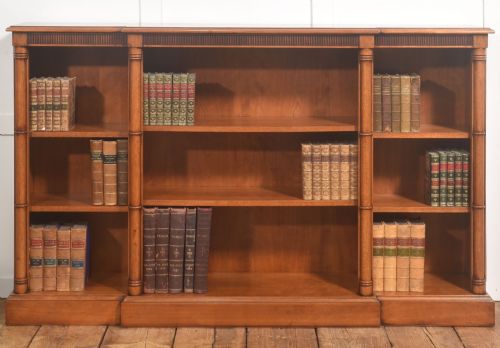
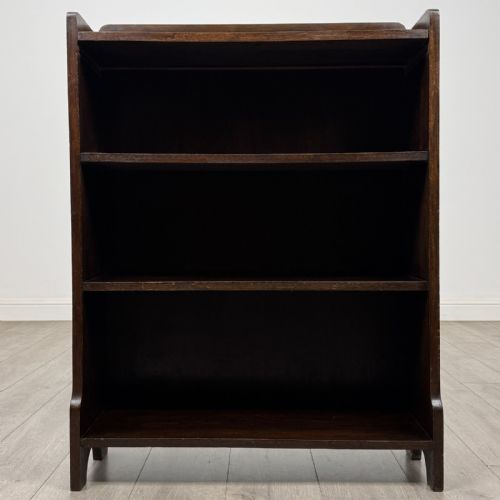
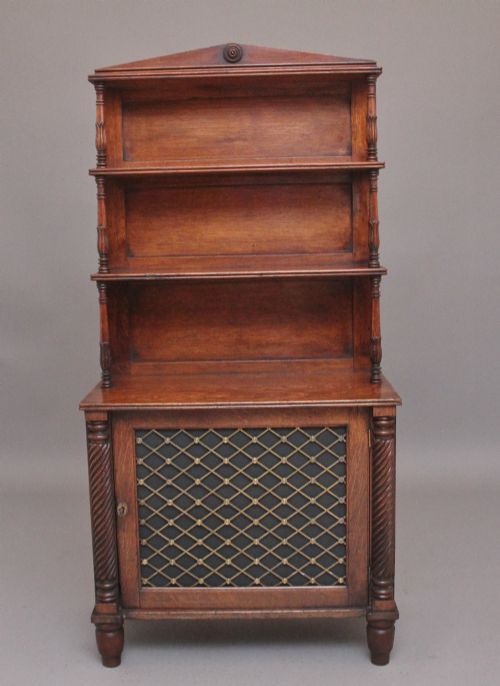
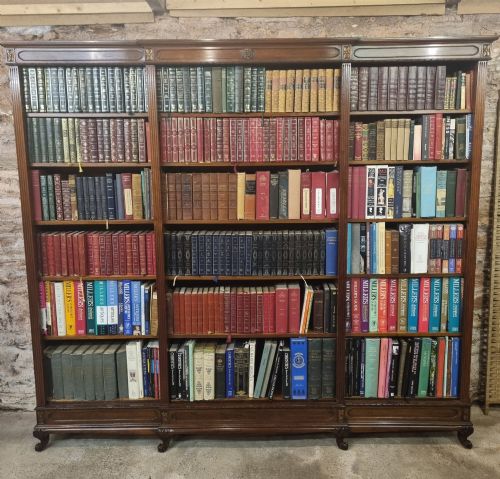
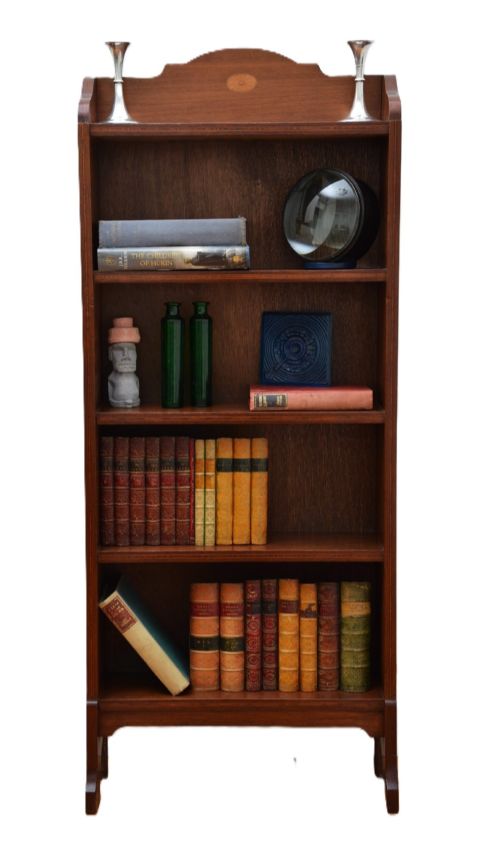
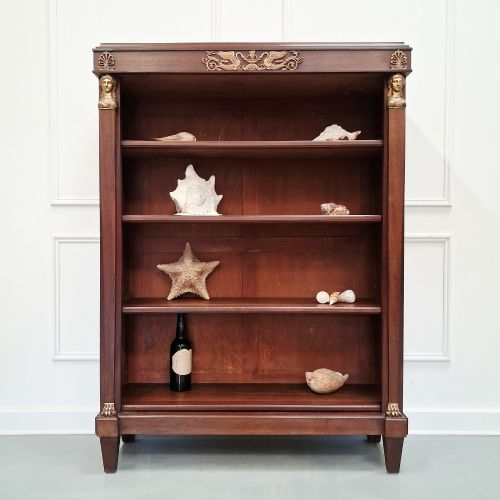
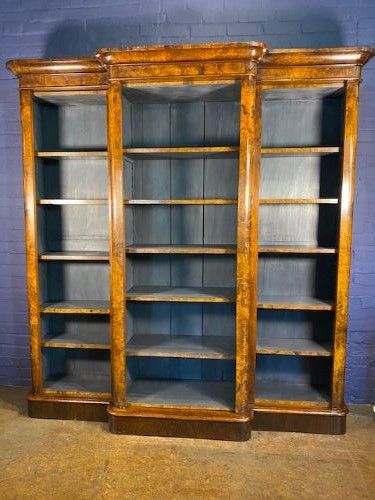
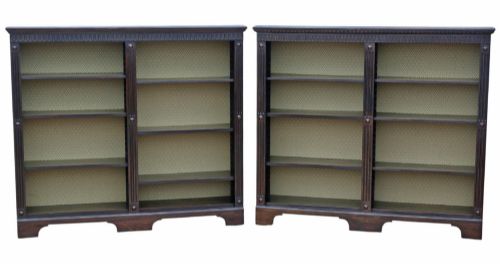
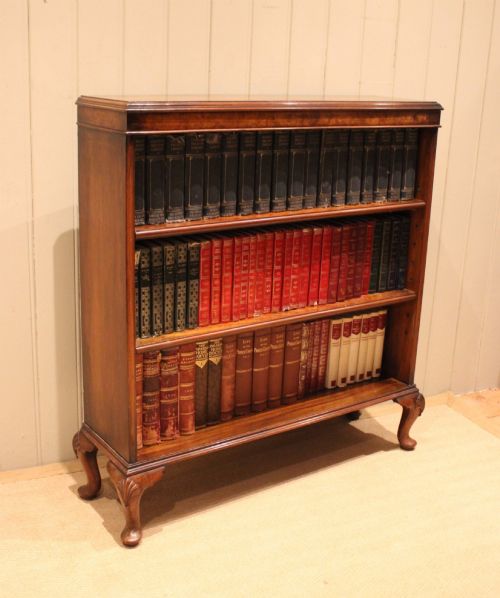
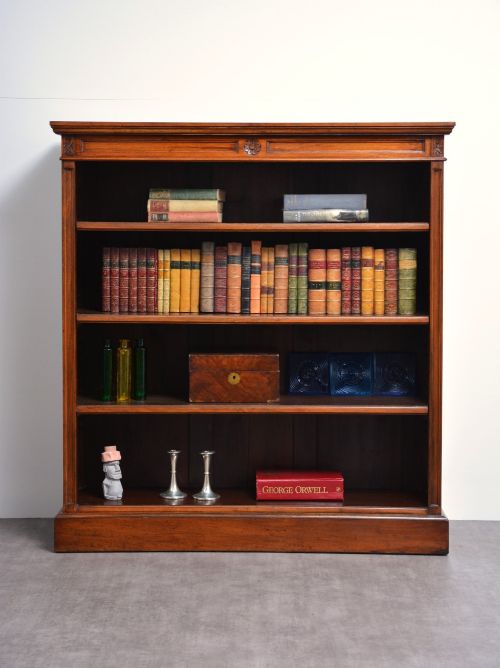
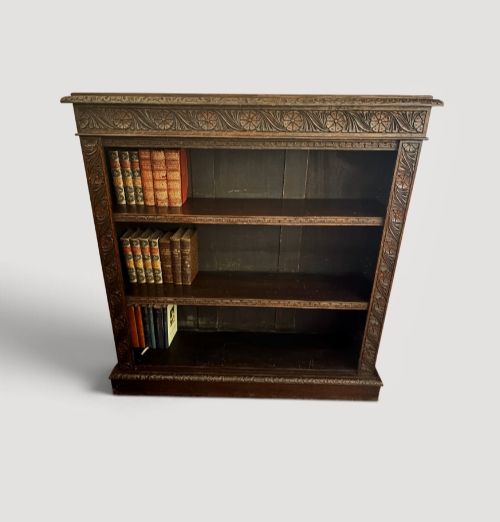
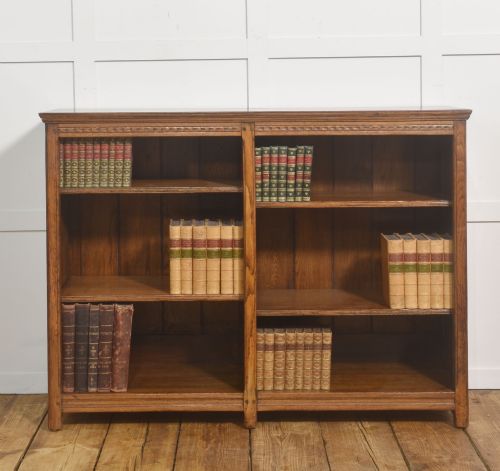
Brown library shelving primarily consists of open bookcases and adjustable library units designed for domestic studies and large reading rooms. When searching for brown library shelving, buyers frequently encounter pieces spanning the Victorian and Edwardian eras, constructed to house heavy volumes with ease.
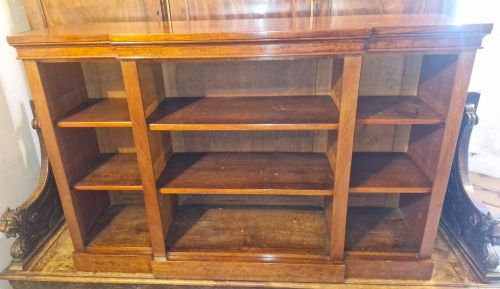
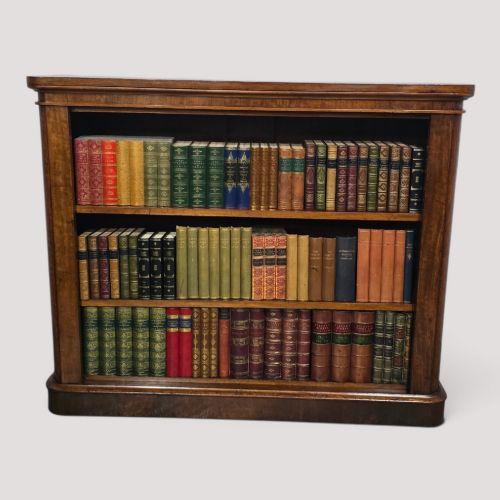
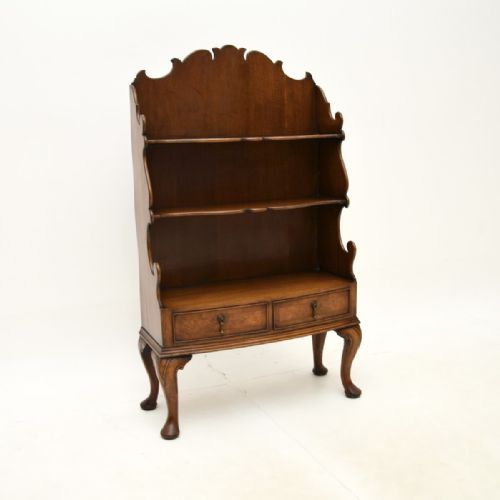
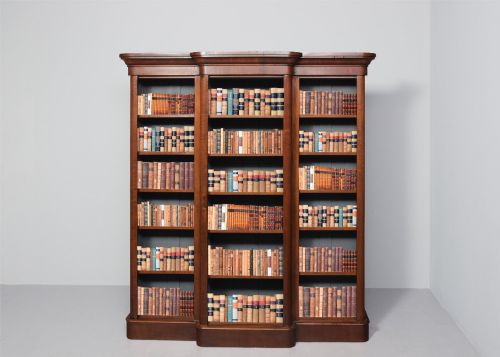
The dominant forms include tall breakfront bookcases, cascading shelves, and low units featuring multiple tiers. Most examples rely on open fronts rather than glazed doors, allowing direct access to the collection stored within.
How they were made
Cabinet makers utilised dense hardwoods such as oak, mahogany, and walnut to build these substantial frames, often applying burr walnut veneer for figured grain patterns on visible surfaces. Brass fittings support adjustable shelving mechanisms, while occasional iron bracing provides structural rigidity.
Joinery techniques focus on weight distribution, using solid timber panels alongside carved mouldings and raised galleries. French polishing or wax finishes seal the wood while deepening the natural tone of the grain.
Some Edwardian oak bookcases include hidden iron backs, giving a subtle industrial edge to traditional library storage.
What varies in quality
The grade of timber and the complexity of the cabinetry define the tier of each piece, distinguishing simple utility shelving from fine architectural library furniture. Breakfront configurations with multiple sections and carefully matched burr walnut veneers represent higher craftsmanship than plain single-bay pine carcases.
Hardware details such as functioning brass shelf racks and integrated cornices demonstrate workshop care. The presence of carved edges or inlaid detailing further separates standard commercial output from bespoke cabinet work.
Bowman Brothers London
The Brown Library Shelving Glossary
- Breakfront
- A cabinet design where the central section projects forward from the flanking wings. This configuration breaks the linear monotony of long walls in traditional libraries.
- Adjustable shelves
- Shelvings that can be repositioned vertically using pegs, racks, or track systems. This mechanism allows the owner to accommodate books of varying heights.
- Burr walnut
- Timber taken from a growth on the walnut tree, showing intricate, swirling grain patterns. Cabinet makers prized this wood for decorative fronts.
- Open bookcase
- A shelving unit without doors across the front face. It provides immediate access to the contents.
- Gallery
- A raised ornamental rim running along the top edge of a piece. It prevents items placed on the surface from sliding off.
Brown Library Shelving: Frequently Asked Questions
Are these shelves suitable for heavy books?
Solid hardwood construction and sturdy vertical divisions allow these units to support substantial weight without sagging.
Adjustable systems also let you set shelf heights to suit large folios and reference volumes.
How do I adjust the shelf height?
Most period library shelves use brass ratchets or wooden slot strips set into the interior sides.
You simply lift the shelf slightly and relocate the supporting pins into the desired position.
Where should I place a breakfront bookcase?
These large units require a substantial wall with adequate clearance to showcase their projecting central sections properly.
They function best in studies, living rooms, or dedicated home libraries with stable humidity levels.
What wood types are most common?
Oak, mahogany, and walnut appear frequently across Victorian and Edwardian examples, often finished with a dark polish.
Burr walnut variants offer decorative grain patterns for more formal rooms.