

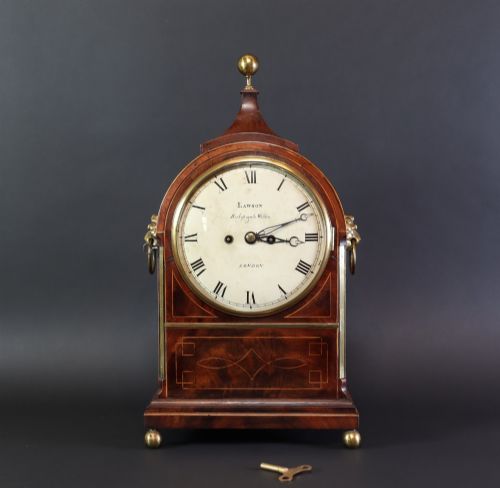
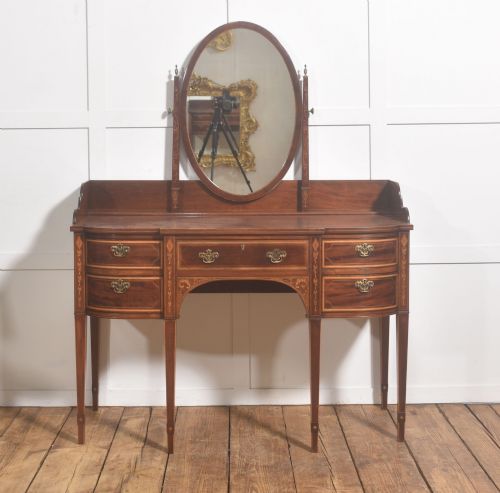
Brown Inlay Tables
Brown inlay tables bring together rich timber and delicate contrasting wood detail, offering a functional surface with distinct period character for the home.
Brown Inlay Tables
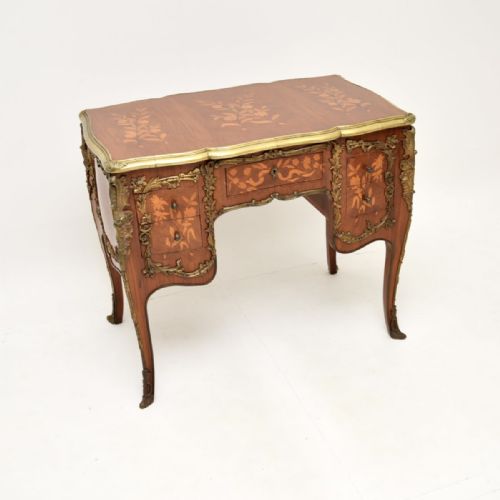
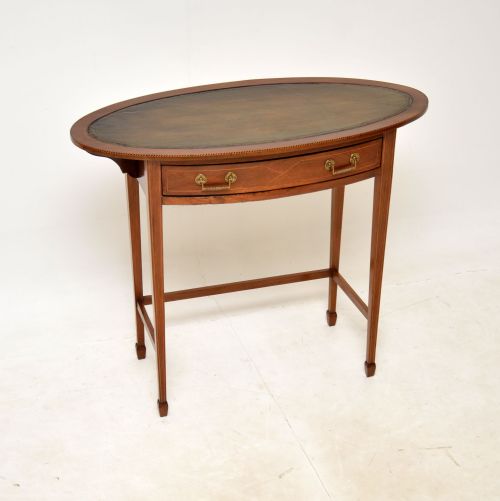
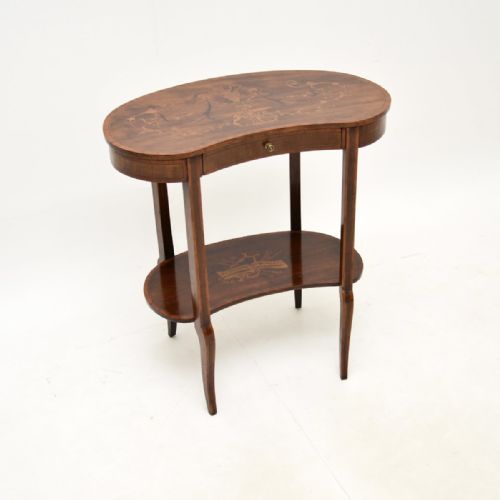
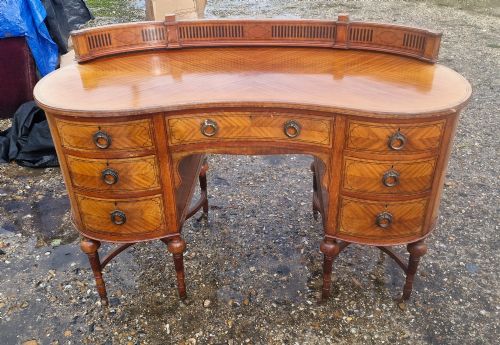
Brown inlay tables encompass a variety of occasional, side, and writing tables created from foundational timbers such as mahogany, walnut, and kingwood. These pieces frequently feature Edwardian, Victorian, and Georgian stylistic influences, reflecting centuries of cabinet-making skill.
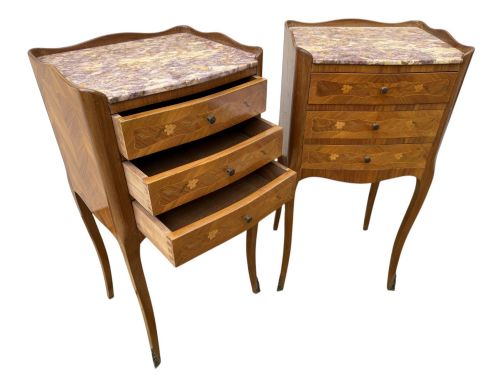
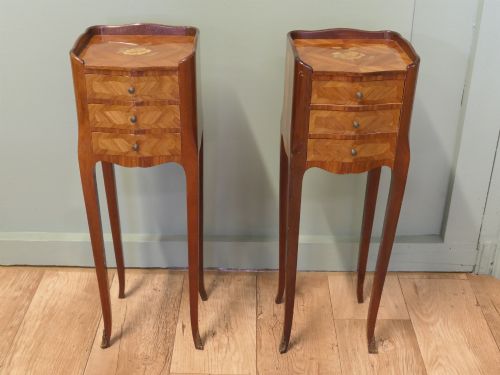
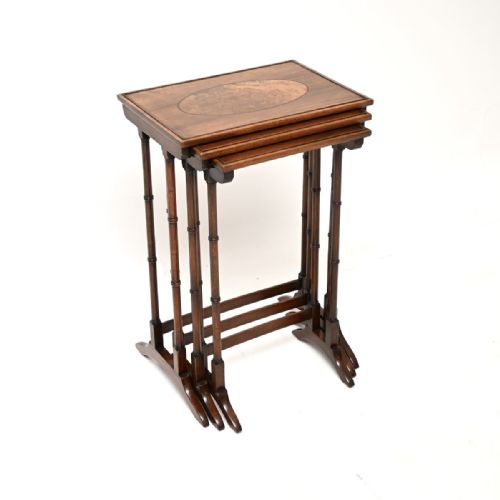
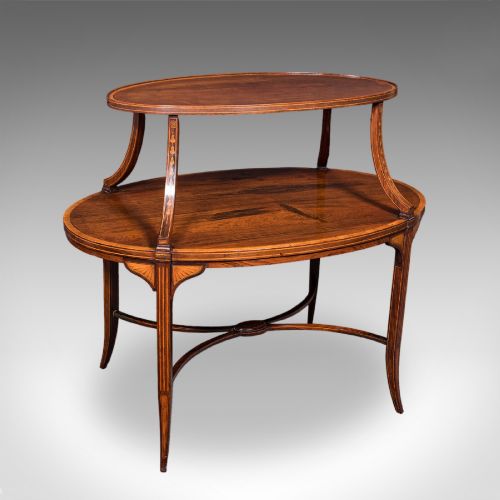
The version most commonly met on this page is the Edwardian occasional or lamp table, typically constructed from mahogany and enriched with satinwood or boxwood inlay. These lighter domestic forms sit alongside larger Victorian marquetry centre tables and eighteenth-century card tables.
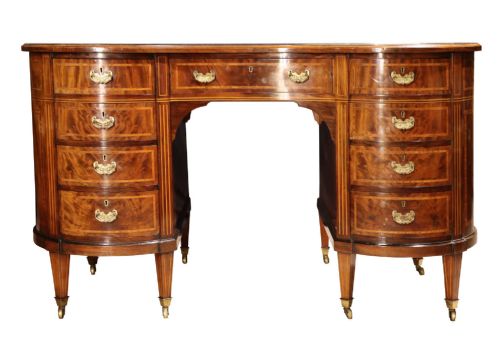
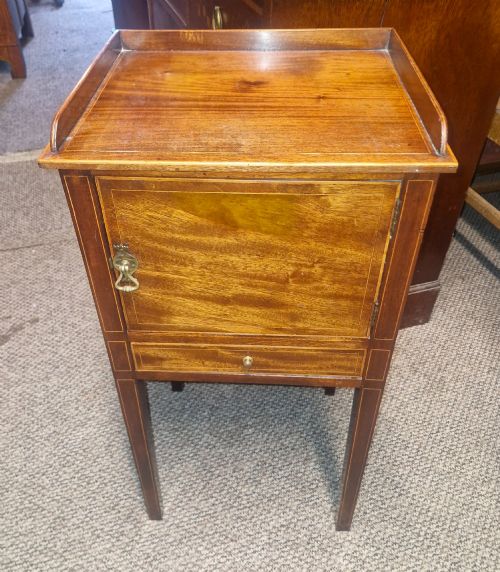
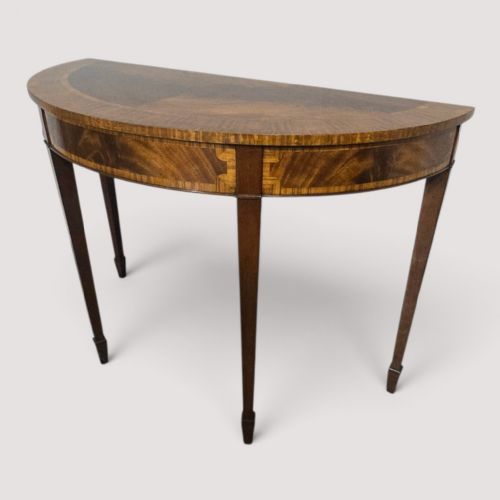
Makers utilised these surfaces for specific household functions, ranging from bedside cabinets and nests of tables to formal console tables. The inclusion of intricate wood inlay distinguishes them from plain timber furniture, adding geometric or floral ornamentation to the design.
Materials and construction
Makers constructed these tables using a carcase of solid timber or wood veneer, employing rich primary woods such as mahogany, walnut, kingwood, and rosewood. Surface decoration relies on contrasting lighter timbers like satinwood and boxwood, cut finely to form linear banding or complex pictorial marquetry.
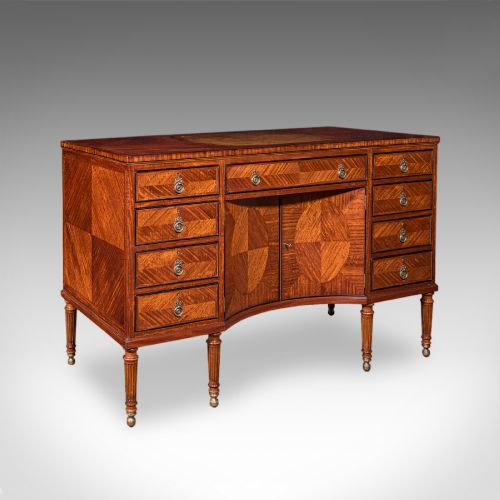
Techniques such as crossbanding frame the central top grain, while parquetry arranges small geometric wood veneers into tiled patterns. Cabinet-makers also incorporated brass fittings and occasional marble tops to complete the construction of desks, side tables, and console tables.
Brown Inlay Tables Retail Price Guide 2026
Typical asking prices for brown inlay tables among the pieces listed under this phrase on Sellingantiques today, from the lower quarter to the upper quarter. They describe what is for sale here now, not the wider market.
Listings span several centuries, featuring 18th Century Georgian craftsmanship, Victorian marquetry, and Edwardian satinwood inlay.
Evaluating craftsmanship and execution
Quality in these tables rests upon the precision of the timber selection and the execution of the inlay work. Finer examples display tight, seamless joins between the contrasting satinwood or boxwood elements and the darker mahogany or walnut ground, without filler or gaps.
The depth and fluidity of the marquetry or parquetry panels distinguish standard production from exceptional pieces. Superior tables also demonstrate careful attention to secondary timbers, sturdy underlying joinery, and well-proportioned forms that retain their structural integrity over centuries.
Bath Cabinet Makers·Ralph Turnbull·Edwards and Roberts
The Brown Inlay Tables Glossary
- Marquetry
- The art of creating decorative pictures or patterns on furniture using thin veneers of various woods. This technique allows for elaborate floral and pictorial designs across table tops.
- Parquetry
- A geometric mosaic of wood pieces used for decorative floors and furniture surfaces. It produces repeating patterns like cubes or chequers.
- Crossbanding
- A strip of veneer applied to the border of a table top with the grain running perpendicular to the centre. This frames the primary timber and provides a neat finish.
- Satinwood
- A durable, lustrous yellow timber imported from tropical regions, frequently used for contrasting stringing and inlay on mahogany furniture.
- Pembroke table
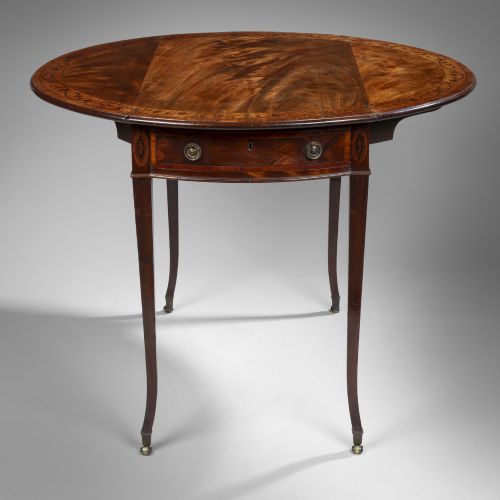
- A small, drop-leaf table with hinged flaps on either side, often featuring inlaid drawer details and slender legs.
Brown Inlay Tables: Frequently Asked Questions
Where should I place a brown inlay table?
These tables suit reception rooms, studies, and hallways where their decorative wood surfaces can be seen. Smaller lamp tables and nests fit easily beside seating.
Larger centre tables or writing desks work well positioned centrally in a room or against a wall as a focal point.
How do I care for inlaid wood surfaces?
Protect the polished timber and delicate boxwood or satinwood inlay from direct sunlight to prevent fading. Keep them away from radiators to stop the veneer from drying and lifting.
Dust gently with a dry cloth and apply occasional specialist wax polish appropriate for antique furniture.
How do I distinguish Edwardian pieces from Victorian ones?
Victorian tables often feature heavier proportions, darker walnut or mahogany timbers, and dense marquetry. They tend towards formal, substantial designs.
Edwardian pieces generally present lighter satinwood highlights, simpler mahogany frames, and delicate forms intended for refined domestic interiors.
What is the difference between marquetry and parquetry?
Marquetry forms pictorial or curved floral motifs using varied coloured wood veneers assembled into artistic scenes. It creates organic shapes across the timber.
Parquetry builds strict geometric patterns and repeating tiles using straight-edged wooden pieces to form regular repeating shapes.