
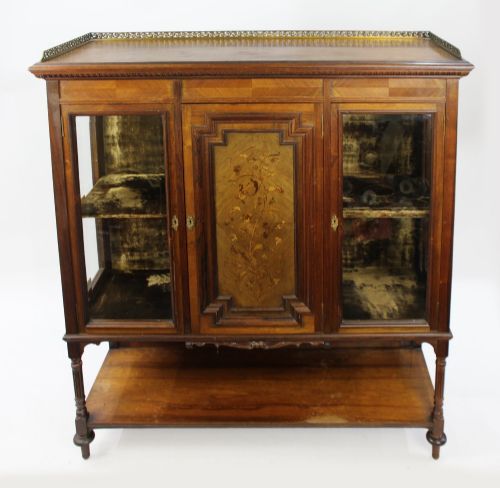
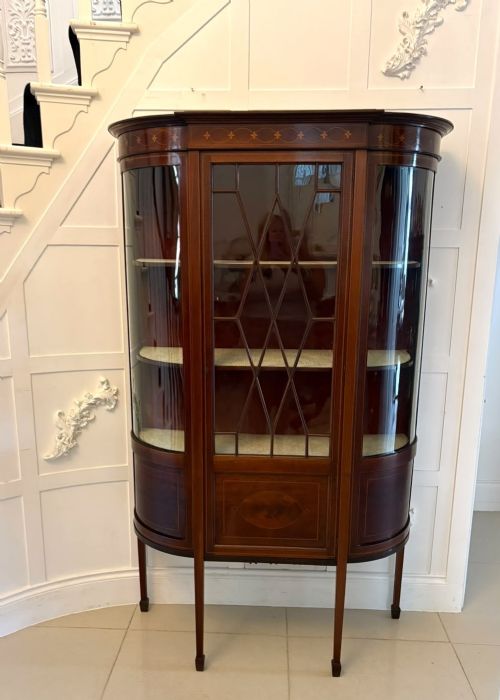
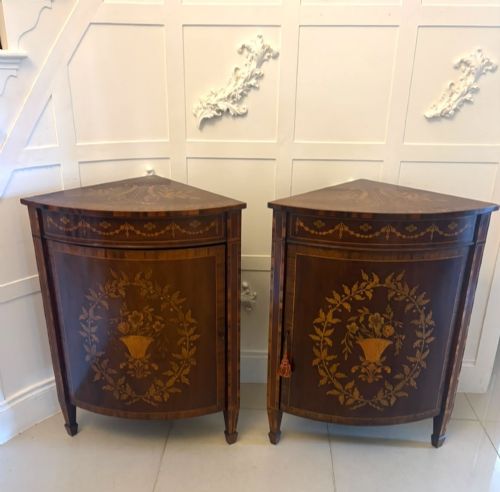
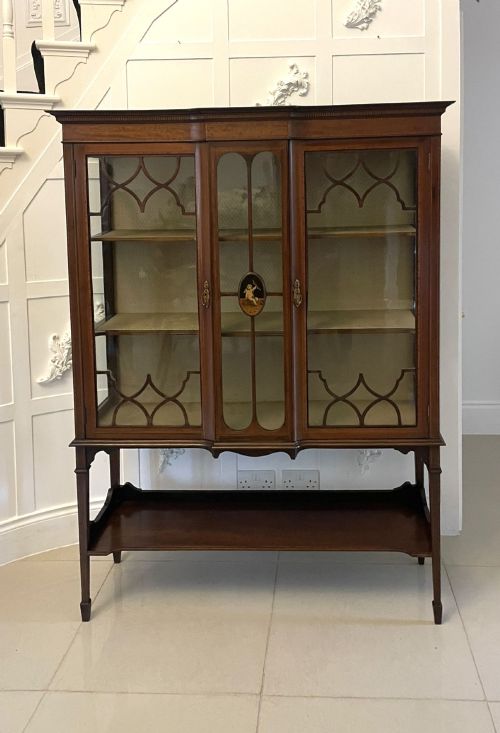
Brown Inlaid Cupboard
A brown inlaid cupboard brings rich timber grain and fine decorative stringing into a room, offering practical storage disguised as art.
Brown Inlaid Cupboard
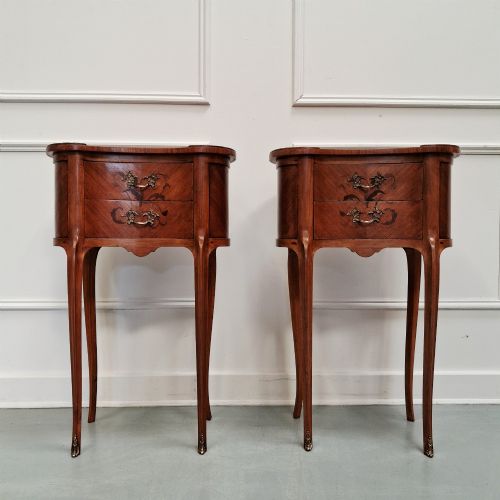
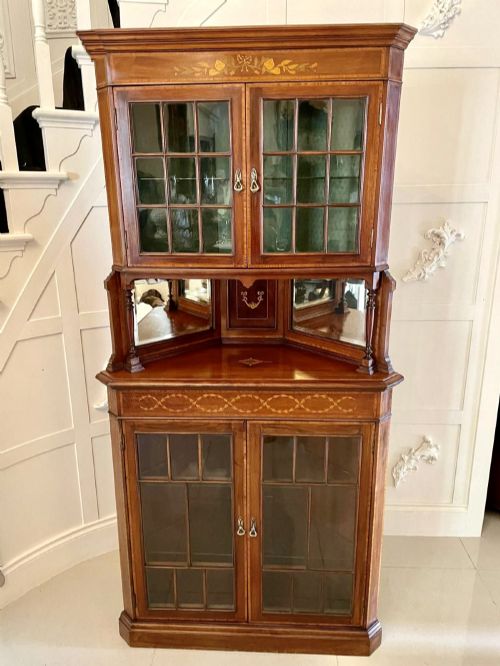
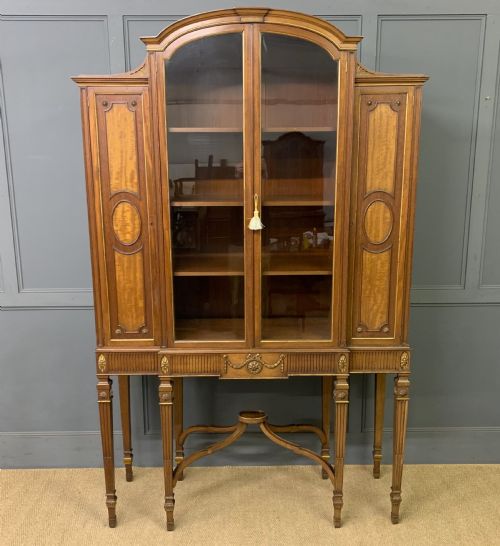
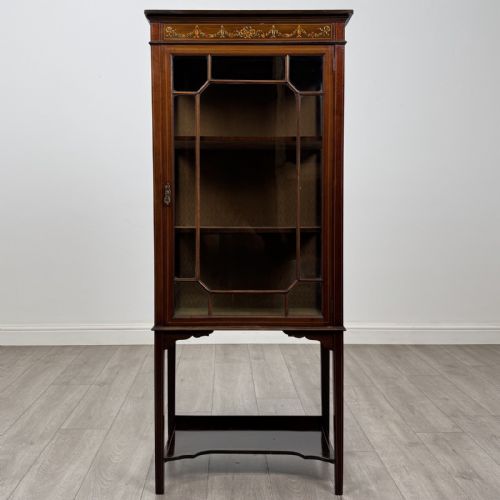
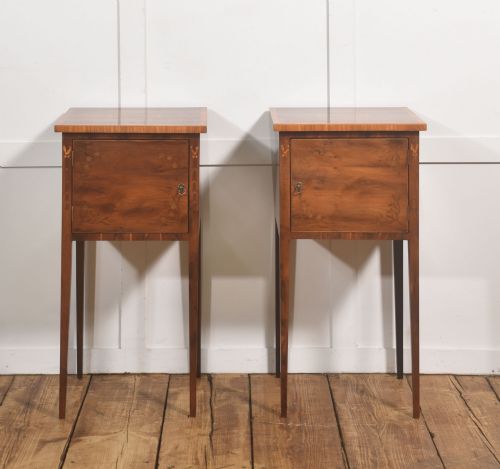
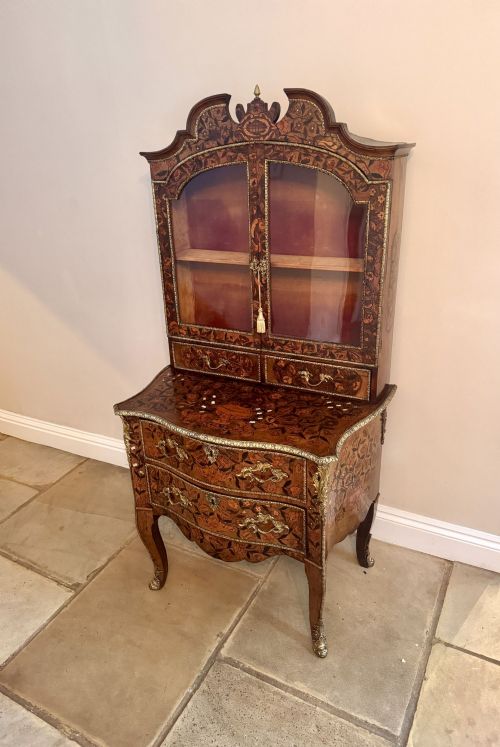
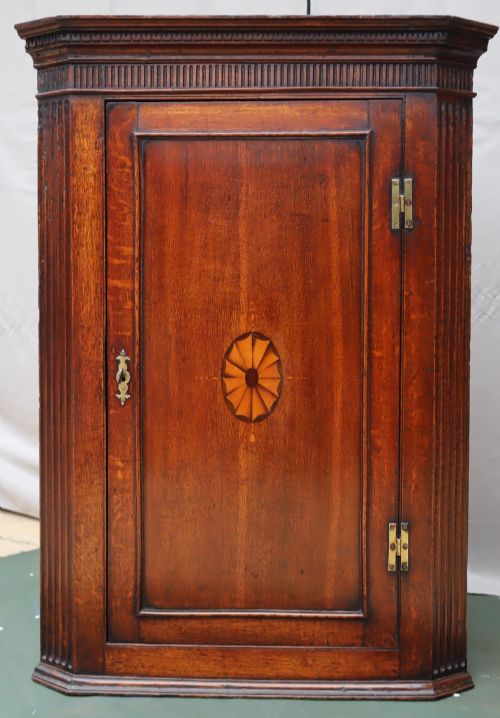
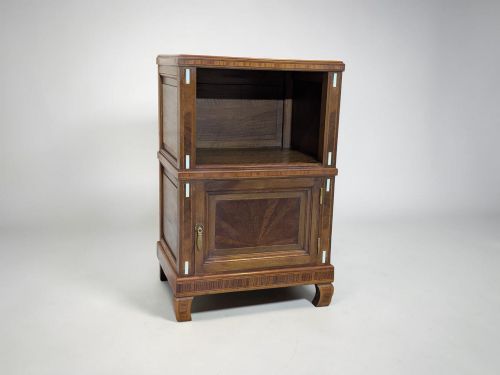
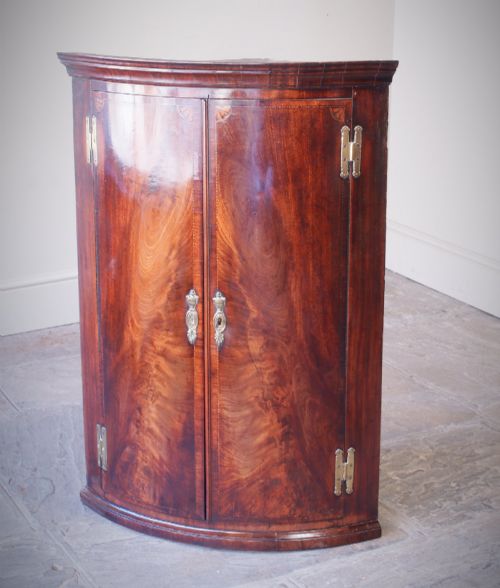
A brown inlaid cupboard encompasses a wide assortment of furniture designed for storage and display, appearing across periods from the eighteenth century through to the twentieth. When searching for a brown inlaid cupboard, buyers encounter forms ranging from corner cabinets and bedside tables to large linen presses, wardrobes, and breakfront bookcases.
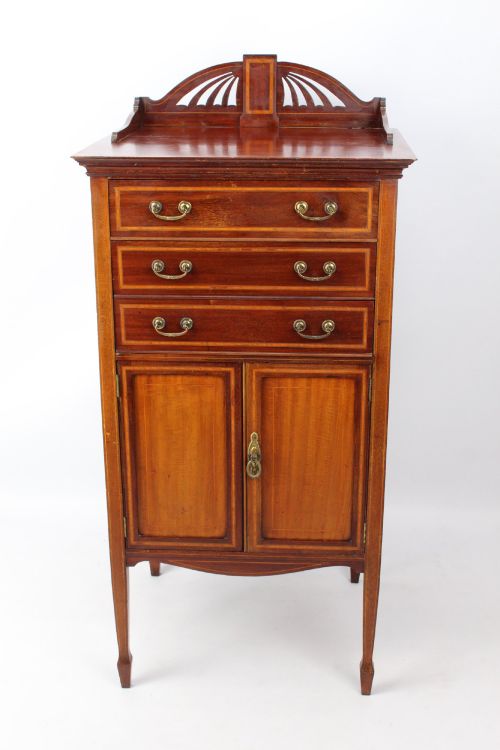
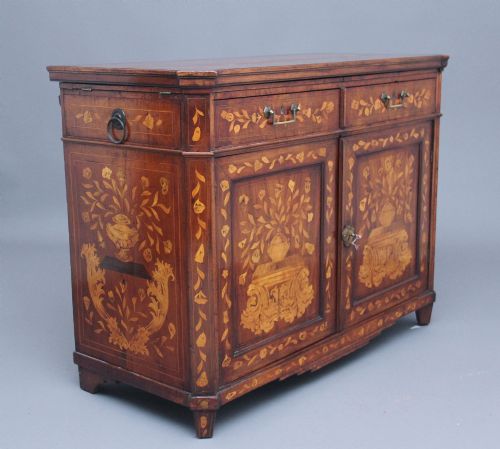
The selection leans heavily towards Edwardian and nineteenth-century pieces executed in mahogany, walnut, and oak. Styles shift from the formal geometry of the Georgian era and Sheraton Revival to the curving lines of Art Nouveau and Dutch Baroque.
Originating from British workshops as well as continental centres, these cabinets frequently utilise contrasting timbers to frame doors, panels, and cornices. The typical survival on this page balances utility with refined ornamental detail suited to traditional and modern interiors alike.
How they were made
Cabinet makers constructed the foundational carcases of these pieces using sturdy timbers such as mahogany, oak, and walnut, often applying burr walnut or satinwood veneers to create richly patterned surfaces. Solid wood frames provided structural stability, while secondary timbers lined the interiors of drawers and backing boards.
Decoration relied on precision cutting and contrasting materials, inserting delicate lines of boxwood, brass, and darker woods into carved recesses. Marquetry compositions incorporated floral and geometric motifs, while brass handles, hinges, and occasional porcelain plaques completed the assembly.
Smokers enjoyed dedicated small cupboards featuring inlaid tobacco leaf motifs alongside their pipes.
What varies in quality
The standard of a piece rests upon the crispness of the inlay work and the selection of the primary timber veneers. Cabinets boasting tightly figured mahogany or burr walnut display a depth of grain that elevates the entire visual weight of the item.
Joinery execution dictates longevity, visible in the precision of dovetail joints on drawers and the smooth alignment of doors within their frames. Superior examples maintain original brass hardware, glass panels, and structural integrity without relying on heavy modern repairs.
maples & co·Edwards & Roberts
The Brown Inlaid Cupboard Glossary
- Inlay
- A decorative technique where small pieces of contrasting wood, brass, or other materials are inserted into prepared recesses flush with the surface. This method defines the characteristic linear and geometric patterns seen across the panels.
- Marquetry
- An elaborate form of inlay assembling fitted veneer pieces to create pictorial designs, commonly floral arrangements or urns. It requires skilled cutting and precise placement.
- Linen Press
- A tall storage piece traditionally used for linens, featuring upper sliding trays or shelves enclosed by doors, often above a base chest of drawers. Georgian and Victorian examples frequently integrate fine stringing.
- Pier Cabinet
- A narrow display or storage cabinet designed specifically to fit the wall space between windows. These pieces often incorporate glass doors and delicate marquetry.
- Stringing
- A thin, narrow strip of contrasting timber inlaid into the surface of furniture to create framing lines. It is a hallmark of Sheraton and Edwardian design.
Brown Inlaid Cupboard: Frequently Asked Questions
Where should I place a corner cupboard?
A corner cabinet fits neatly into unused room angles, turning dead space into a decorative focal point for displaying glassware or porcelain.
Smaller models work well in dining rooms or hallways, while taller floor-standing versions anchor larger reception spaces.
How do I clean mahogany surfaces?
Dust mahogany and walnut regularly with a soft, dry cloth to prevent particulate buildup on the polished timber. Avoid silicone sprays and modern chemical polishes that can degrade nineteenth-century finishes over time.
Apply a traditional beeswax sparingly once or twice a year to nourish the wood grain and maintain the natural sheen.
Can I use a linen press as a wardrobe?
Many linen presses feature interior sliding trays that accommodate folded garments, while others have been adapted with hanging rails.
Evaluating the internal depth helps determine whether standard coat hangers fit comfortably behind the doors.
What is the difference between Georgian and Edwardian inlay?
Georgian inlay, particularly during the Sheraton period, tends to feature restrained geometric stringing, satinwood banding, and classical motifs like urns and swags.
Edwardian interpretations often revive these eighteenth-century themes with lighter overall construction and sometimes incorporate broader floral marquetry.