

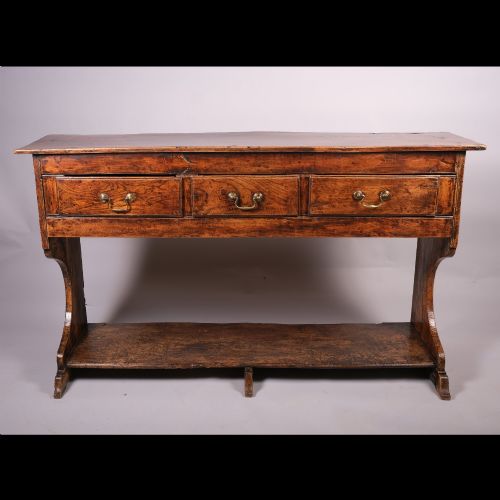
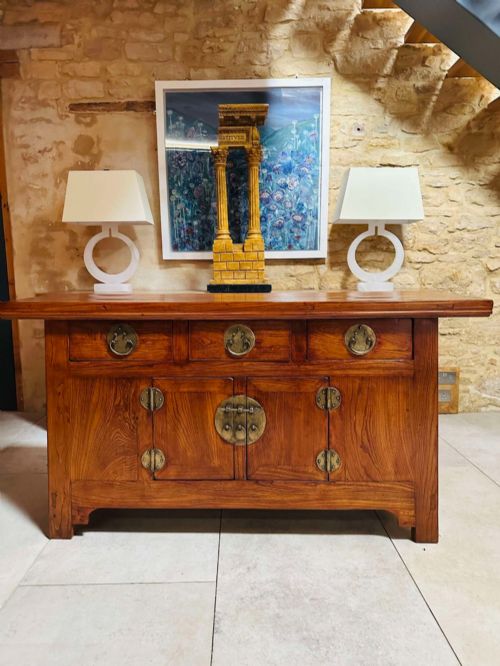
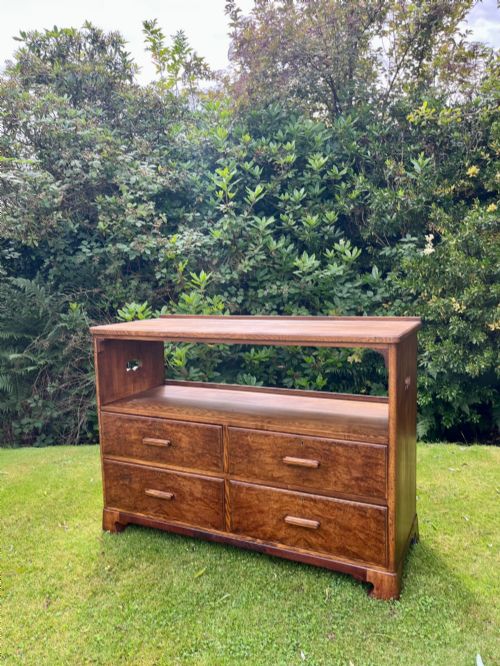
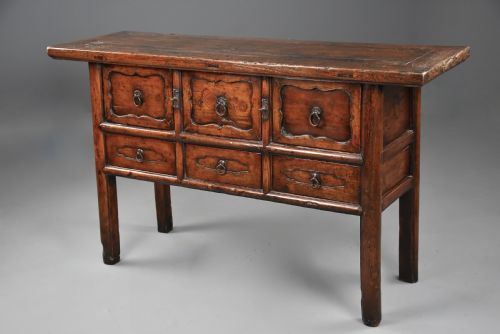


Brown Elm Credenza
A brown elm credenza brings a rich, figured grain and a robust presence into a room.
Brown Elm Credenza
The English examples lean toward Georgian, Queen Anne, and Arts and Crafts designs, frequently utilising solid elm or burr elm combined with oak. Alongside these, Chinese provincial pieces from the Qing dynasty bring clean lines in elm, offering a different take on low storage furniture.
Buyers encountering this selection will find a mix of nineteenth-century rustic works, eighteenth-century commodes, and early twentieth-century interpretations. Each piece relies on the characteristic interlocking grain of elm to create a warm, honey-toned surface that draws the eye.
How they were made
Makers utilised solid elm and burr elm for their striking figuring, often pairing the timber with secondary woods like oak or incorporating brass hardware. Some sophisticated pieces employ marquetry and wood inlay to contrast the honey-toned background with darker decorative elements.
Surface finishing techniques focused on developing a deep patina through simple polishing, allowing the natural grain pattern to dominate. Regional cabinetmakers relied on traditional joinery methods suited to elm's tendency to move, ensuring the stability of larger dresser bases and side cabinets over centuries.
Brown Elm Credenza Retail Price Guide 2026
Typical asking prices for brown elm credenza among the pieces listed under this phrase on Sellingantiques today, from the lower quarter to the upper quarter. They describe what is for sale here now, not the wider market.
Burr elm forms from chaotic tree growths, meaning every swirling knot pattern on these cabinet doors is entirely untamable and unique.
What varies in quality
The distinction between ordinary and exceptional examples rests upon the choice of timber and the sophistication of its figuring. Burr elm veneers and select burr yew accents demand superior cabinetmaking skill to apply smoothly across curved surfaces like demi-lune commodes.
Proportion and structural integrity define the upper tier of these items, where regional vernacular styles maintain balanced lines without heavy restoration. The depth of the natural patina and the crispness of surviving hardware further separate standard utility furniture from finer stylistic expressions.
Whytock and Reid
The Brown Elm Credenza Glossary
- Burr Elm
- A growth on an elm tree that produces highly figured, swirling wood grain patterns. It is sliced into veneers for decorative cabinet fronts.
- Dresser Base
- A low freestanding storage unit featuring drawers or cupboards beneath a wide top surface. These pieces formed a staple of country house utility.
- Commode
- A low French-style cabinet or chest of drawers designed with decorative proportions. Eighteenth-century versions often feature serpentine or demi-lune shapes.
- Marquetry
- The art of applying pieces of veneer to a structure to form decorative patterns. Craftsmen use various coloured woods to create complex pictorial designs.
- Patina
- The surface sheen and colour developed by wood over years of handling, light exposure, and waxing. It serves as a visual indicator of age and care.
Brown Elm Credenza: Frequently Asked Questions
What is a brown elm credenza?
A brown elm credenza is a low storage piece built from figured elm wood, encompassing sideboards, commodes, and cabinets.
These items share a warm timber tone and sturdy construction, though their exact styles range from English country furniture to Chinese provincial designs.
How do I date a piece?
Dating relies on examining construction methods, timber preparation, and stylistic markers such as cabriole legs or marquetry inlay.
Georgian and eighteenth-century pieces display different joinery conventions compared to nineteenth-century rustic works or early twentieth-century revivals.
Where were these pieces made?
The pieces originate from diverse regions, including English workshops influenced by Queen Anne and George III styles, as well as Chinese provinces like Shanxi.
This geographic spread means cabinetmakers applied local traditions to the same resilient elm timber.
How do I care for elm furniture?
Elm furniture responds well to regular dusting and occasional applications of traditional beeswax to nourish the grain and preserve the patina.
Keeping pieces away from direct heat sources prevents the timber from drying out and maintains the stability of the joinery.