





Brown Damask Armchair
A brown damask armchair brings deep texture and traditional seating to a room, offering sturdy mahogany or walnut frames paired with patterned textile upholstery.
Brown Damask Armchair
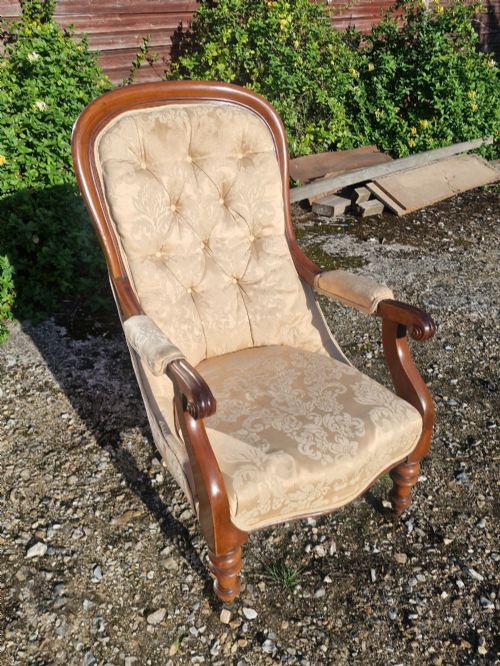
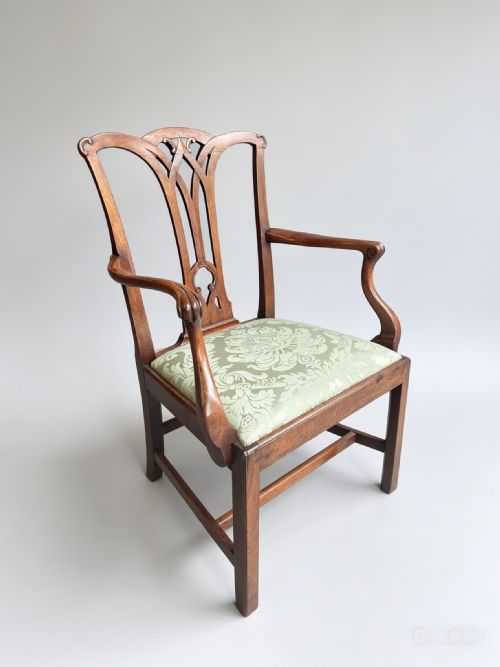
A brown damask armchair encompasses seating designed for libraries, firesides, and dining rooms across several centuries. These pieces combine robust wooden frames with woven textile covers, ranging from Victorian library chairs to Georgian designs.
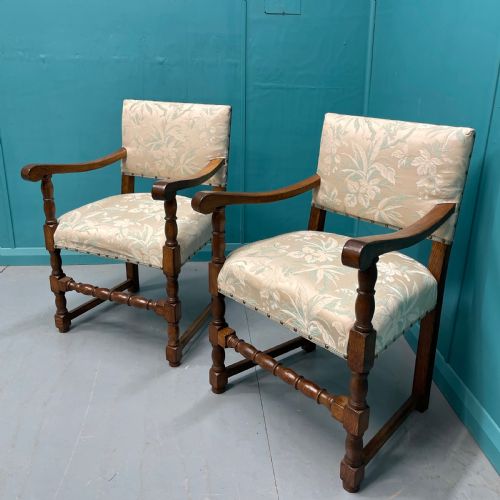
The most common forms on this page include mahogany framed library chairs and walnut elbow chairs upholstered in patterned fabric. Buyers often encounter Victorian and 18th-century examples featuring carved details, scroll arms, and high backs.
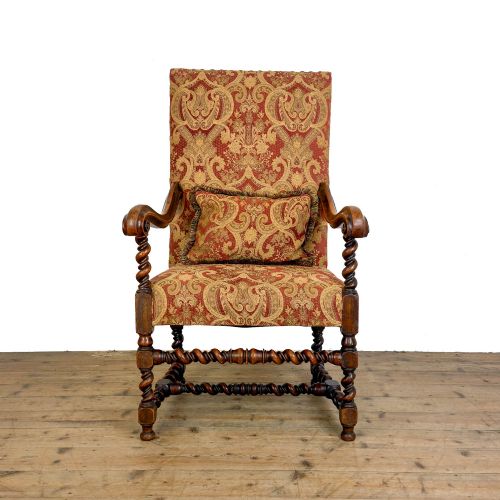
Originating primarily from British workshops, these armchairs serve functional seating roles while displaying distinct period characteristics such as Dutch marquetry or Carolean Revival styling.
How they were made
Carpenters and joiners constructed the structural frames using dense hardwoods like mahogany, walnut, and oak. These timbers provided the necessary strength for heavy seating, often enhanced through intricate carving, inlay work, or polished finishes.
Upholstery techniques involved securing damask textile directly to the frame, sometimes incorporating brass elements for structural or decorative effect. The woven patterns characteristic of damask were integrated into the fabric during its creation on specialised looms.
Brown Damask Armchair Retail Price Guide 2026
Typical asking prices for brown damask armchair among the pieces listed under this phrase on Sellingantiques today, from the lower quarter to the upper quarter. They describe what is for sale here now, not the wider market.
Listings feature mahogany, walnut, and oak timbers alongside textiles like damask, demonstrating centuries of woodworking and upholstery traditions.
What varies in quality
The refinement of the woodwork dictates the standing of an armchair, separating simpler vernacular forms from highly articulated period pieces. Master carvers invested greater time in shaping mahogany and walnut frames, producing crisp scroll arms and detailed foliage.
The choice of textile and the integrity of the upholstery execution also define the standard of the piece. Superior damask fabrics maintain tight weaves and rich brown tones that complement the underlying hardwood structure without obscuring its craftsmanship.
The Brown Damask Armchair Glossary
- Damask
- A reversible figured fabric woven on a jacquard loom, featuring patterns created by contrasting warp and weft threads. This textile provides the characteristic textured surface found on the upholstery of these armchairs.
- Library armchair
- A sturdy upholstered seating form designed for reading rooms, typically featuring padded arms and a supportive high back. These chairs prioritised comfort alongside formal dignity in domestic interiors.
- Marquetry
- The art of applying decorative pieces of veneer to a wooden structure to form intricate pictorial designs. This technique appears on walnut frames from Dutch and English workshops.
- Carolean style
- A decorative manner reflecting the restoration period of the late 17th century, noted for scrollwork, high backs, and turned wooden components. 19th-century makers frequently revived these motifs.
Brown Damask Armchair: Frequently Asked Questions
What is a brown damask armchair?
A brown damask armchair is a traditional wooden seat upholstered in patterned textile, spanning periods from the 18th century to the Victorian era. These pieces combine structural hardwoods with woven fabric covers.
They serve as functional seating and decorative additions to studies, libraries, and living spaces.
Where were these chairs used?
These armchairs were traditionally placed in libraries, drawing rooms, and studies for reading and conversational use. Pairs often flanked fireplaces or writing desks.
Their sturdy construction suited daily domestic life in large country houses and urban townhouses alike.
How do I care for the upholstery?
Maintaining damask upholstery involves gentle brushing to remove dust and keeping the textile away from direct sunlight to preserve its brown colour. Professional cleaning helps protect the woven fibres over time.
Wooden frames benefit from occasional polishing with suitable wax to maintain the timber.