



Brown Corner Armoire
These brown corner armoire pieces use awkward room angles wisely, offering sturdy timber storage built to last.
Brown Corner Armoire
A brown corner armoire solves storage dilemmas by fitting snugly into room angles that standard rectangular cabinets cannot occupy. These pieces combine the function of a wardrobe or cupboard with a triangular footprint designed for corners.
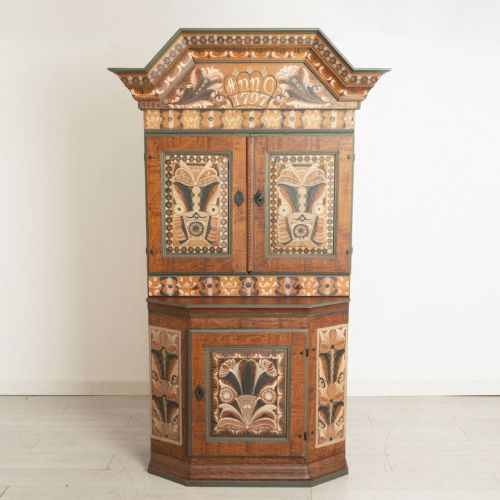
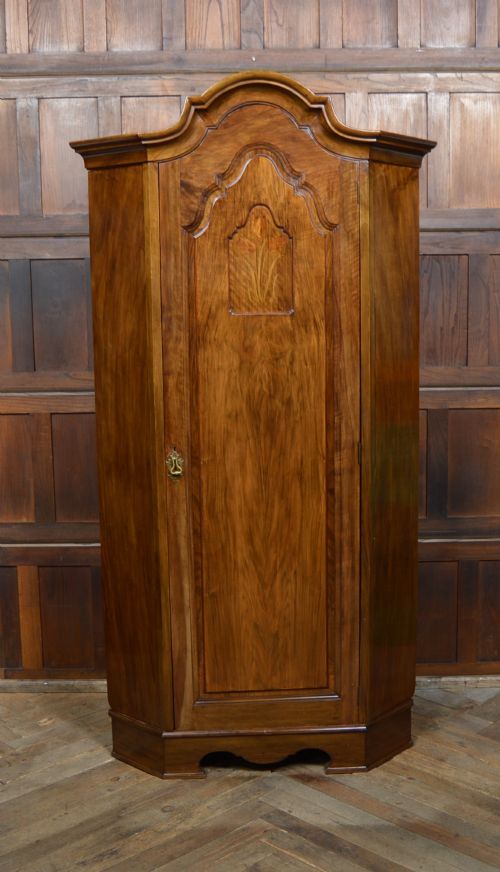
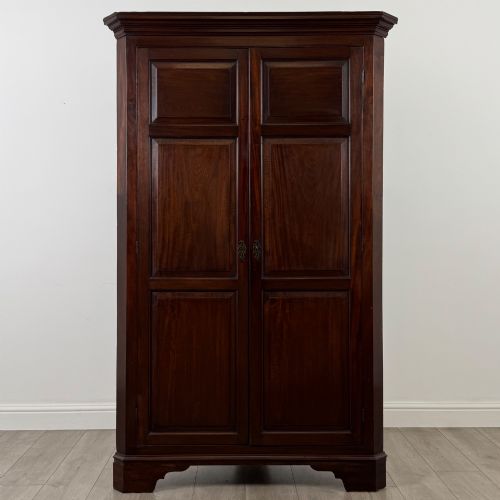
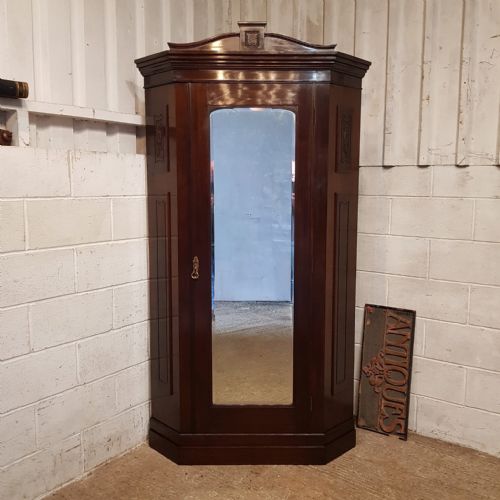
Most examples found here date from the eighteenth and nineteenth centuries, taking the form of corner cabinets, wardrobes, and painted cupboards. Mahogany, pine, walnut, and oak form the primary bodies of these timber constructions.
Makers across Georgian Britain, Victorian England, and continental Europe built these units to maximise floor space. Swedish folk art and German provincial pieces sit alongside refined British mahogany designs on this page.
Materials and construction
Cabinetmakers utilised dense hardwoods such as mahogany and walnut for formal British and continental pieces, often applying fine joinery and marquetry details. Pine and oak served regional workshops crafting robust provincial furniture.
Surface treatments range from clear polished timber grains to hand-painted Scandinavian folk art finishes. Brass and iron hardware, including hinges and locks, secured heavy doors whilst glass featured on glazed display variants.
Brown Corner Armoire Retail Price Guide 2026
Typical asking prices for brown corner armoire among the pieces listed under this phrase on Sellingantiques today, from the lower quarter to the upper quarter. They describe what is for sale here now, not the wider market.
The selection includes British Georgian and Victorian styles alongside Swedish folk art and German provincial pieces.
Judging quality in corner furniture
Construction integrity dictates value, distinguishing sturdy hardwood frames from lesser pieces with loose joints. Timber selection matters greatly, with well-figured mahogany or richly grained walnut sitting above plain utility woods.
The sophistication of surface decoration separates standard storage from superior examples. Original hand-painted folk art or fine timber detailing elevates a piece far beyond plain utility cupboards.
The Brown Corner Armoire Glossary
- Armoire
- A tall wardrobe or cupboard, traditionally used for storing clothes. These vertical storage units provide substantial capacity while utilising minimal floor space.
- Bowfront
- A convex curved cabinet front. This curved shaping softens the hard angles typical of corner furniture.
- Marquetry
- Decorative veneer patterns applied to furniture surfaces. Craftsmen assemble thin slices of wood to create intricate geometric or pictorial designs.
- Provincial
- Furniture made in regional areas rather than capital cities. These pieces often display charming local construction traits and vernacular styles.
Brown Corner Armoire: Frequently Asked Questions
How do I style a corner armoire?
Position your corner armoire in an unused room angle where it anchors the space without obstructing walkways. Because these pieces draw the eye upward, keep surrounding wall decor minimal to let the timber or painted finish stand out.
Use the interior shelving for linens, books, or display items depending on whether the doors are solid timber or glazed. Let the natural wood tone or folk art paint dictate the room's accent colours.
How do I date a corner cabinet?
Examine the timber species, construction joints, and hardware to determine the period of a corner cabinet. Eighteenth-century pieces often feature hand-cut dovetails and regional timbers, whereas late Victorian examples may show mass-produced fixings and machine-cut elements.
Stylistic cues such as Georgian mahogany proportions, Art Nouveau curves, or Swedish folk art paintwork provide clear clues to the era of manufacture.
Are corner armoires hard to move?
Moving a corner armoire requires care due to its awkward triangular shape and solid timber construction. Because these units are designed to fit snugly against two walls, navigating tight hallways and doorways takes patience and two people.
Removing internal shelves and doors before transport can significantly reduce the weight and make handling much easier.