



Brown Ceramic Cup
A brown ceramic cup brings heft and earthy warmth to the table, and these pieces span centuries of utilitarian and commemorative drinking vessels.
Brown Ceramic Cup
A brown ceramic cup encompasses sturdy earthenware and dense stoneware vessels designed for drinking or commemoration, often taking the form of mugs, tankards, tygs, and steins. These pieces trace their origins from the eighteenth century through the Victorian era and into the Art Deco period, reflecting changing domestic habits and public celebrations.
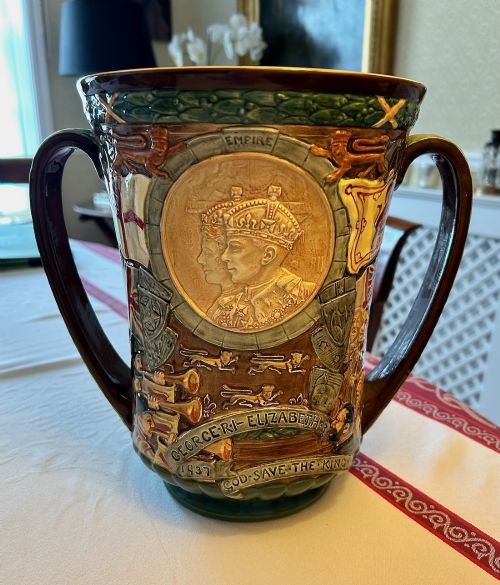
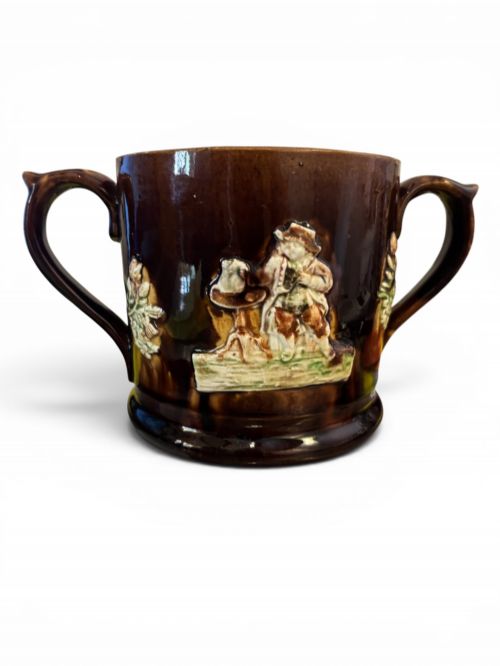
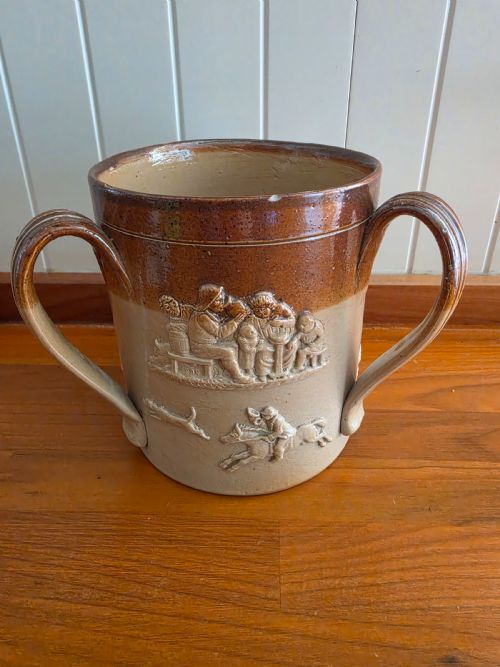
The version most commonly met on this page is the robust stoneware or earthenware drinking vessel, sometimes featuring multiple handles or commemorative decoration. Examples range from simple children's alphabet mugs to large silver-mounted harvest cups and coronation loving cups.
How they were made
Makers shaped these brown ceramic cup examples from clay, earthenware, and heavy-duty stoneware on the potter's wheel or in moulds before firing them in kilns. Many vessels received an impervious glaze to seal the porous body, whilst others incorporated decorative organic materials like carved coconut shells or precious metal mounts in silver and sterling silver.
Workshops frequently added applied relief decoration or hand-painted details to the fired body, particularly on commemorative steins and nursery mugs. Silver rims and mounts were then fitted by silversmiths to reinforce the edges and elevate the status of the drinking vessel.
Brown Ceramic Cup Retail Price Guide 2026
Typical asking prices for brown ceramic cup among the pieces listed under this phrase on Sellingantiques today, from the lower quarter to the upper quarter. They describe what is for sale here now, not the wider market.
Some eighteenth-century surprise mugs conceal a little ceramic frog inside that spits liquid at the unwary drinker.
What varies in quality
The standard of a brown ceramic cup rests upon the fineness of the clay body, the evenness of the glaze, and the crispness of any moulded or applied relief work. Superior pieces display balanced proportions, clean handle attachments, and securely fitted precious metal mounts.
Artistic execution and historical significance set the better examples apart, particularly when associated with notable potteries or specific royal coronations. The clarity of transfer-printed alphabets on children's mugs or the intricate detail of carved coconut shells and pewter elements also determine the standing of an individual piece.
Royal Doulton·Clarice Cliff·Doulton Lambeth·Sarreguemines
The Brown Ceramic Cup Glossary
- Stoneware
- A dense, hard pottery fired at high temperatures until vitrified and completely non-porous. It provides a durable body suited for everyday drinking vessels.
- Earthenware
- Porous pottery fired at lower temperatures, typically glazed to hold liquids. It forms the foundation for many traditional country mugs and nursery wares.
- Tyg
- A large drinking vessel featuring three or more handles designed for passing around a company. Early examples frequently appear in sturdy stoneware.
- Loving cup
- A large two-handled or multi-handled drinking vessel traditionally passed between guests at banquets and celebrations. Many survive to commemorate royal coronations and historical events.
- Stein
- A traditional drinking vessel, typically for beer, often fashioned from stoneware with a hinged lid. Nineteenth-century examples sometimes record specific imperial coronations.
Brown Ceramic Cup: Frequently Asked Questions
What is a brown ceramic cup used for?
These vessels served primarily for consuming ale, beer, tea, and other daily liquids, whilst larger multi-handled versions functioned communally at feasts and gatherings.
Many examples also served commemorative purposes, marking royal coronations, weddings, or historical events rather than everyday table use.
How do I care for a brown ceramic cup?
Wash antique ceramic and stoneware pieces gently by hand using mild soap and warm water, avoiding harsh abrasive scourers that might damage the historic glaze.
Keep silver rims and mounts polished with a suitable silver cloth, taking care not to let polish residue gather in the ceramic crevices or relief work.
How can I tell the age of a brown ceramic cup?
Examine the base, the wear patterns on the footrim, and the characteristics of the glaze to gather clues about the manufacturing period.
Commemorative inscriptions, specific royal cyphers, and known pottery marks also provide precise dates or narrow windows of production.
Are these cups safe for drinking?
Whilst many historic stoneware and earthenware vessels remain physically robust enough to hold liquids, older glazes can sometimes contain trace elements.
Collectors generally treat antique drinking vessels as display pieces or decorative works of art rather than practical tableware for modern consumption.