
Brown Carved Sideboard
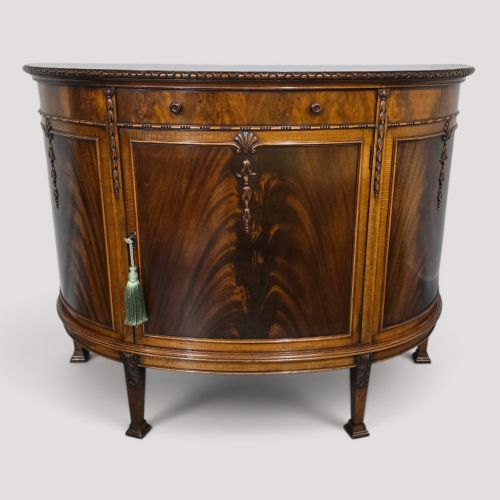
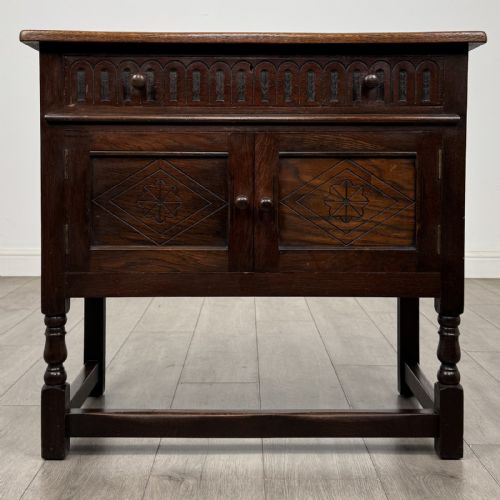
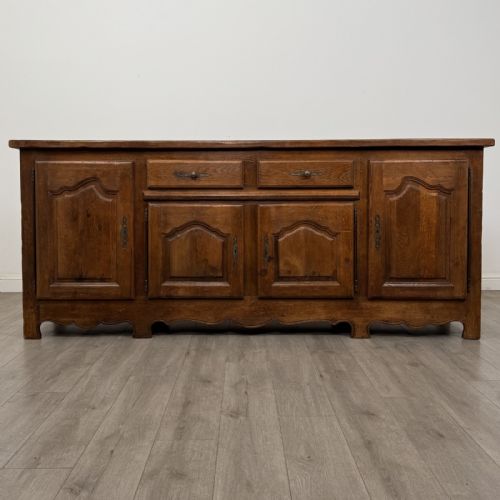
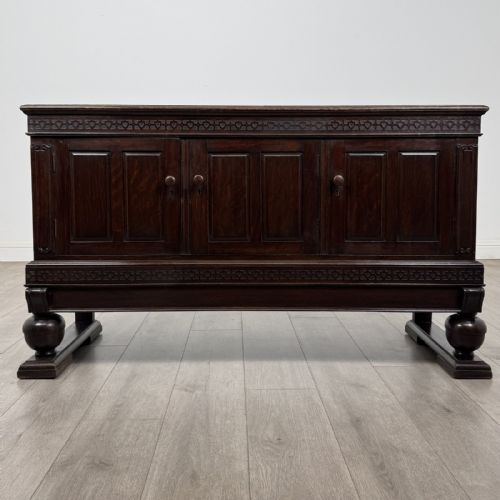
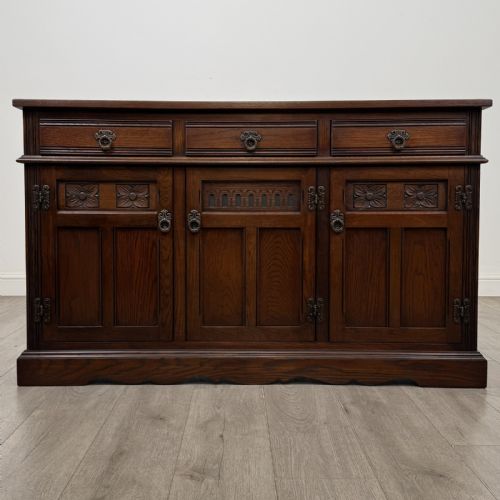
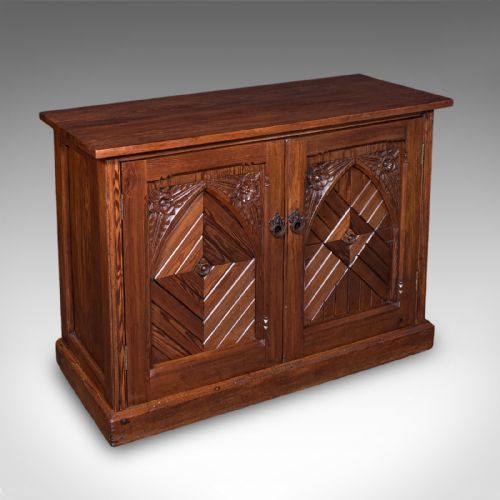
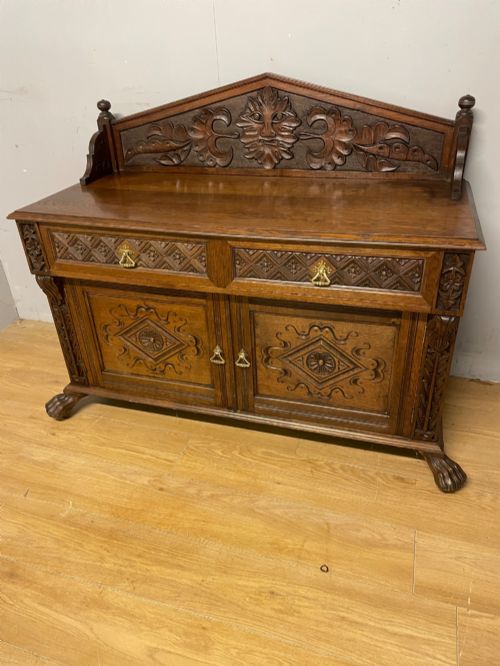
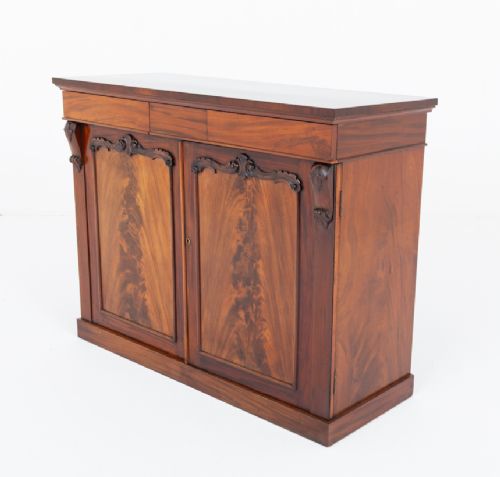
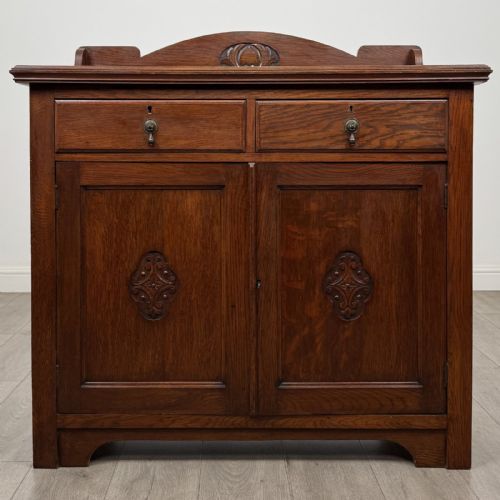
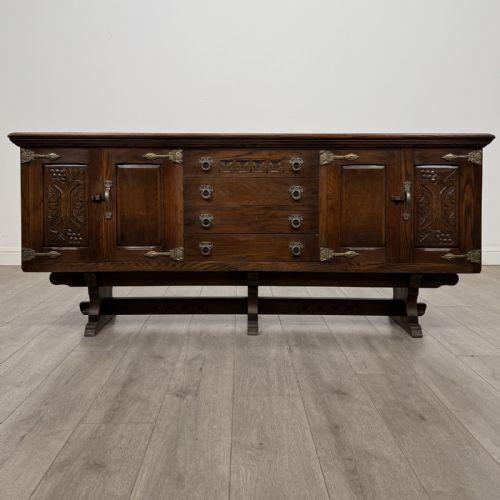
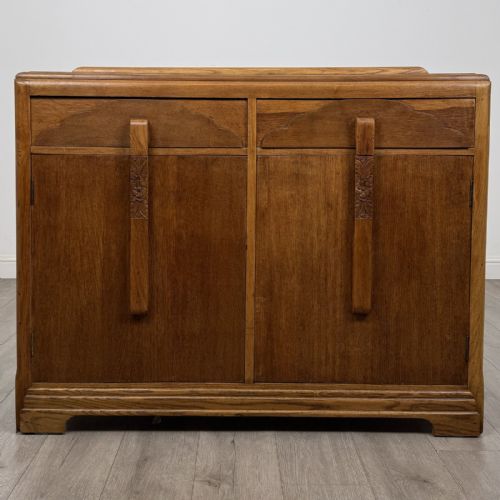
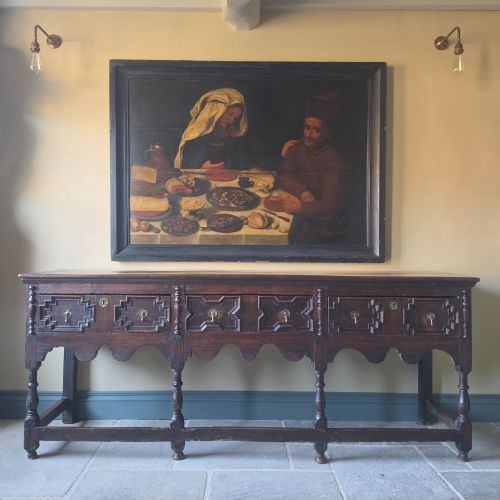
A brown carved sideboard anchors a dining room with substantial storage and rich timber presence.
Brown Carved Sideboard
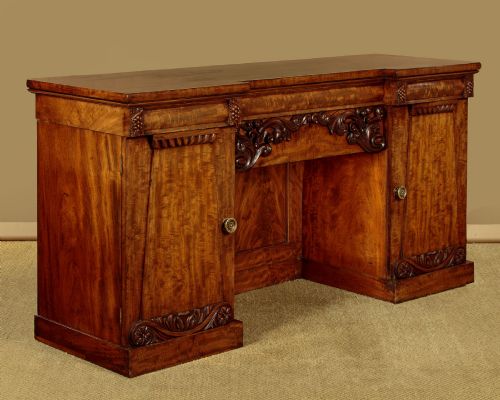
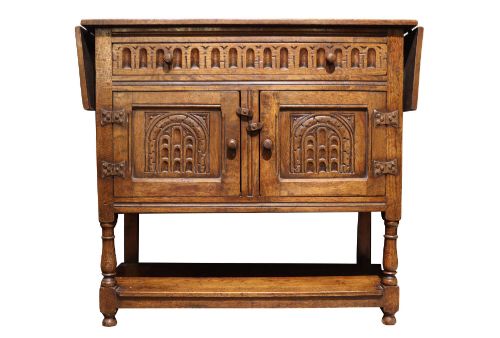
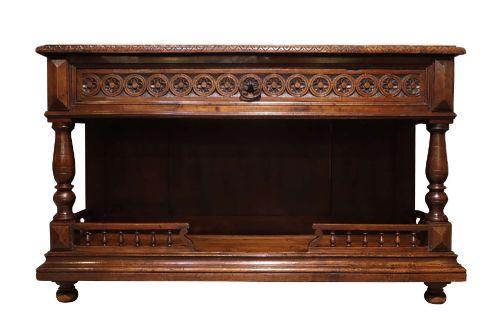
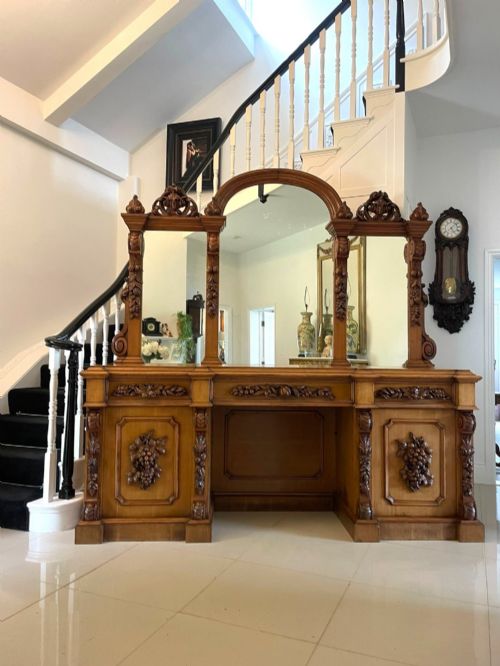
When searching for a brown carved sideboard, buyers encounter heavy storage furniture spanning the nineteenth and twentieth centuries, with oak and mahogany appearing most frequently on this page. These pieces serve dining rooms and hallways as sideboards, buffets, dressers, and side cabinets, originating from English, French, and Scottish workshops.
The assortment includes Jacobean Revival, Gothic Revival, and Arts and Crafts styles alongside Georgian, Regency, and Edwardian periods. Oak examples often display deep relief carving, while mahogany versions lean towards figured veneers and clean architectural lines.
How they were made
Cabinetmakers constructed these pieces primarily using solid oak and mahogany, often applying burr walnut or flame mahogany veneers to prominent drawer fronts and doors. Brass hardware and glass panels integrate into the designs of cabinets and dressers.
Joinery techniques combine traditional hand-cut dovetails for drawers with mortise and tenon frames. Carving is executed directly into the solid timber or onto applied panels, particularly on revival and Arts and Crafts examples.
One walnut sideboard comes equipped with its own twelve-piece cutlery set, ready for immediate dining room service.
What varies in quality
The depth and crispness of the timber carving separate standard production items from exceptional commissions. Sharp, undercut foliage and figures indicate a skilled hand, whereas shallow, mechanical stamping signals lower workshop standards.
Timber selection and veneer matching dictate the visual weight of the piece. Well-figured burr walnut or flame mahogany matched across drawer banks elevates a sideboard far above plain boards hastily assembled.
Shoolbred & Co.·Ambrose Heal for Heal & Son·Arthur Simpson of Kendal
The Brown Carved Sideboard Glossary
- Chiffonier
- A low sideboard or cabinet, frequently fitted with shelves or a mirror on the upper tier. These pieces became popular during the nineteenth century for smaller dining spaces.
- Enfilade
- A long sideboard or cabinet with three or more doors, originating in France. They provide extensive interior storage beneath a broad top surface.
- Dumbwaiter
- A tiered serving piece or small sideboard without doors, used to hold dishes during meals. Examples in the listings are constructed from carved oak.
- Pollard oak
- Oak timber taken from trees that were pruned close to the trunk, producing a clustered, knotty grain pattern. Cabinetmakers used its distinct figure for decorative panels.
- Serpentine front
- A furniture front curving outward in the centre and inward at the sides in an S-shape. This contour requires precise woodworking and timber selection.
Brown Carved Sideboard: Frequently Asked Questions
Where should a brown carved sideboard go?
These large storage pieces suit dining rooms, large hallways, or spacious living areas where their depth and height fit the proportions of the room. They serve well against a blank wall to hold tableware, linens, or serving dishes.
Because many examples incorporate heavy oak or dark mahogany, placing them in rooms with adequate natural light prevents the timber tones from making the space feel enclosed.
How do I identify a Jacobean Revival sideboard?
Jacobean Revival sideboards draw on seventeenth-century motifs, showing heavy turned legs, geometric panel moulding, and dense strapwork carving in dark oak. They often feature rectangular doors and heavily proportioned frames.
These details distinguish them from smoother Regency or Georgian pieces, which favour clean mahogany surfaces and classical proportions rather than rustic, heavy relief work.
What is the difference between a sideboard and a chiffonier?
A sideboard is typically a long, low piece designed primarily for dining room storage and serving, featuring multiple cupboards and drawers. A chiffonier is a more compact cabinet, often possessing a raised superstructure or tiers on top.
Chiffoniers emerged as versatile side cabinets for smaller parlours and dining rooms during the nineteenth century, whereas traditional sideboards accommodated larger households.
How do I care for antique oak and mahogany?
Maintain the timber surfaces by applying a traditional beeswax polish sparingly and buffing with a soft cloth to nourish the grain. Avoid placing these pieces near direct heat sources or strong sunlight, which dries out old wood and splits veneers.
Keep humidity levels in the room stable to protect the historic joinery and prevent the solid oak or mahogany panels from warping over time.