
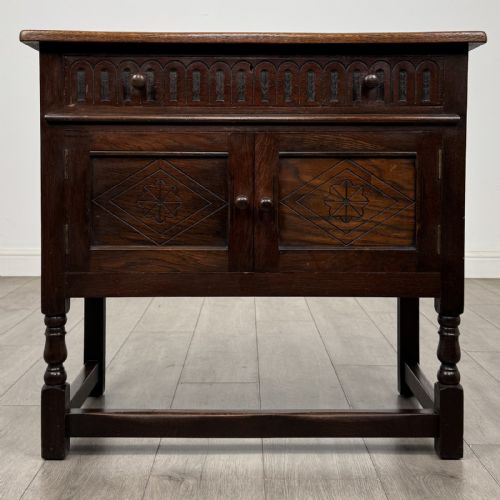
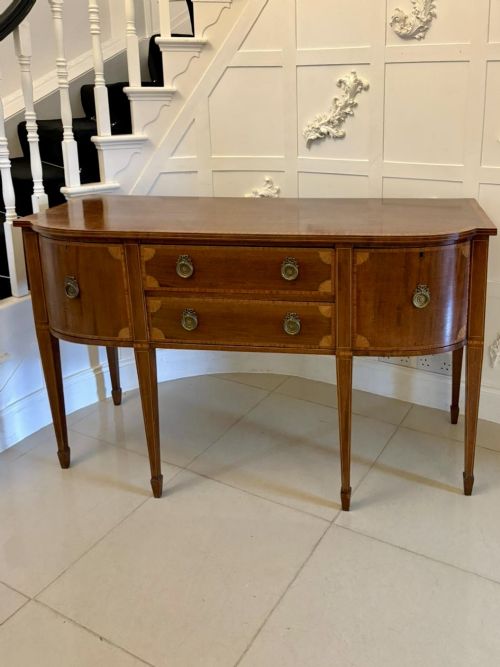
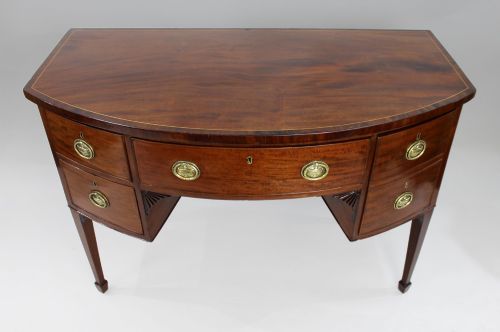
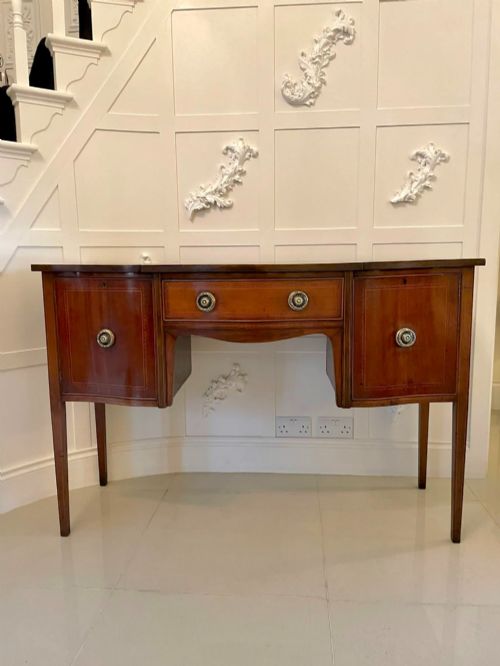
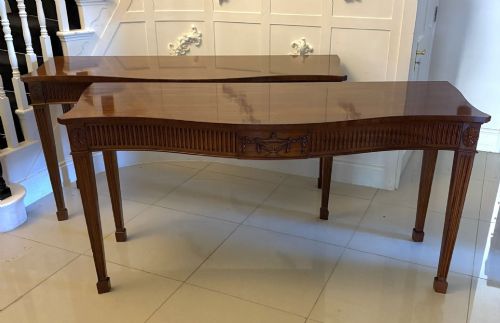
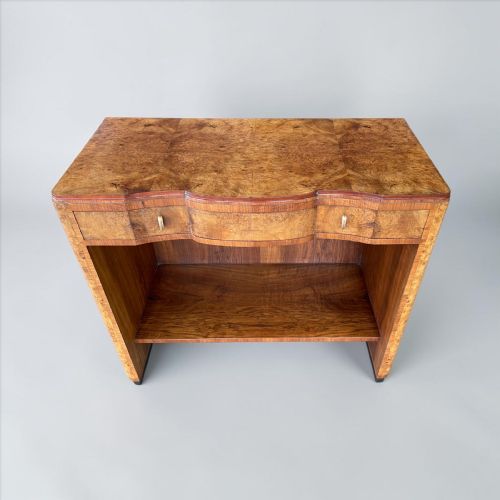
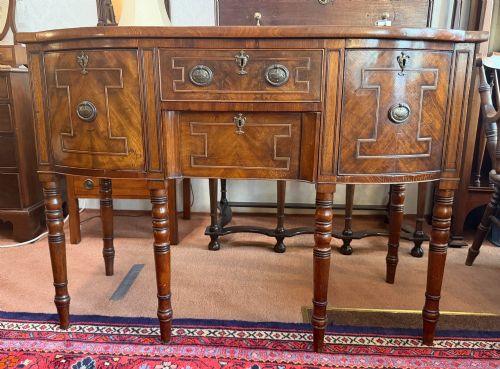
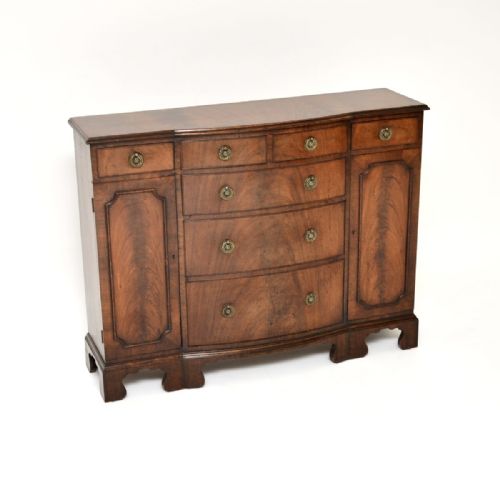
Brown Buffet Table
A brown buffet table anchors a dining room with rich timber tones and practical surface space for serving.
Brown Buffet Table
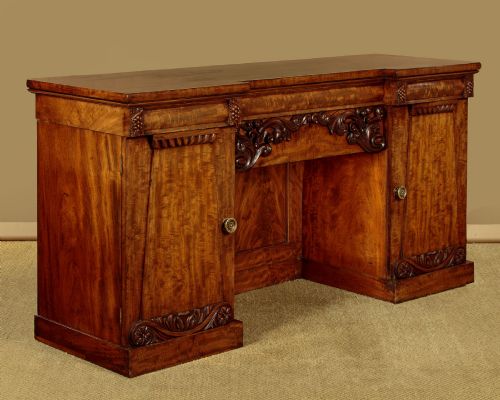
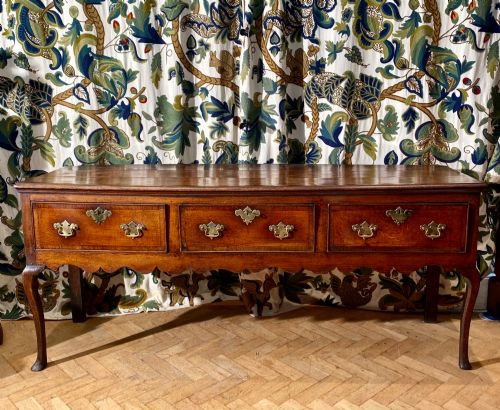
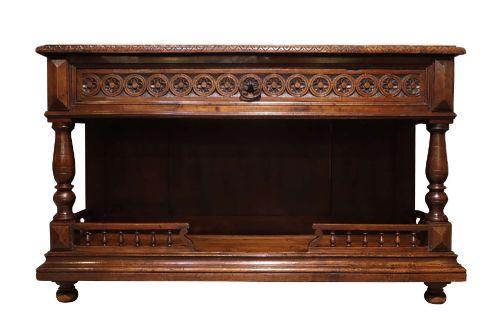
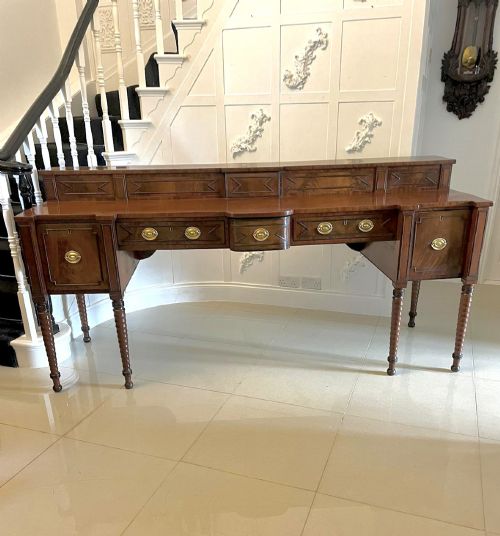
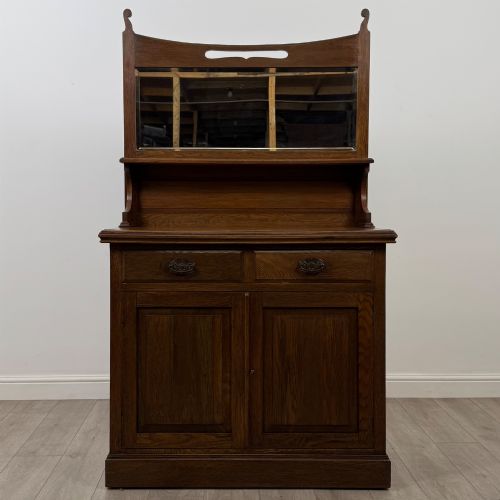
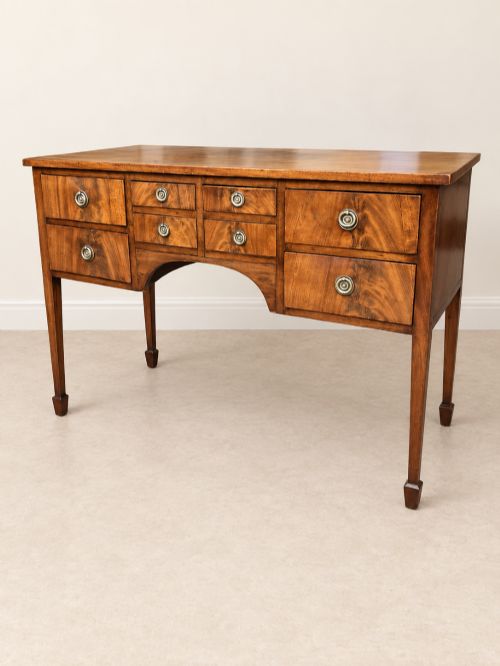
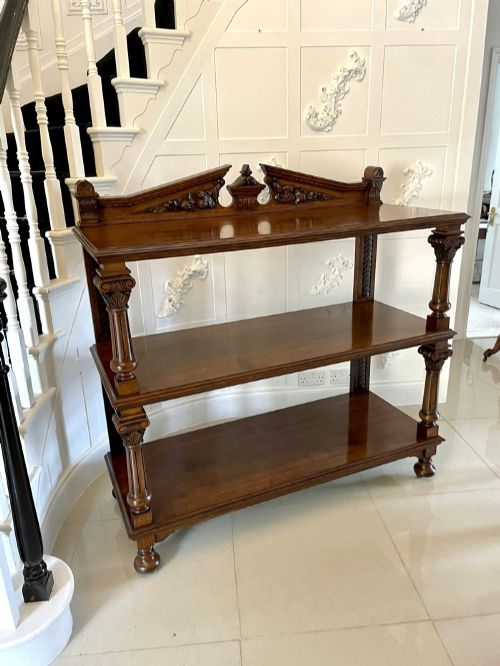
A brown buffet table encompasses diverse serving furniture including sideboards, serving tables, dresser bases, and dumbwaiters spanning the eighteenth, nineteenth, and twentieth centuries. These forms serve dining spaces by providing surface area and storage for food and tableware.
The pieces appearing on this page range from compact Georgian bow-front examples to substantial Victorian and Edwardian oak and mahogany designs. Buyers encounter various stylistic revivals alongside formal period pieces, reflecting shifting dining customs across eras.
Makers utilised rich timbers like mahogany, walnut, and oak, frequently incorporating decorative elements such as satinwood crossbanding, boxwood stringing, and elaborate carving. Each type offers distinct proportions suited to contemporary interior schemes.
How they were made
Cabinet makers constructed these brown buffet tables primarily using solid timbers and select veneers like flame mahogany and burr walnut over secondary woods. Workshops employed traditional joinery techniques to build durable carcases capable of supporting heavy serving platters and tableware.
Surface enrichment relied on precision inlays including satinwood, boxwood, and purpleheart banding, alongside carved details such as barley twist legs and neoclassical motifs. Finishing involved hand-applied polishes that emphasised the natural grain and deep brown colour of the wood.
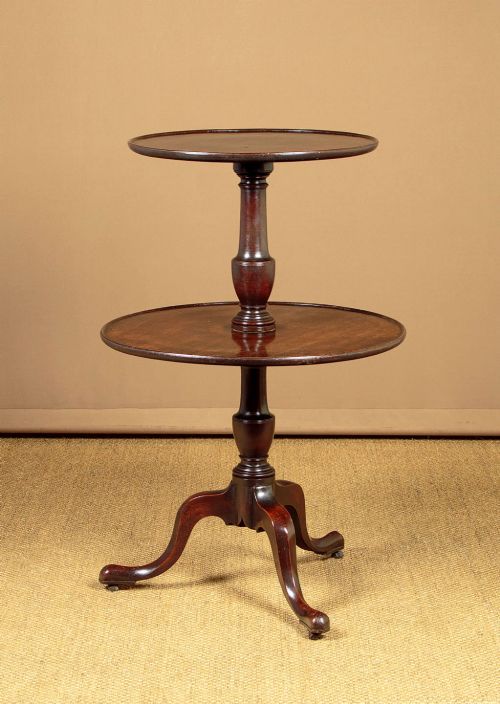
Several dumbwaiters include revolving tiers, letting diners spin their condiments without stretching across the mahogany.
What varies in quality
Construction fidelity separates standard utilitarian examples from masterwork brown buffet tables, visible in the precision of the timber joints and the selection of figured veneers. Superior pieces display carefully matched grain patterns across drawer fronts and top surfaces.
The refinement of carved ornament and the integration of secondary woods define the upper tier of craftsmanship. Finer iterations exhibit crisp detailing on mouldings and legs, whereas simpler pieces rely on plain surfaces and robust, straightforward framing.
Maurice Adams·M. D. Miller & Sons
The Brown Buffet Table Glossary
- Bow front
- A convex curved cabinet front that swells outward toward the centre. This configuration softens the room's geometry while adding interior depth.
- Serpentine
- A shaped furniture front featuring a convex central section flanked by concave curves. It requires advanced woodworking skill to execute properly.
- Crossbanding
- A border veneer applied around the perimeter of a surface with the grain running perpendicular to the central panel. This technique creates a distinct visual framing effect.
- Dumbwaiter
- A multi-tiered serving stand with revolving or stationary shelves used for holding dishes. These tiered pieces often feature central pedestals with tripod or multiple-leg bases.
- Dresser base
- A low wooden storage unit featuring drawers and cupboards beneath a flat top. These sturdy pieces originated in kitchens and dining areas for holding culinary utensils.
Brown Buffet Table: Frequently Asked Questions
What is a brown buffet table used for?
These tables provide a functional surface for presenting food and drink during meals while offering enclosed storage for linens and serving dishes.
Their substantial tops and internal compartments make them versatile additions to dining rooms and living spaces alike.
How do I date a brown buffet table?
Dating relies on identifying characteristic period details, timber choices, and construction methods associated with eras like the Georgian, Victorian, or Edwardian periods.
Hardware styles, secondary woods, and regional cabinet-making traits also provide reliable chronological clues.
Are these tables suitable for modern homes?
Their classic proportions and warm timber tones allow them to integrate smoothly into contemporary interior design schemes.
They serve as practical sideboards in modern dining areas or as statement display surfaces in hallways.
How do I care for the wood surface?
Regular dusting with a soft cloth keeps the timber free from abrasive particles that can dull the polished finish over time.
Applying appropriate wax occasionally helps nourish the wood and maintain its rich brown lustre.