
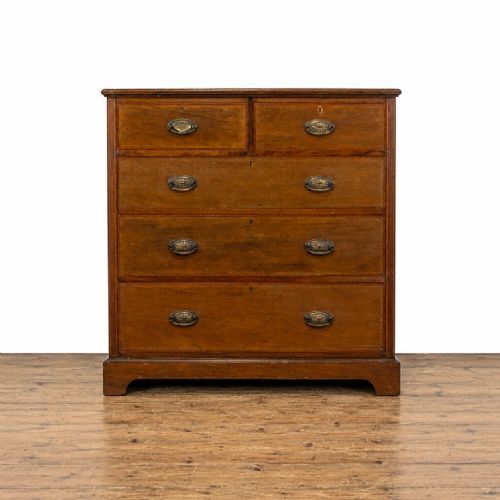
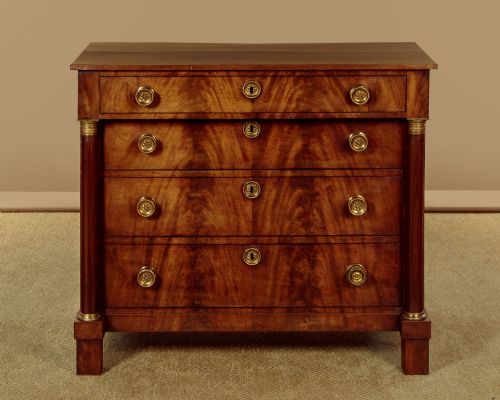
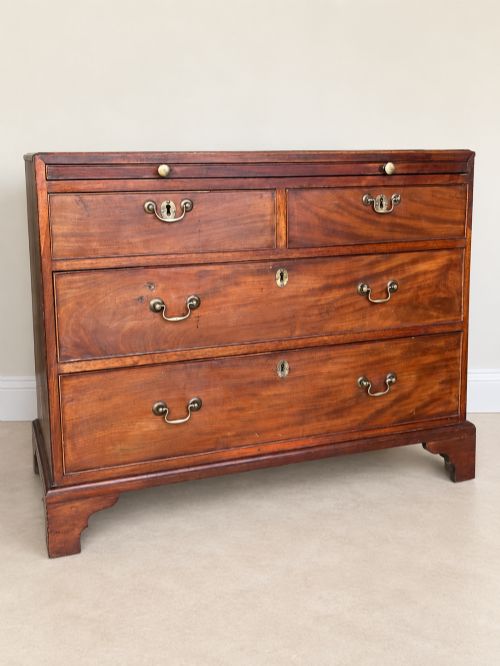
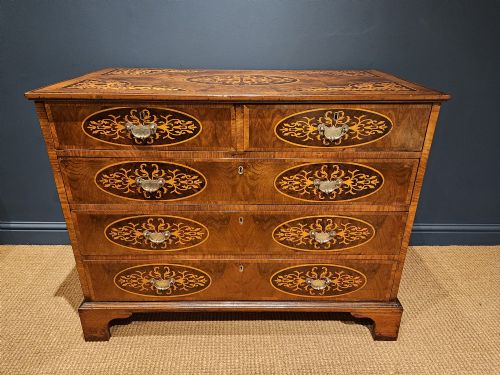
Brown Bedroom Chest
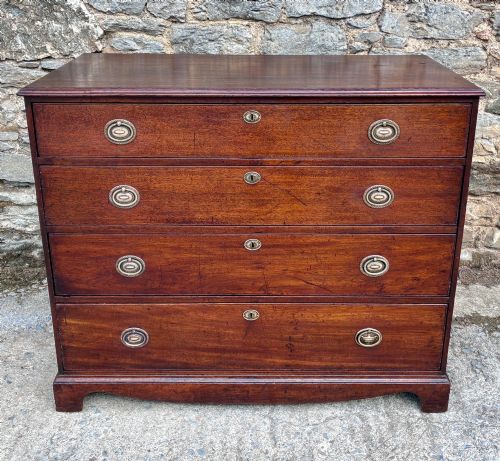
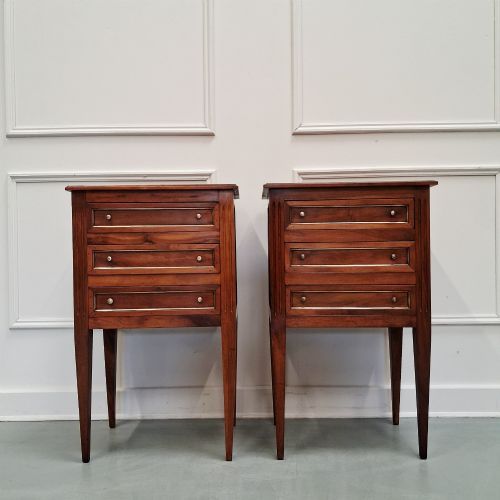
A brown bedroom chest provides substantial bedside or dressing storage in mahogany, walnut, or oak, anchoring a traditional sleeping space with rich timber grain.
Brown Bedroom Chest
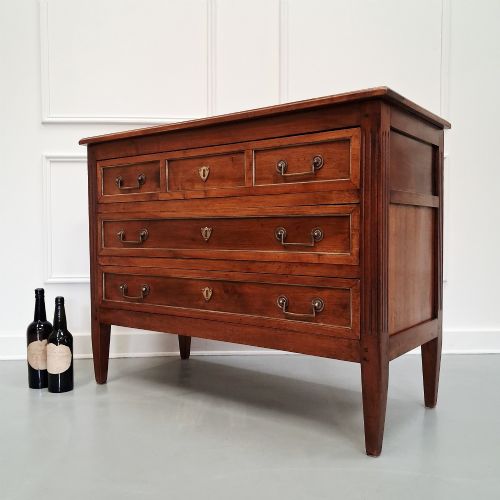
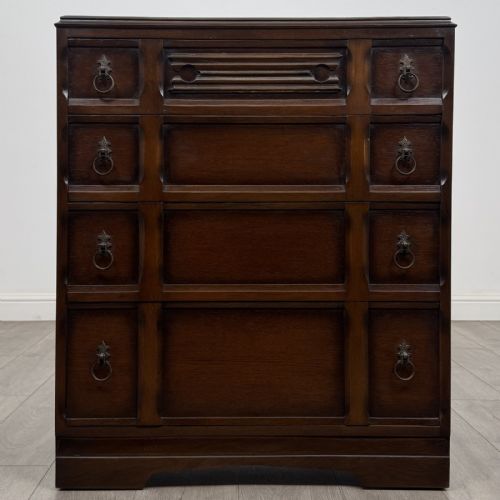
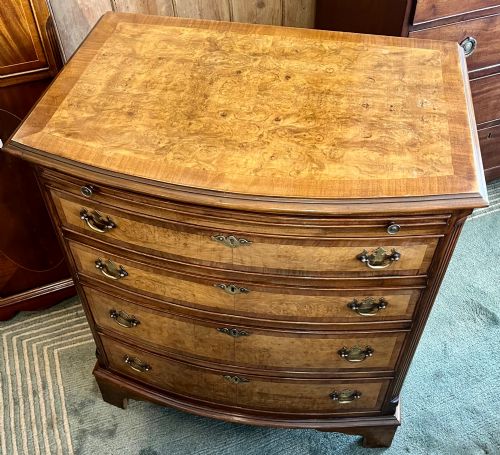
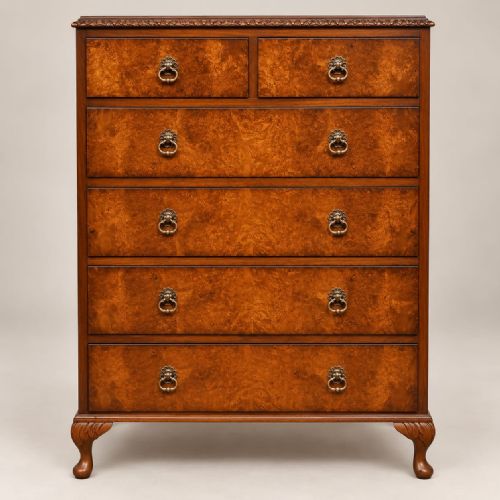
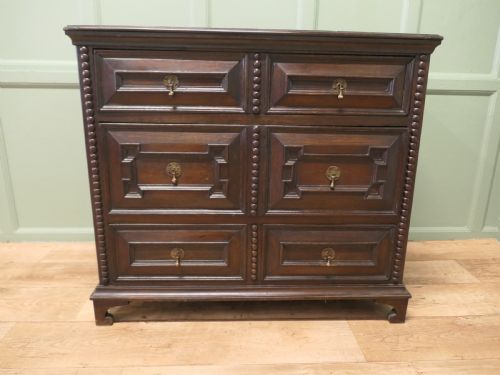
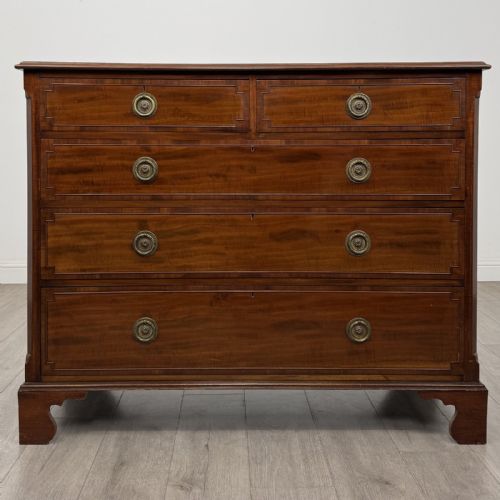
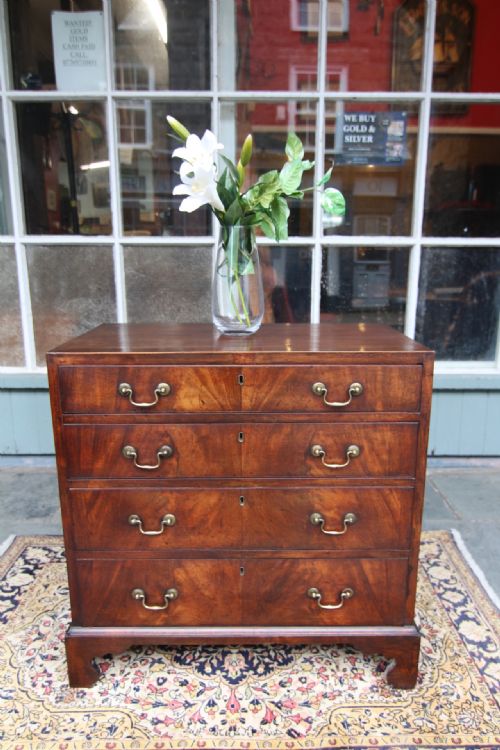
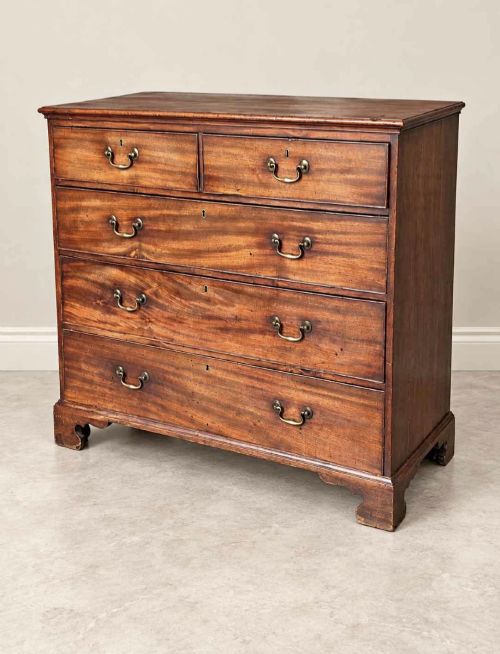
A brown bedroom chest encompasses forms such as chests of drawers, tallboys, nightstands, commodes, and dressing tables spanning the Georgian, Victorian, Edwardian, and twentieth-century periods. The most common examples met on this page are mahogany and walnut chests featuring varying drawer configurations, from compact bedside models to tall multi-drawer tallboys.
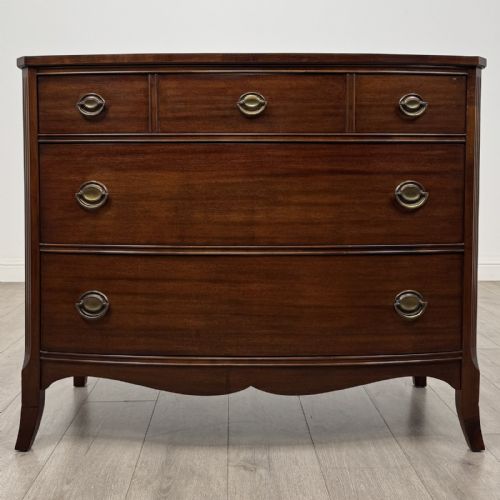
Pieces range from eighteenth-century Georgian and Regency designs through to later nineteenth-century Victorian workshops and early twentieth-century interpretations. Buyers encounter standard rectangular carcases alongside bow-front, serpentine, and tall chest-on-chest constructions designed for domestic storage.
Materials and Construction
Cabinetmakers utilised solid timbers and figured veneers, predominantly mahogany, oak, and walnut, often enhanced by burr walnut or flame mahogany grain patterns on drawer fronts. Brass handles, cup handles, and bracket or bun feet complete the structural assembly of these traditional carcases.
Joinery methods reflect the period of manufacture, utilising dovetailed drawer construction and solid timber secondary woods. Surface finishes rely on traditional polish and wax techniques that highlight the natural figure of the wood.
Listings feature timbers including mahogany, walnut, burr walnut, oak, ash, and teak across Georgian, Victorian, Edwardian, and twentieth-century periods.
Evaluating the Pieces
Quality rests in the selection of timber veneers and the crispness of carved or inlaid details, such as bracket feet, raised galleries, and brass hardware. Superior examples display carefully matched grain patterns across drawer fronts and solid secondary timbers within the carcase.
Proportion and scale dictate the desirability of individual pieces, with smaller bow-front or slim tallboy formats demonstrating particular cabinetmaking skill. The integration of original fittings and the stability of the drawer action further distinguish finer examples.
Shapland & Petter
The Brown Bedroom Chest Glossary
- Bow-front
- A furniture front that curves outward in a convex shape. This profile appears frequently on Regency and later mahogany chests to soften the rectangular carcase.
- Tallboy
- A tall chest of drawers, often constructed as a chest on chest. These vertical pieces maximise storage while occupying a compact floor footprint.
- Bracket foot
- A foot shape resembling a bracket, mitred at the corner. Georgian and later chests often stand on these architectural supports.
- Wellington chest
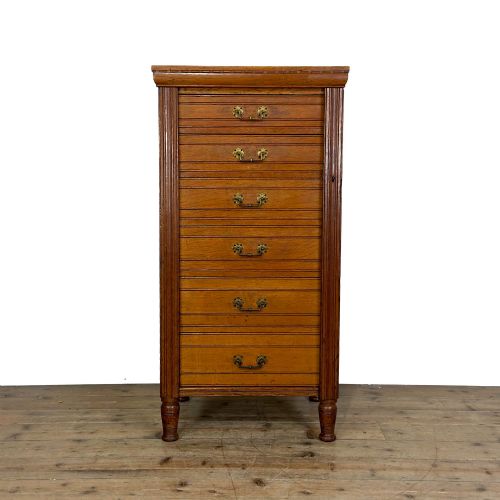
- A tall, narrow chest of drawers secured by a locking side flap. Victorian examples typically feature multiple graduated drawers.
- Commode
- A low chest of drawers or cabinet. French and English variants in walnut or mahogany serve bedside and dressing room functions.
Brown Bedroom Chest: Frequently Asked Questions
What is a brown bedroom chest?
A brown bedroom chest is a traditional wooden storage item, typically a chest of drawers, commode, or bedside table made from timbers such as mahogany, walnut, or oak.
These pieces provide functional surface space and drawer storage within domestic sleeping quarters across various historical periods.
How do I date a wooden chest?
Dating relies on observing construction methods, timber choices, handle styles, and overall aesthetic characteristics associated with periods like the Georgian era or Victorian decades.
Secondary woods, dovetail precision, and hardware types offer reliable clues to the decade of manufacture.
Where were these chests used?
These chests functioned primarily in bedrooms, dressing rooms, and boudoirs to store clothing, linens, and personal accessories.
Smaller variants served beside beds as nightstands or commodes for nighttime essentials.
How do I care for timber surfaces?
Maintenance involves applying appropriate furniture wax periodically and protecting the wood from direct sunlight and extreme temperature shifts.
Dusting with a soft, dry cloth preserves the polished finish and natural grain of the mahogany or walnut.