






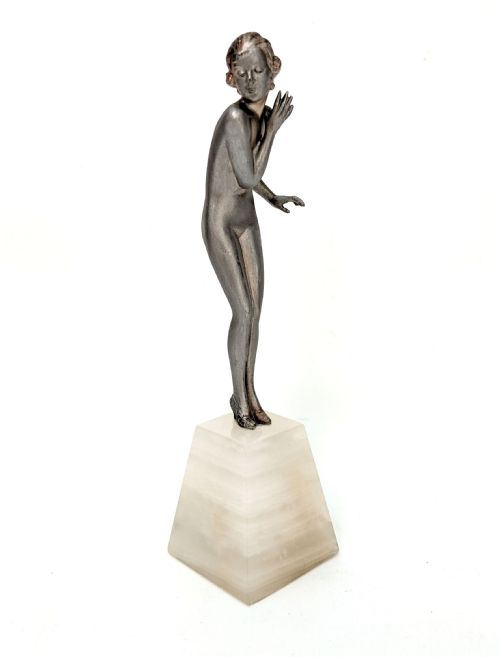
Bronzed Spelter Dancer
A bronzed spelter dancer brings the unmistakable geometric energy and kinetic grace of the nineteen-twenties and thirties straight into a room.
Bronzed Spelter Dancer
A bronzed spelter dancer embodies the quintessential Art Deco aesthetic of the nineteen-twenties and nineteen-thirties, capturing female figures in dynamic motion or poised repose. These pieces take several distinct forms, appearing most frequently as standalone spelter figures, table lamps, and table lighters.
The figures often depict women with outstretched arms, performing dances, or holding instruments alongside musicians. Many examples mount these metal figures upon heavy contrasting plinths made of onyx, marble, or alabaster.
How they were made
Makers utilised spelter, an alloy typically based on zinc, cast into moulds to shape the intricate bodies and garments of the figures. This metal then received a dark patinated or bronzed finish to simulate the appearance of more expensive cast bronze.
The finished metal figures were bolted onto natural stone bases such as marble, onyx, or alabaster, frequently incorporating glass elements like frosted lamp shades or vessels for table lighters.
Bronzed Spelter Dancer Retail Price Guide 2026
Typical asking prices for bronzed spelter dancer among the pieces listed under this phrase on Sellingantiques today, from the lower quarter to the upper quarter. They describe what is for sale here now, not the wider market.
Some elegant dancing ladies moonlight as table lighters, proving that interwar sophistication also knew how to keep a flame handy.
What varies in quality
The choice and thickness of the base material also mark the tier of the piece, with richly variegated marble and genuine onyx bases elevating the overall presence compared to simpler wooden mounts.
Josef Lorenzl
The Bronzed Spelter Dancer Glossary
- Spelter
- A zinc-based alloy commonly utilised as a less costly alternative to bronze for decorative sculptures and light fittings during the early twentieth century. It accepts metallic finishes and patination well.
- Art Deco
- The dominant design style of the nineteen-twenties and nineteen-thirties, characterised by stylised geometric forms, streamlined shapes, and depictions of modern movement. It influences the posture and clothing of these figures.
- Patina
- The surface appearance achieved through chemical treatment or ageing, giving the base metal its characteristic dark bronzed tone. This finish defines the visual texture of the garment and skin.
- Onyx
- A banded variety of chalcedony stone frequently employed for the heavy geometric bases that anchor these figures. Its natural striations provide a decorative contrast to the dark metal.
Bronzed Spelter Dancer: Frequently Asked Questions
What is a bronzed spelter dancer?
A bronzed spelter dancer is a decorative figurine or functional object created in the Art Deco style during the nineteen-twenties and thirties. These pieces depict female dancers cast in zinc alloy with a dark metallic finish.
They frequently double as sculptural table lamps or table lighters, mounted on stone bases like onyx or marble.
How were these figures used originally?
These pieces served primarily as decorative interior ornaments for mantelpieces, sideboards, and occasional tables in interwar homes. Many examples incorporated functional elements directly into the design, functioning as lighting fixtures or desk accessories.
The dual role of sculpture and illumination made them popular additions to contemporary living spaces and studies.
How do I style a dancer lamp?
Placing a dancer lamp upon a solid wood sideboard or a marble-topped table allows the frosted glass and stone base to catch ambient light effectively. Pairing the piece with complementary interwar decor enhances the geometric lines of the period.
Ensure the lamp sits on a stable, level surface due to the weight of the stone plinth and metal casting.
How do I date an Art Deco figure?
Dating relies upon stylistic markers such as the characteristic costuming, hair styling, and streamlined postures typical of the nineteen-twenties and thirties. Material combinations, including spelter mounted on heavy onyx or alabaster bases, point firmly to this interwar manufacturing window.
Makers' signatures stamped directly into the metal casting can also help pinpoint specific origins within the period.