




Bronze Tent Chandelier
These bronze tent chandeliers combine heavy metal frames with shimmering glass drops, offering a grand focal point for high-ceilinged rooms.
Bronze Tent Chandelier
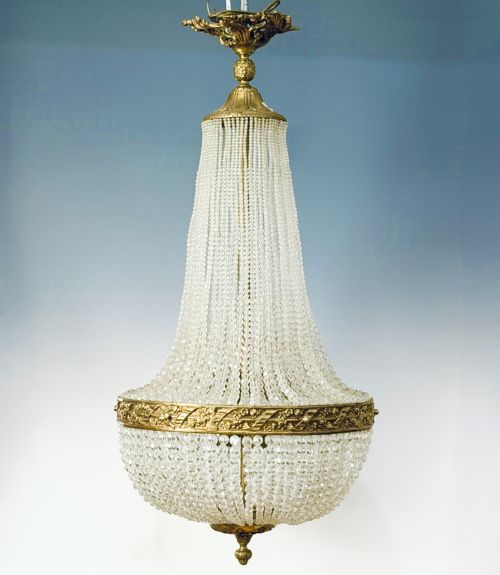
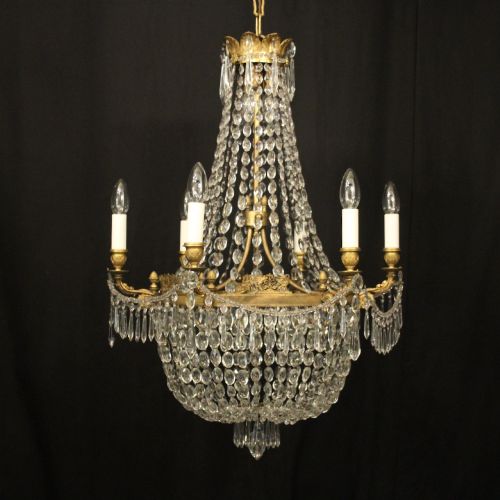
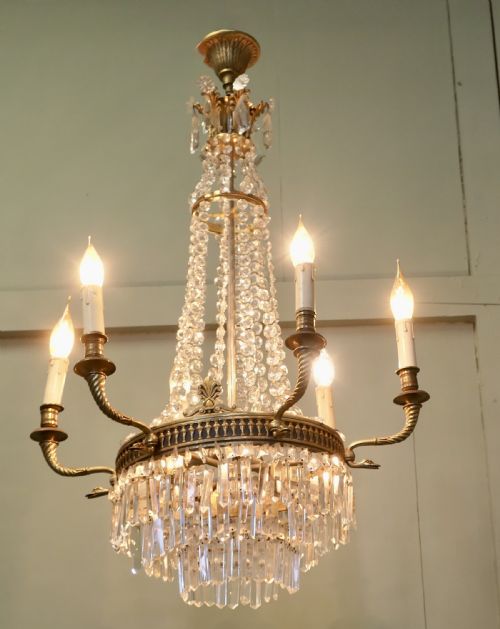
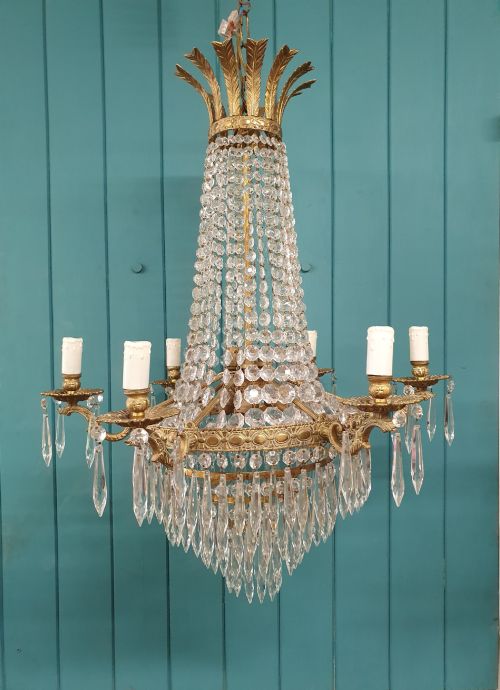
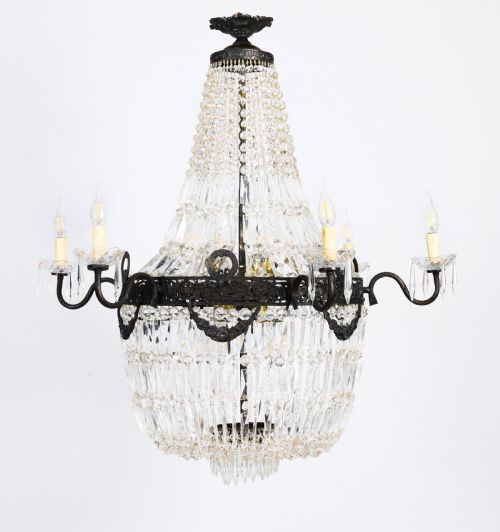
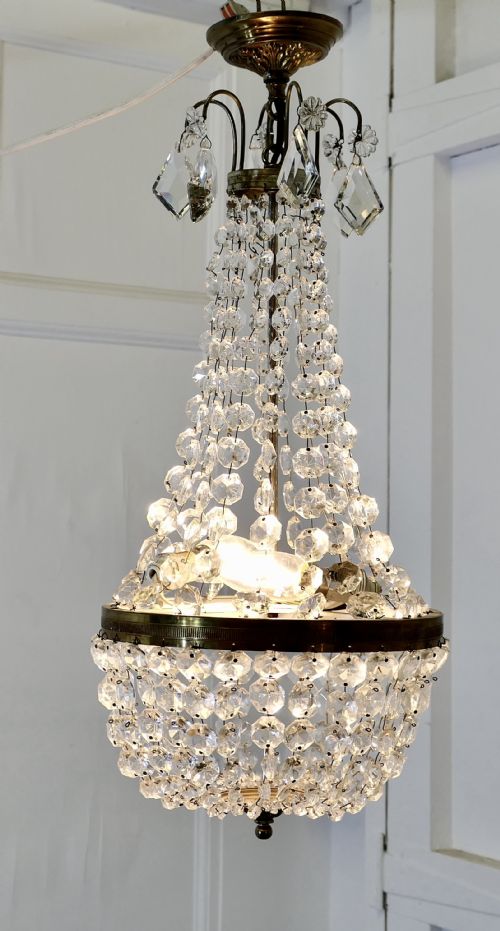
A bronze tent chandelier takes its name from the distinctive conical canopy of crystals or beads that stretches from a crown ring down to a wider lower circlet, creating the silhouette of a tent. Beneath this upper canopy, many examples incorporate a waterfall formation of cascading glass drops that conceals the central metal stem.
The pieces available here lean heavily into French decorative traditions, spanning the nineteenth century through to the interwar decades of the 1920s and 1930s. Buyers will regularly encounter French Empire, Louis Revival, and Neoclassical styles among these listings, alongside variations described simply as French chateau pieces.
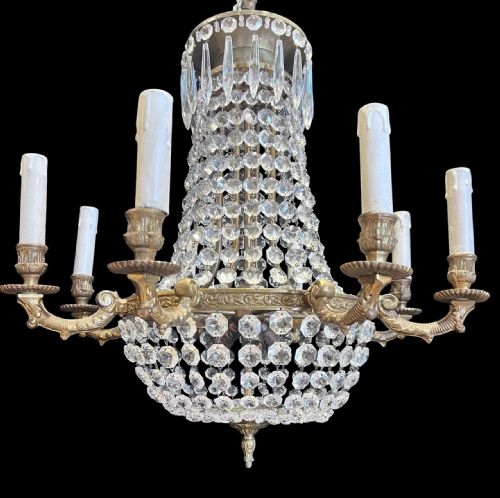
Lighting capacity varies significantly across these fixtures, ranging from single-light reading lamps to large ballroom chandeliers holding fourteen or sixteen lights. Smaller examples feature six branches or leaf decorations, while larger iterations provide extensive illumination suitable for principal reception rooms.
Materials and construction
The foundational structures rely on cast bronze, patinated bronze, or gilt brass, providing a sturdy metal skeleton capable of supporting dozens of glass ornaments. Some pieces utilise plain brass or mixed metal framing, while others showcase gilded bronze surfaces that reflect the candlelight or electric bulbs suspended within.
Prisms, droplets, and cascading strands are fashioned from clear glass, crystal, and cut crystal, wired directly to the metal armature to form the characteristic tent and waterfall tiers. Leaf decorations and decorative bobeches are frequently cast directly into the bronze framework near the arms.
Bronze Tent Chandelier Retail Price Guide 2026
Typical asking prices for bronze tent chandelier among the pieces listed under this phrase on Sellingantiques today, from the lower quarter to the upper quarter. They describe what is for sale here now, not the wider market.
Listings feature pieces dated from the nineteenth century up to 1930, utilising bronze, brass, crystal, and glass across French Empire and Louis Revival styles.
Judging the standard of execution
Quality reveals itself in the crispness of the bronze casting and the depth of the chasing on the metal arms and crowns. Superior examples display sharply defined leaf motifs and refined patination, whereas lesser versions rely on softer contours and simpler foundry work.
The clarity and cutting of the crystal drops further differentiate the tier of a fixture. Heavily faceted cut crystal catches and refracts light with far greater brilliance than pressed glass alternatives, altering the overall visual weight of the chandelier.
The Bronze Tent Chandelier Glossary
- Tent
- The upper conical network of strung glass beads or crystals stretching from a top ring to a wider lower band. This arrangement forms the signature silhouette of the fixture.
- Waterfall
- A cascading tier of glass drops falling below the main circlet. It softens the vertical lines of the central metal stem.
- Bobeche
- A small saucer-like dish fitted beneath the candle nozzle to catch melting wax. In these pieces, they are often cast in bronze or brass to match the arms.
- Gilt bronze
- Bronze that has been coated with a thin layer of gold leaf or gilt. This finish provides a warm, reflective surface that complements crystal elements.
Bronze Tent Chandelier: Frequently Asked Questions
How do I clean a bronze tent chandelier?
Cleaning requires removing dust with a soft brush and wiping the metal components with a dry cloth. Glass elements can be washed in situ using a mild soapy solution and a fine spray.
Care must be taken to avoid harsh chemical cleaners on patinated or gilded bronze surfaces. Ensuring the power is completely disconnected before undertaking any maintenance is essential.
Are these chandeliers suitable for low ceilings?
Most pieces in this category are designed for rooms with generous vertical clearance due to their hanging height and complex multi-tiered structures. Smaller single-light or compact six-branch variants can occasionally work in more modest spaces.
Buyers should carefully measure the drop of the chandelier against the room height. The fixture must hang high enough to clear head height while remaining low enough to anchor the space.
How do I distinguish French Empire style from Louis Revival?
French Empire pieces typically adhere to the neoclassical symmetry, military motifs, and restrained classical ornamentation popular during the early nineteenth century. Louis Revival works draw upon the more exuberant flourishes of the seventeenth and eighteenth-century French courts.
Revival pieces produced around the early twentieth century often combine these earlier design vocabularies with updated internal wiring. Examining the casting style and construction joints helps clarify the actual period of manufacture.
What kind of wiring do these antique chandeliers use?
Older fixtures frequently require rewiring to meet contemporary safety standards before installation in a modern home. Many pieces have been adapted over time to accept standard electrical lamp holders rather than actual candles.
Qualified electricians can easily integrate modern internal wiring through the hollow central stems of these metal frames. This update preserves the exterior appearance while ensuring safe daily operation.