

Bronze Glass Ceiling Light
A bronze glass ceiling light brings heavy metal and brilliant glass together to illuminate a room with historical presence.
Bronze Glass Ceiling Light
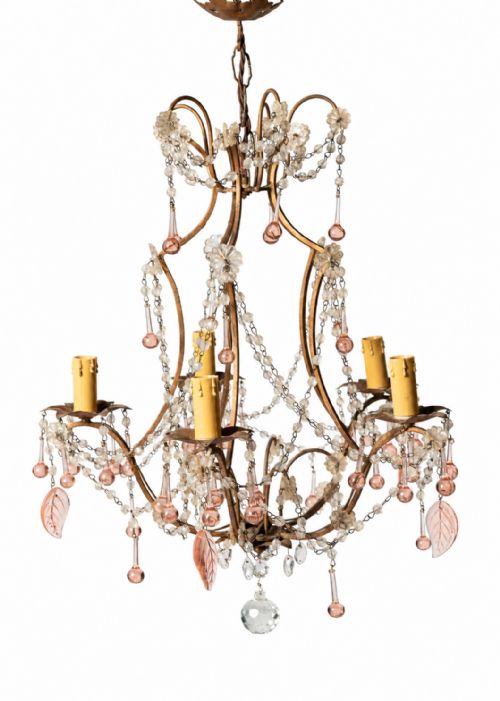
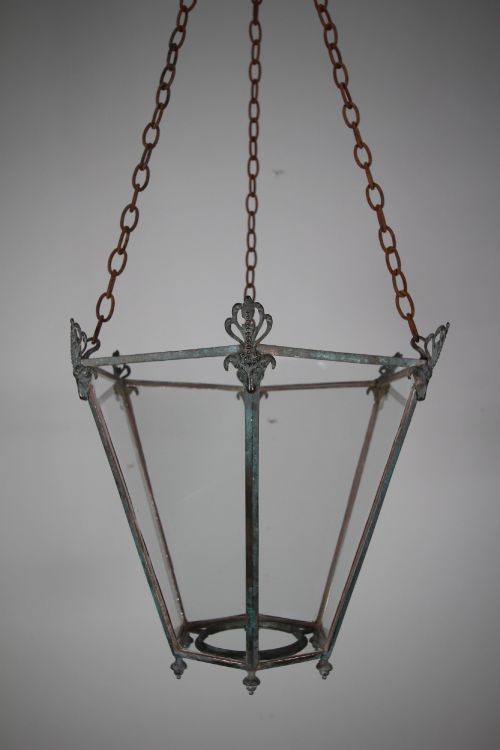
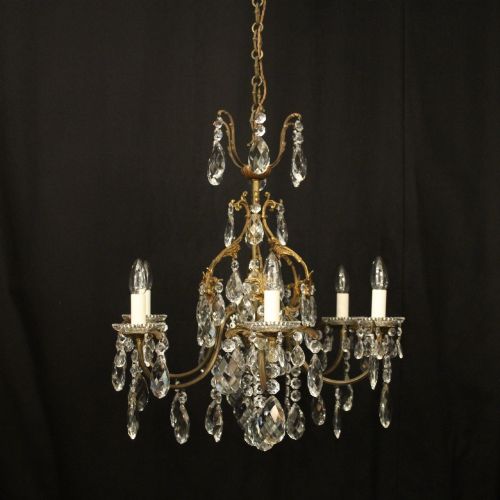
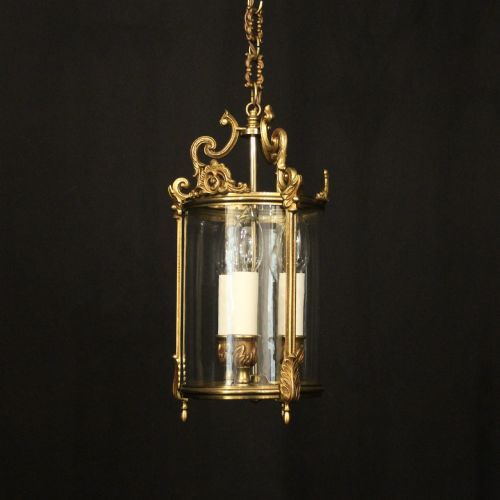
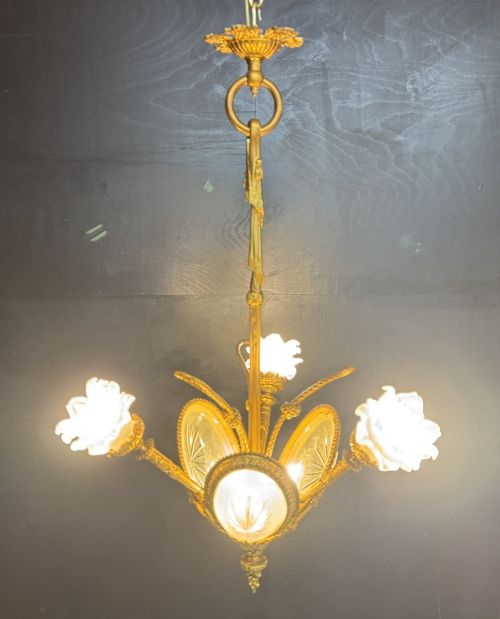
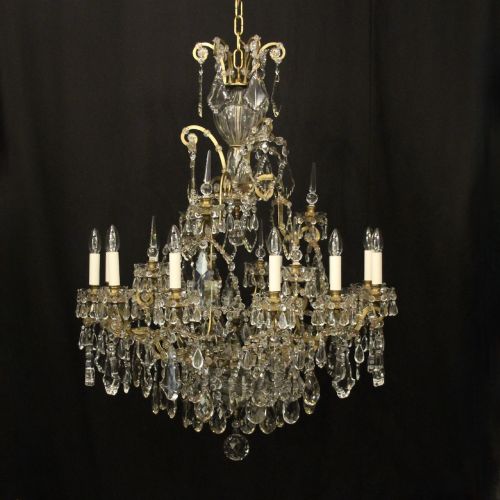
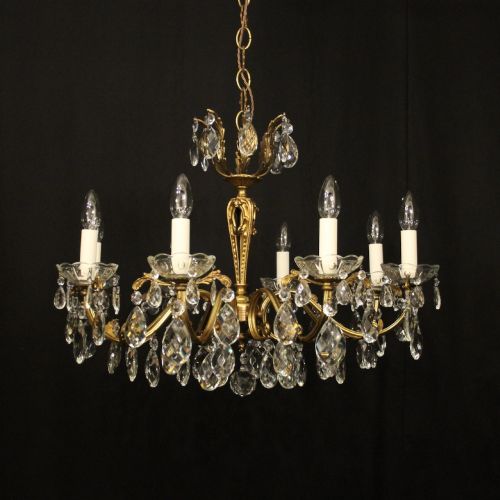
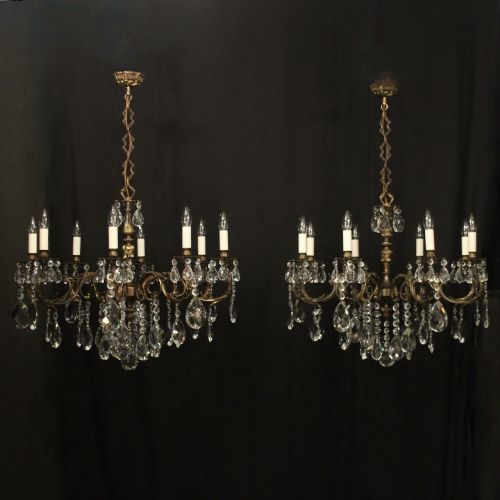
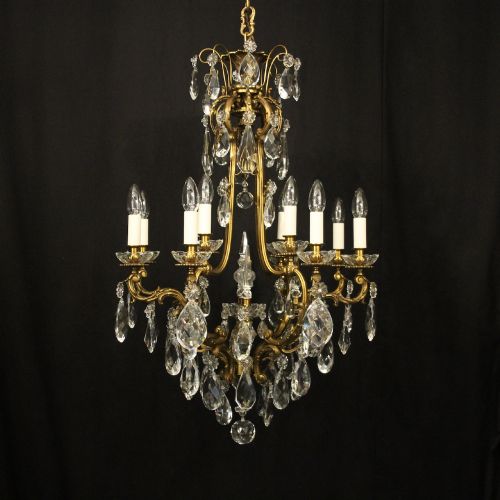
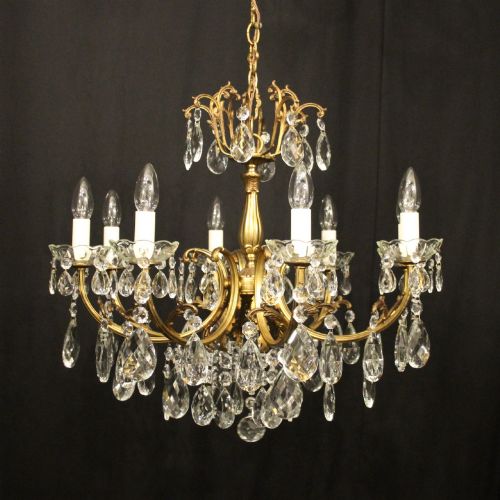
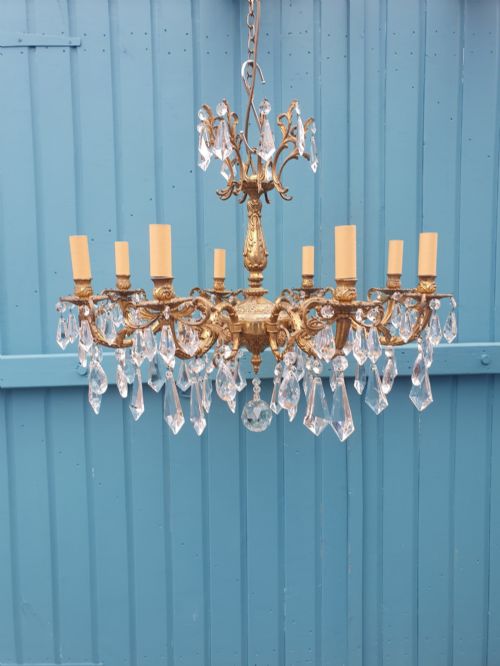
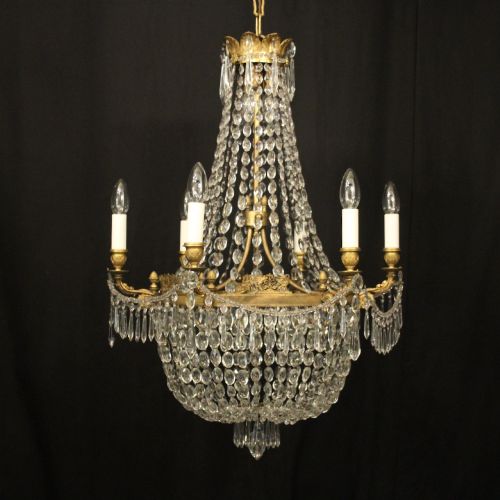
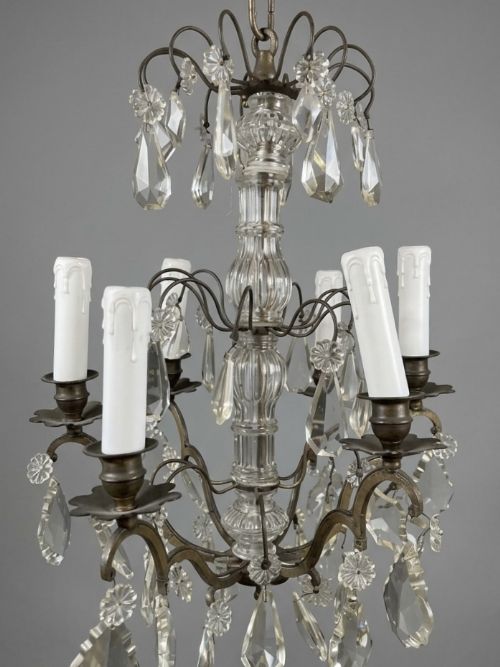
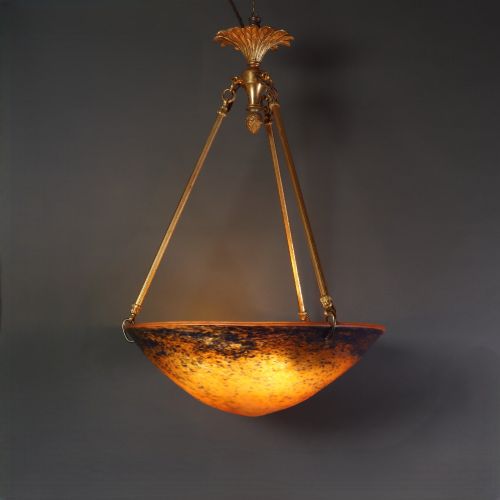
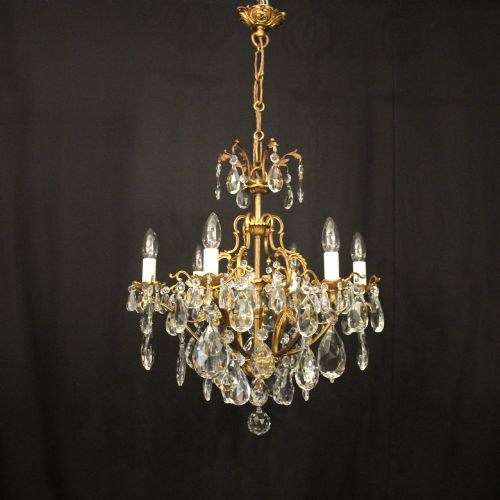
A bronze glass ceiling light encompasses hanging fixtures that combine metallic frames with glass or crystal elements, often referred to through search terms that emphasise this material pairing. The selection ranges from substantial multi-armed chandeliers to smaller hall lanterns and flat ceiling bowls.
The objects span periods from the nineteenth century through the Edwardian era and into the 1920s and 1930s Art Deco movement. French designs heavily populate the selection, frequently drawing on neoclassical, empire, and rococo revival aesthetics alongside geometric modernist lines.
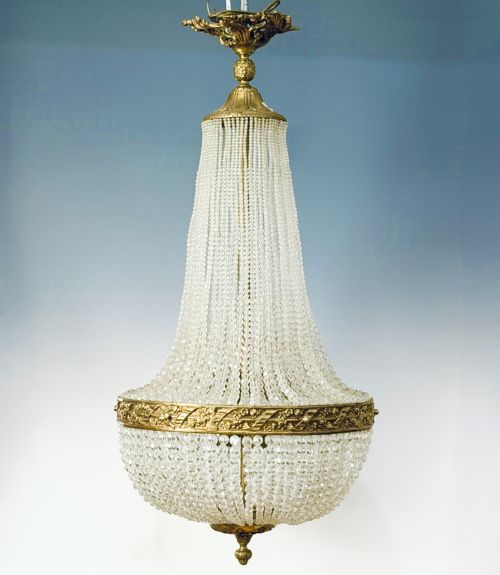
Buyers encounter forms like tent and waterfall chandeliers adorned with crystal drops alongside enclosed glass lanterns and slip shade fixtures. These pieces originate predominantly from French workshops and American makers of the early twentieth century.
Materials and Construction
Makers utilised cast bronze, brass, or gilt metal to build the structural skeletons of these lights, providing a sturdy framework to support glass components. Ormolu and silver gilt treatments frequently add surface sheen to the metallic mounts.
Glass and crystal elements are integrated through cut drops, moulded shades, and convex panels held securely within the metal armature. These transparent and translucent components refract the internal light source across the room.
Bronze Glass Ceiling Light Retail Price Guide 2026
Typical asking prices for bronze glass ceiling light among the pieces listed under this phrase on Sellingantiques today, from the lower quarter to the upper quarter. They describe what is for sale here now, not the wider market.
Angels occasionally keep watch overhead through flying cherub figures holding glass spike chandeliers.
Assessing Quality
The precision of the metal casting and the depth of the gilding set superior examples apart from simpler production pieces. Crisp chased details on bronze mounts indicate skilled artisan work rather than mass-produced output.
The clarity and cut of the crystal or glass determine the brilliance of the fixture when illuminated. Intricately faceted drops and heavy moulded glass shades reflect greater care in material selection.
Charles Schneider·Degué
The Bronze Glass Ceiling Light Glossary
- Plafonnier
- A ceiling light fixture that sits flush or close to the ceiling surface. These often feature moulded or slip-shaded glass bowls popular in the Art Deco period.
- Ormolu
- Gilded bronze applied to decorative mounts and hardware. The technique involves fusing a mercury-gold amalgam to the bronze base.
- Slip Shade
- A moulded piece of art glass that fits into a metal frame to form a bowl-like pendant light. These pieces define many American ceiling lights from the nineteen-thirties.
- Tent and Waterfall
- A lighting configuration where strings of crystal beads form a conical tent shape above a lower cascade of drops. This arrangement maximises light refraction across large rooms.
Bronze Glass Ceiling Light: Frequently Asked Questions
How do I hang a heavy bronze glass ceiling light safely?
These fixtures require direct anchoring to a ceiling joist using a metal mounting bracket capable of supporting the combined weight of the bronze frame and crystal glass. Professional installation is strongly recommended for heavier multi-armed chandeliers and large lanterns.
Electrical wiring must also be inspected and updated to meet current safety standards before hanging an antique fixture. Ensure the junction box can bear the load safely.
What rooms suit a bronze glass ceiling light best?
Pendant lights and hall lanterns work well in entranceways and corridors where downward illumination is practical. Larger chandeliers suit dining rooms and living spaces with sufficient ceiling height.
Consider the scale of the room relative to the fixture diameter to maintain balanced proportions. Low ceilings benefit from flush plafonniers rather than hanging chandeliers.
How do I clean the crystal and bronze on these lights?
Dust the bronze frame regularly with a dry microfibre cloth to prevent grime accumulation. Avoid harsh chemical cleaners that can strip the original gilding or patina.
Crystal drops can be washed gently with warm water and mild soap while attached, or removed individually for thorough cleaning. Ensure the power is completely switched off before maintenance.
How can I tell an Art Deco light from an earlier style?
Art Deco ceiling lights from the nineteen-twenties and thirties favour geometric lines, stylised motifs, and moulded slip shades. These contrast sharply with the elaborate curves and leaf decorations of nineteenth-century revival styles.
Materials also shift during the Art Deco period toward frosted glass and streamlined metal mounts. Earlier pieces rely heavily on cut crystal droplets and ornate ormolu castings.