


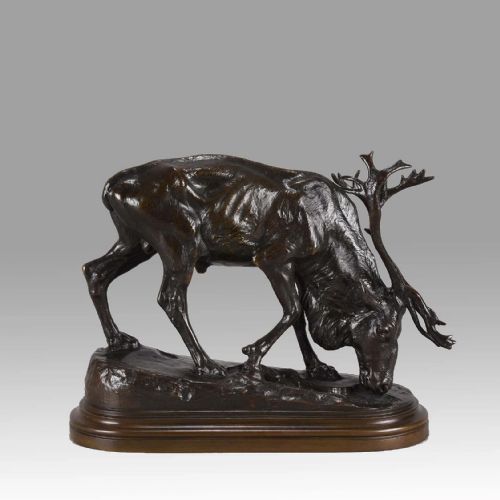


Bronze Deer Sculptures
These bronze deer sculptures capture the tension and grace of stags, does, and fawns in metal, offering a focal point that brings the natural world indoors.
Bronze Deer Sculptures
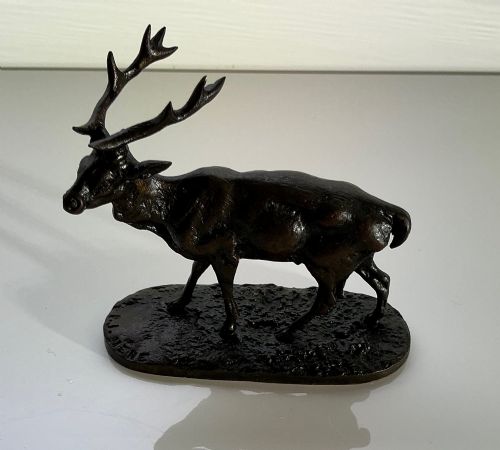
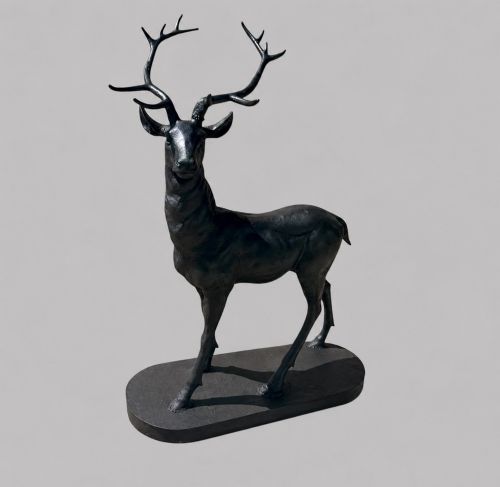
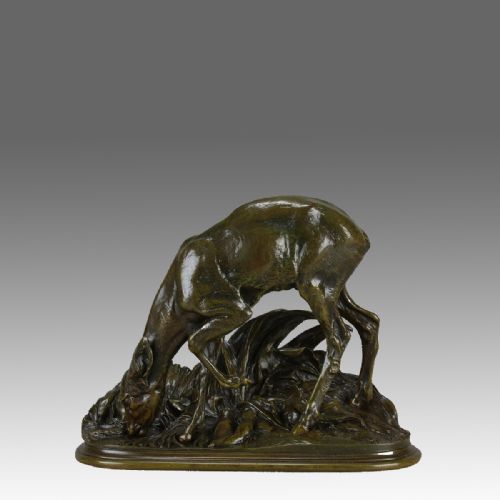
Bronze deer sculptures encompass studies of stags, does, and fawns cast during the nineteenth and early twentieth centuries. These figures range from realistic Victorian portrayals to stylised Art Deco groups.
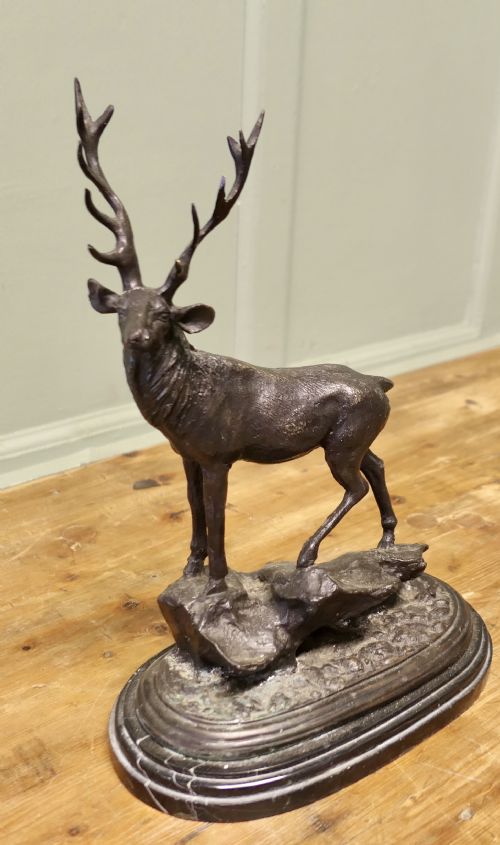
The pieces on this page appear in various forms, including stags standing on rocks, resting does, and figures paired with marble or onyx plinths. The Animalier tradition dominates the nineteenth-century examples, while French studios shape the later modernist interpretations.
Makers often mounted these animals on stone bases, and some works incorporate related figures such as Pan playing pipes to a fawn. Buyers encounter both solid bronze castings and spelter alternatives from the interwar period.
How they were made
Foundries cast these figures in bronze or spelter, applying dark patinas to simulate natural coat tones and age. Molten metal poured into moulds captured the musculature and antler detail recorded by the sculptors.
Workers mounted finished metal figures onto shaped bases of marble and onyx. Signatures and titles were often cast directly into the metal or inscribed upon the plinths.
Listings span the nineteenth century and the decades leading to nineteen-thirty, using bronze, spelter, marble, and onyx.
What varies in quality
The choice of base materials and the depth of the dark patina influence the overall presence of the piece. Integrated signatures from recognised Animalier or Art Deco sculptors elevate the standing of a work.
PJ Mene·A L Barye·Pierre Jules Mêne·Isidore Bonheur·I. Rochard·Jules Moigniez
The Bronze Deer Sculptures Glossary
- Animalier
- A nineteenth-century artistic movement dedicated to the realistic portrayal of animals. Sculptors in this tradition focused closely on anatomical precision and natural behaviour.
- Spelter
- A zinc-based alloy utilised as an economical alternative to bronze, particularly during the Art Deco period. It often received a bronze-coloured coating to mimic heavier metal.
- Patina
- The surface coloration and finish applied to bronze sculpture through chemical treatments or heat. A dark patina helps define the contours and texture of the animal forms.
- Plinth
- A heavy slab of marble or onyx that supports the metal sculpture. It provides stability and visual weight to the composition.
- Cast
- The solid or hollow metal form produced by pouring molten material into a mould. The quality of the cast dictates how closely the finished piece matches the sculptor's original model.
Bronze Deer Sculptures: Frequently Asked Questions
How do I tell bronze from spelter?
Bronze is heavier, denser, and generally cooler to the touch than spelter. Spelter is a softer zinc alloy that often shows a lighter grey metal underneath any surface wear.
Examining the underside or areas of friction usually reveals the true nature of the metal used in the casting.
What is an Animalier sculpture?
An Animalier sculpture depicts animals in realistic poses, a genre that gained popularity in nineteenth-century Europe. These works focus on accurate anatomy and expressive movement.
Artists in this field studied live subjects in menageries to capture authentic postures.
Why are some figures mounted on marble?
Marble and onyx plinths provide structural support and a formal frame for the metal sculpture. They became particularly common in Art Deco designs to add geometric contrast.
Heavy stone bases also prevent top-heavy animal figures from tipping over.
How should I clean a dark patina?
Dust bronze sculptures gently with a soft, dry brush to prevent dirt buildup. Avoid harsh chemical cleaners or abrasive cloths that can strip the patination.
Applying a very light coat of microcrystalline wax can protect the metal surface over time.