





Bronze Animal Grouping
These bronze animal grouping works capture fierce predator conflicts and quiet domestic herds in enduring metal.
Bronze Animal Grouping
A bronze animal grouping brings together multiple figures of beasts, birds or hounds in a single dynamic composition. When searching for a bronze animal grouping, collectors find works spanning the nineteenth century up through the Art Deco period of the twentieth century. These pieces range from substantial French animalier studies of big cats to intricate Japanese Meiji period okimono sculptures.
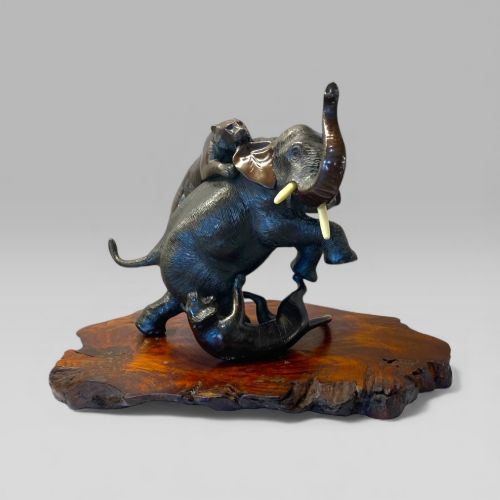
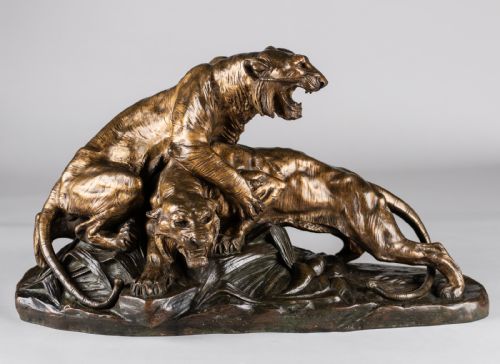
The subjects divide broadly between European naturalist works depicting hunting dogs, stags, foxes or lions, and East Asian sculptures focusing on elephants, tigers, bears and buffalo. European examples often emerge from the animalier school, where sculptors modelled realistic animal behaviour in motion. Japanese works from the Meiji period present elaborate scenes of struggle, such as elephants fighting tigers.
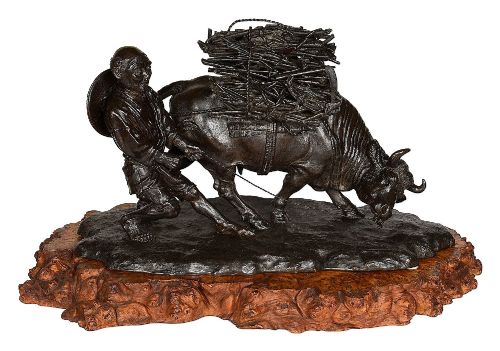
Most pieces stand upon integrated or fitted bases made from bronze itself, marble, burr wood, onyx or hardwood. Sculptures manifest as heavy cast metal creations, occasionally accompanied by subsidiary materials like ivory or spelter in later decorative iterations. Scale varies from intimate cabinet studies to large floor-standing groups.
How they were made
Foundries produced these groupings primarily through the lost wax casting method or sand casting techniques, which allowed makers to capture fine muscle tension and fur texture. Molten bronze poured into moulds formed the core animal figures, which workers then chased with chisels and filed to define anatomical details.
Patination followed casting, involving chemical treatments applied to the hot or cold metal surface to achieve rich brown, green or near-black tones. Artisans mounted the finished metal figures onto bases of marble, onyx or polished hardwood using threaded pins or integrated fixings.
Bronze Animal Grouping Retail Price Guide 2026
Typical asking prices for bronze animal grouping among the pieces listed under this phrase on Sellingantiques today, from the lower quarter to the upper quarter. They describe what is for sale here now, not the wider market.
Elephants and tigers appear to hold grudges across multiple continents, locked in eternal bronze skirmishes.
What varies in quality
The refinement of the chasing work separates standard foundry output from master castings, visible in the sharp rendering of claws, fur and facial expressions. Superior pieces preserve the tension and realism of the animal anatomy without soft edges or obscured details from worn moulds.
The integration between the figures and their mounting base influences the overall integrity of the group. Stronger examples feature balanced composition where the interaction between multiple animals feels deliberate rather than crowded, supported by carefully selected marble, wood or bronze bases.
Kaniya Kuniharu·Auguste Nicholas Cain·G.Gardet·Vannetti·P J Mene·Alfred Dubucand·I. Rochard·E.Drouot
The Bronze Animal Grouping Glossary
- Animalier
- A nineteenth-century European sculptural movement dedicated to the realistic portrayal of animals, particularly predators and domestic beasts in motion. Practitioners studied anatomy from life in menageries.
- Okimono
- A Japanese decorative sculpture designed for display on a shelf or in a tokonoma alcove, frequently cast in bronze during the Meiji period. These often depict complex wildlife interactions.
- Patination
- The chemical or thermal coloration applied to the surface of bronze sculpture to create varied brown, black or greenish tones. This layer protects the metal and defines shadow.
- Spelter
- A zinc-based alloy utilised as a less expensive alternative to bronze for decorative animal sculptures during the Art Deco period. It accepts metallic paint finishes well.
- Lost wax casting
- The traditional cire perdue method of metal casting where a wax model is melted out of a ceramic mould to receive molten bronze. This technique permits intricate undercuts.
Bronze Animal Grouping: Frequently Asked Questions
What is an animalier bronze group?
An animalier bronze group is a nineteenth-century European sculpture depicting multiple animals, usually wild beasts or hunting dogs, engaged in natural behaviour or combat.
These pieces focus on anatomical accuracy and dynamic movement, capturing moments of tension between predators and prey.
How do I identify Meiji period bronzes?
Meiji period bronzes originate from late nineteenth-century Japan and typically feature highly detailed subjects like elephants, tigers and bears. They often bear signature plaques or maker marks.
The casting work on these Japanese pieces displays exceptional precision in fur texturing and complex multi-figure arrangements.
What materials are bases made from?
Bases for these animal groups commonly utilise green or black marble, burr wood, onyx, hardwood or cast bronze. Some pieces integrate the base directly into the main metal casting.
The choice of base material often reflects the period and region of origin, with French animalier works frequently employing shaped marble.
How should I clean a bronze sculpture?
Cleaning requires only a soft, dry cloth to remove dust from the surface of the metal and its base. Avoid using water, soap or metal polishes, as these can strip the original patina.
Periodic application of microcrystalline wax can help protect the bronze surface from environmental moisture.