


British Impressionist Garden Art
British impressionist garden art captures open-air scenes of domestic blooms and country houses, offering a bright slice of domestic horticultural heritage for your walls.
British Impressionist Garden Art
British impressionist garden art encompasses paintings depicting sunlit lawns, walled plots, cottage borders, and urban parks created during the late nineteenth and early twentieth centuries. These works record the changing light and colour of private and public retreats across Britain and occasionally the continent, spanning Edwardian to mid-century periods.
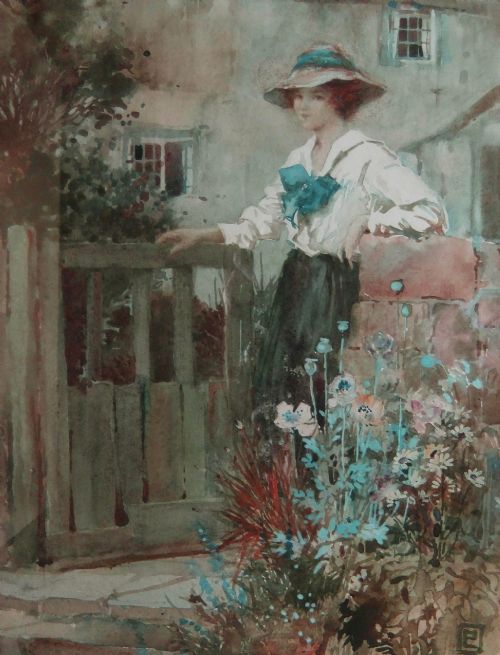
The version most commonly met on this page is the intimate watercolour or oil on canvas depicting a country house garden or cottage gate. Artists record these scenes through loose brushwork or fluid washes, focusing on the transient effects of light on seasonal flowers and foliage.
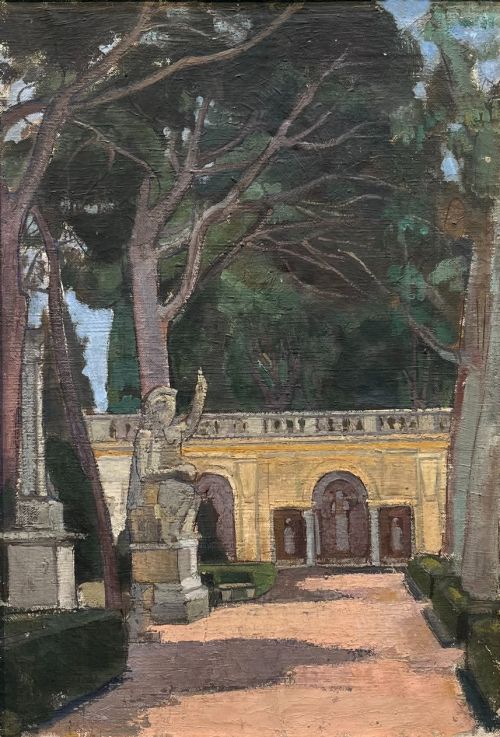
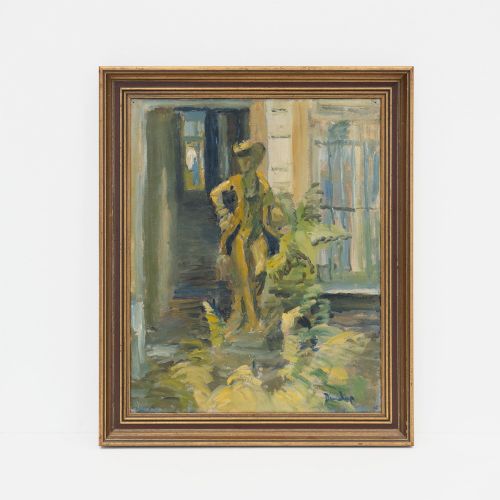
Compositions range from intimate studies of flowerbeds and solitary figures knitting by a door to wider vistas of statues and manicured lawns. The makers include regional artists associated with the Staithes Group alongside various named British painters working between the late nineteenth century and nineteen fifty.
Materials and Technique
Painters utilised oil paint on canvas or wooden supports to build rich textures and layered colours that capture the heavy summer light. This medium allowed artists to work both outdoors in front of the subject and back in the studio.
Watercolour pigment on paper formed the basis for lighter, more translucent studies of cottage gardens and parkland views. Artists applied fluid washes alongside deft pencil or brush lines to preserve the luminous quality of the paper beneath.
The application of paint relies on broken brushstrokes and unblended pigments rather than meticulous academic finish. This direct method prioritised the immediate visual impression of an outdoor scene over topographical exactness.
The listings span from the nineteenth century through the nineteen fifties, featuring both oils on canvas and watercolours on paper.
Judging Quality
Quality rests upon the artist's ability to handle light and atmosphere convincingly across the canvas or paper surface. A successful piece demonstrates confident brushwork and a coherent tonal balance that conveys the warmth and openness of a garden setting.
The distinction between standard and superior works lies in the liveliness of the composition and the subtlety of the colour palette. Stronger examples avoid muddy transitions and instead use clean, energetic strokes to define floral forms and structural elements like gates and stone walls.
Percy Lancaster·Ronald Ossory Dunlop·Rowland Henry Hill·Owen Bowen·Ernest Higgins Rigg·Kershaw Schofield·Lilian Stannard·Charles E Cundall·John Henry Inskip·William Hatherell·David Woodlock·Herbert Royle·Lester Sutcliffe·Edgar Bundy·Hermoine Hammond·George Frederick Nicholls·Beatrice Parsons·William Greaves·Fred Merriman
The British Impressionist Garden Art Glossary
- Watercolour pigment
- A water-soluble medium used on paper to create translucent washes and fine details. It requires a deft hand to maintain luminosity across the sheet.
- Oil on canvas
- A traditional combination of linseed oil based paint applied to stretched woven fabric. This medium offers rich pigmentation and durable longevity.
- British Impressionism
- A painting style developed in the late nineteenth and early twentieth centuries characterised by loose brushwork and natural light. Practitioners focused on contemporary scenes of everyday life and domestic landscapes.
- Staithes Group
- A regional association of painters working on the Yorkshire coast who adopted impressionistic techniques. Their output frequently featured coastal villages and local cottage gardens.
British Impressionist Garden Art: Frequently Asked Questions
How do I hang and light them?
Hang these watercolours and oil paintings away from direct sunlight to prevent the pigments and paper from fading over time. Standard picture lighting or warm ambient room light will bring out the varied brushwork.
Keep them in rooms with stable humidity levels, particularly for works on paper framed behind glass to protect the delicate medium.
How do I tell watercolours from oils?
Watercolours are painted on paper, usually displayed behind glass, showing translucent washes where the white of the paper shines through. They present a lighter, more delicate surface.
Oil paintings utilise thicker pigment applied to canvas or wood panels, often displaying visible brush texture and a heavier weight without the need for protective glass.
What periods do these artworks cover?
The available selection spans from the late nineteenth century through the Edwardian era and into the mid-twentieth century, up to nineteen fifty. Most pieces cluster around the early nineteen hundreds.
This timeframe captures the evolution of British painting from late Victorian academic traditions towards more expressive impressionist and post-impressionist approaches.