



British Army Watercolours
British army watercolours capture centuries of military service through delicate brushwork on paper, offering collectors a direct window into regimental history.
British Army Watercolours
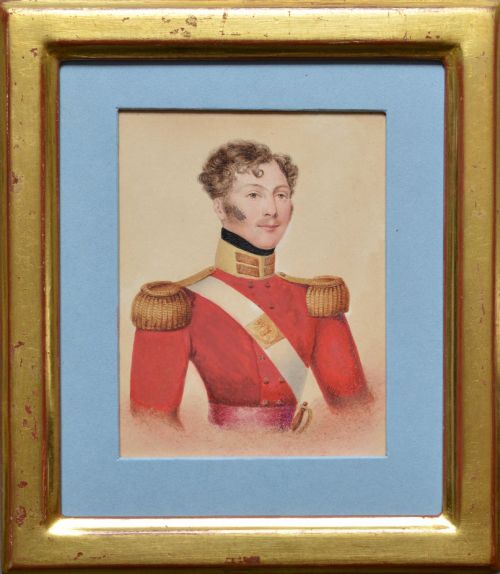
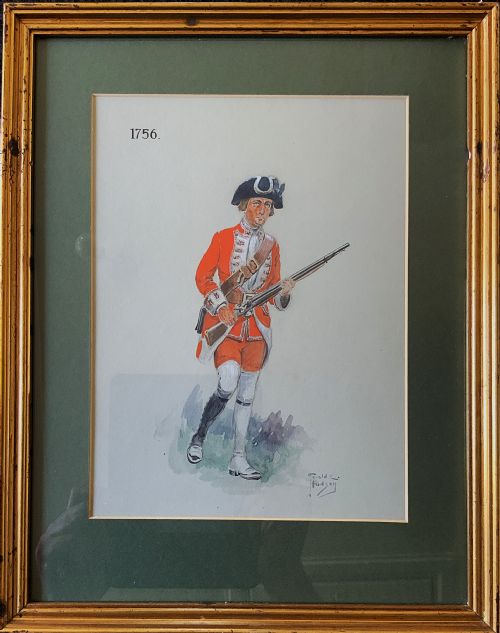
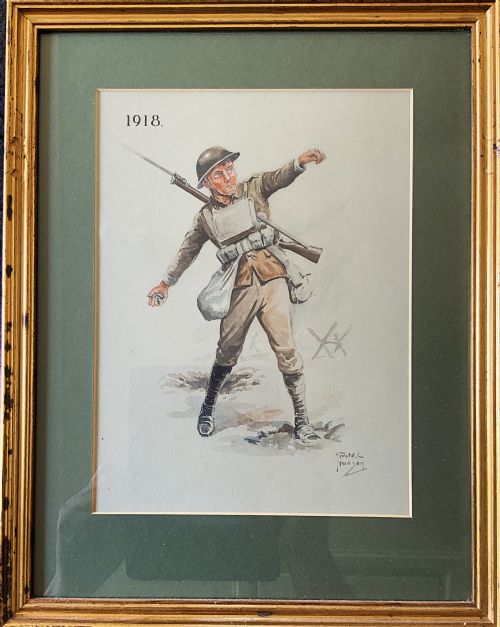
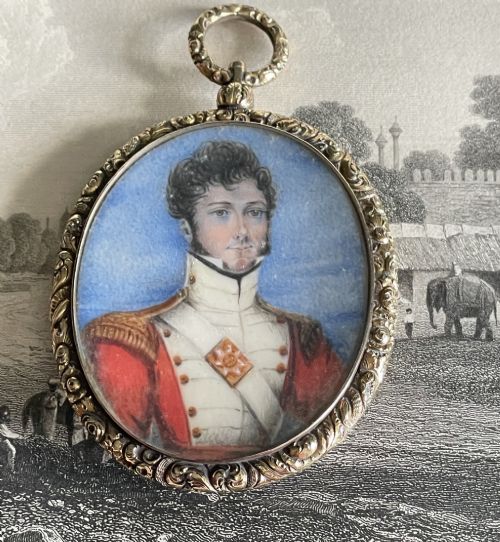
British army watercolours encompass framed artworks and miniature portraits depicting soldiers, officers, and commanders from the eighteenth century through to the early twentieth century. These pieces record the uniforms, campaigns, and portraits of regiments such as the Staffordshire 80th Regiment of Foot and the 3rd Dragoon Guards. Buyers encounter works rendered in watercolour and wash on paper, frequently preserved behind glass within wood, giltwood, or gilt metal frames.
The selection spans distinct historical eras including Georgian, Regency, Victorian, and Edwardian periods, alongside specific twentieth-century depictions of First World War soldiers. Portrait miniatures sit alongside larger framed paintings, capturing subjects ranging from anonymous private soldiers to prominent figures like Field Marshal Frederick Sleigh Roberts. These works bridge fine art and military history, reflecting the changing styles of portraiture across multiple centuries.
Materials and technique
Framing materials protect these fragile works on paper, utilising wood, gilt wood, giltwood, and gilt metal alongside protective glass glazing. The construction of the frames varies from simple wooden surrounds to ornate gilded mouldings appropriate for military portraits of officers and commanders.
British Army Watercolours Retail Price Guide 2026
Typical asking prices for british army watercolours among the pieces listed under this phrase on Sellingantiques today, from the lower quarter to the upper quarter. They describe what is for sale here now, not the wider market.
Listings feature works spanning the 18th century, 19th century, and early 20th century, utilising watercolour, paper, wood, and gilt metal.
Evaluating quality and execution
The survival and condition of the paper surface, the vibrancy of the pigments, and the originality of the framing components contribute significantly to the standing of an individual piece. Works attributed to known artists or specific military schools often demonstrate superior handling of light and composition.
The British Army Watercolours Glossary
- Watercolour
- A painting method in which the paints are made of pigments suspended in a water-based solution. Artists use this medium on paper to achieve translucent layers and fine detail.
- Portrait Miniature
- A small, highly detailed painting, often executed on ivory or paper. These intimate works were frequently commissioned to commemorate family members or military officers.
- Giltwood
- Wood that has been treated with gold leaf or a gold-colored gilt finish. It appears frequently on the frames enclosing these historical artworks.
- Regiment
- A permanent unit of an army commanded by a colonel. British army watercolours often document the specific uniforms and insignia associated with these military bodies.
British Army Watercolours: Frequently Asked Questions
What periods do these watercolours cover?
The works span from the eighteenth century through the Victorian and Edwardian eras up to the twentieth century, including the First World War.
Specific dates within the listings range from early eighteenth-century subjects to works produced in the 1920s and 1930s.
How should I frame and display them?
Watercolours on paper require protection from direct sunlight and excessive humidity to prevent fading and paper degradation. Framing behind glass helps shield the delicate pigments from atmospheric pollutants.
Displaying them in stable indoor environments ensures the preservation of both the artwork and its historical frame.
How do I identify military ranks?
Uniform details, lace, gorgets, and headwear depicted in the artwork indicate the rank and regiment of the subject. Officers typically display distinctive facings and insignia that differentiate them from enlisted soldiers.
Accompanying inscriptions on the mount or reverse of the frame often provide the name and regiment of the sitter.