





Breakfront Bookcase Top
A breakfront bookcase top is the upper section of a large sectional cabinet, prized for its linear projection and shelved display.
Breakfront Bookcase Top
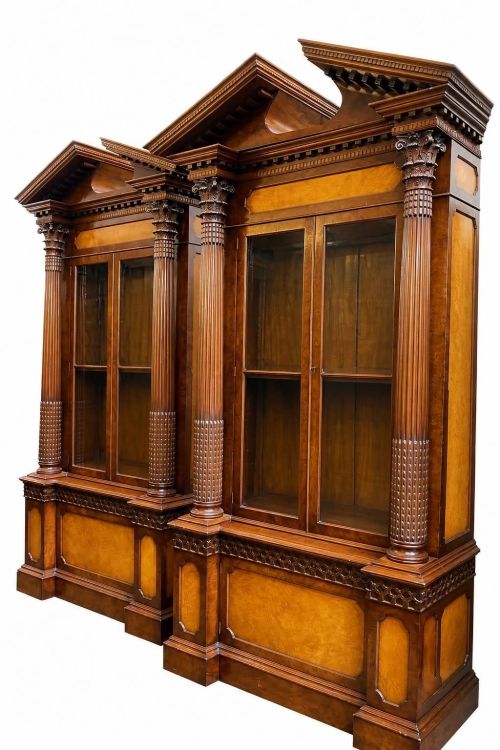
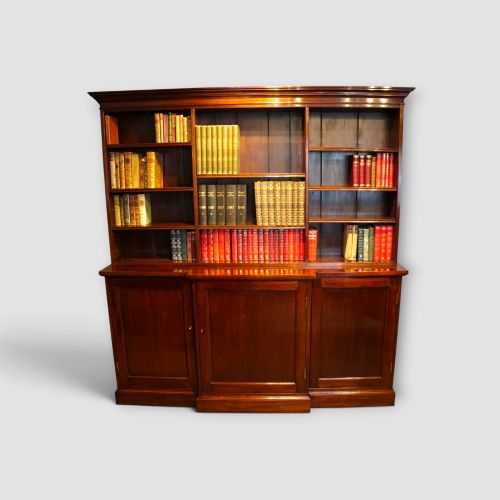
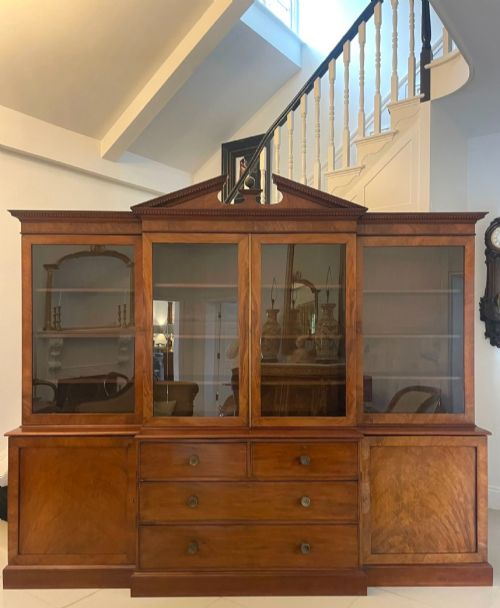
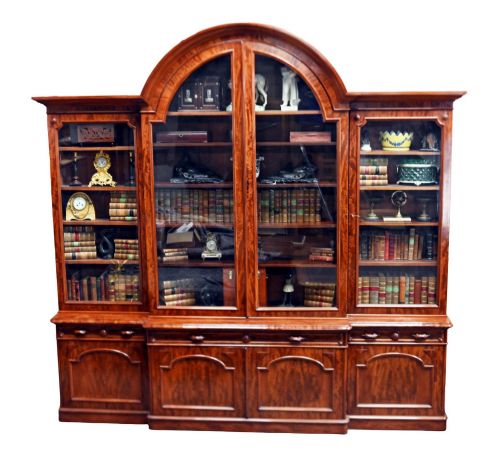
A breakfront bookcase top represents the upper shelving section of a grand cabinet configuration, designed to sit upon a matching lower base. These architectural units project forward centrally, creating a tiered facade that breaks the flat line of a standard wall.
Surviving examples span several centuries, with pieces emerging from the eighteenth, nineteenth, and early twentieth centuries. Styles range from restrained Georgian and Regency designs to ornate Victorian and revival iterations.
While complete cabinets are heavy and immense, sourcing just the upper section offers a manageable way to integrate classic cabinetry into a modern interior. These tops function independently as wall-hanging or surface-mounted display shelving.
Materials and construction methods
Cabinet makers utilised dense timber substrates, primarily rich mahogany and dark rosewood, often enhanced with figured veneers. Selected pieces incorporate oak or general hardwoods for internal framing and shelving.
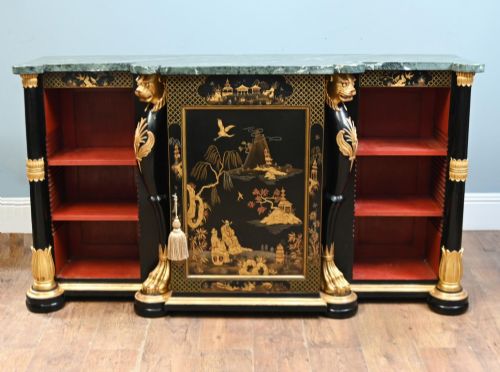
Glazing is a defining characteristic, featuring glazed timber frame doors that protect libraries and display collections. Finer examples integrate brass mounts, ormolu details, and parcel gilt highlights to accentuate the architectural mouldings.
Surface treatments range from polished timber finishes to painted surfaces and decorative lacquer work, particularly seen in later revival interpretations. Silk or fabric linings occasionally back the interior shelves.
Breakfront Bookcase Top Retail Price Guide 2026
Typical asking prices for breakfront bookcase top among the pieces listed under this phrase on Sellingantiques today, from the lower quarter to the upper quarter. They describe what is for sale here now, not the wider market.
The recorded inventory spans from the eighteenth century through the 1920s, featuring rosewood, mahogany, oak, and marble components.
Assessing craftsmanship and execution
Quality rests in the precision of the joinery and the selection of timber veneers. Superior sections display book-matched grain patterns across the projecting central section and crisp, hand-carved mouldings that define the architectural form.
The sophistication of the glazing bars, known as astragals, dictates the refinement of the upper cabinet. Delicate, complex geometric or arched glazing patterns require high skill compared to simple rectangular panes.
Gillows·A Blain Liverpool
The Breakfront Bookcase Top Glossary
- Breakfront
- An architectural cabinet design where the central section projects forward from the flanking wings. This format creates distinct visual depth across the front facade.
- Astragal
- A narrow wooden or brass moulding that holds individual panes of glass within a cabinet door. Complex astragals divide the glass into intricate geometric shapes.
- Ormolu
- Cast bronze that is gilded with gold leaf, used for decorative mounts on furniture. It provides bright metallic highlights against dark cabinet timbers.
- Chiffonier
- A low cabinet originating in the nineteenth century, often equipped with shelves or enclosed storage. It serves a similar display function to smaller side cabinets.
Breakfront Bookcase Top: Frequently Asked Questions
What is a breakfront bookcase top?
A breakfront bookcase top is the upper glazed shelving component of a large modular cabinet system. These pieces feature a central section that projects forward from the two side sections.
Buyers often acquire these upper sections to use as standalone wall display cabinets or to place on custom lower bases. They provide enclosed shelving behind glass doors while maintaining a distinct classical silhouette.
How do I date an antique bookcase?
Dating relies on examining the timber species, construction methods, and stylistic vocabulary. Eighteenth-century pieces typically show solid mahogany or oak framing with hand-cut joins, while nineteenth-century variants often employ elaborate rosewood veneers and brass inlays.
Revival pieces from later decades frequently copy earlier Georgian or Regency motifs but use machine-standardised fixings and internal timber construction typical of their actual period of manufacture.
How should I hang or mount a bookcase top?
Because these upper sections were originally engineered to be supported by a heavy sideboard base, they require secure wall anchorage. Professional installation involves fixing a robust batten directly into masonry or wall studs to bear the substantial weight.
It is essential to distribute the load evenly and prevent any forward tipping, particularly when heavy books or ceramic collections are placed on the interior shelves.
What woods were used in these cabinets?
Mahogany and rosewood dominate the higher quality nineteenth-century examples, offering deep natural grain and dark tones. Oak appears frequently in earlier pieces and interior carcases.
Secondary timbers were often utilised for non-visible internal shelving and backboards, while decorative accents incorporated exotic woods and gilded brass mounts.