




Brass Wire Nursery Fender
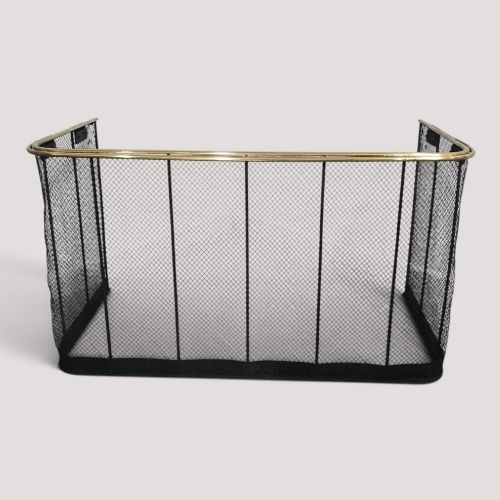
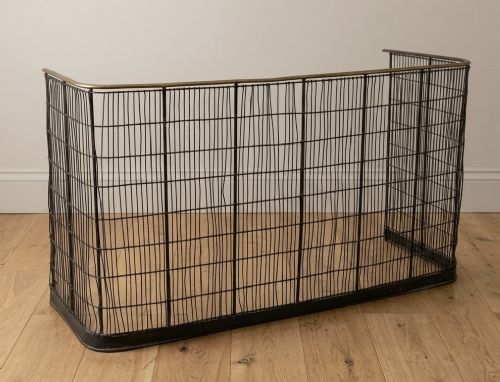
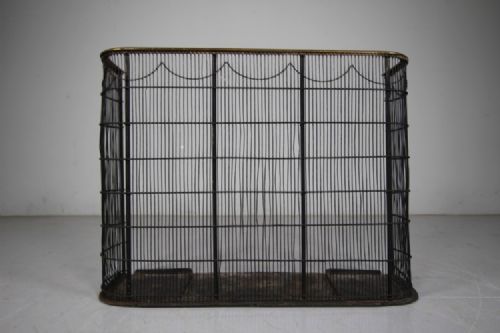
A brass wire nursery fender protects children from open hearths while letting radiant heat circulate freely through the room.
Brass Wire Nursery Fender
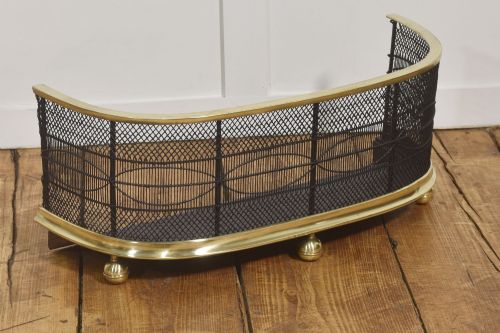
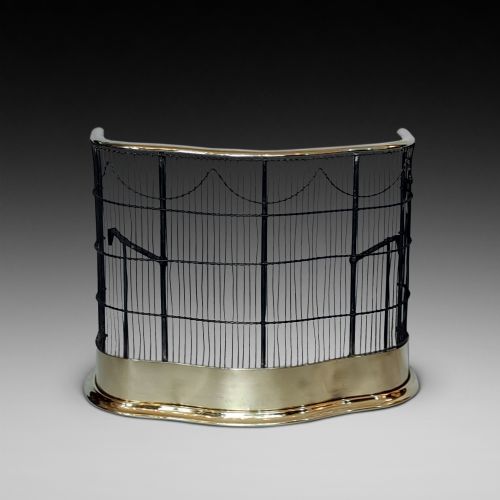
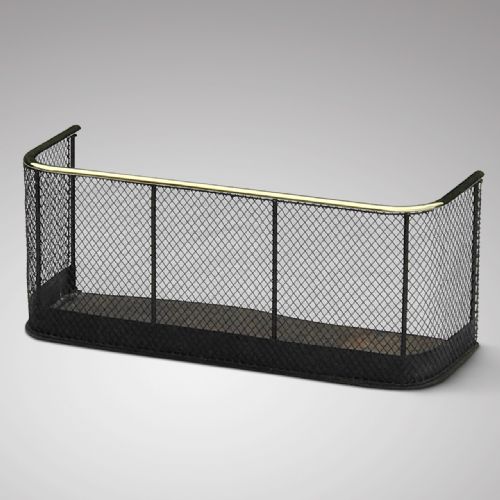
A brass wire nursery fender forms a protective barrier around a hearth, stopping stray embers and keeping small children at a safe distance from the fire. These practical household guards appear primarily in nineteenth century and Victorian designs, though some pieces trace back to the Regency period. Buyers encounter various forms on this page, including bowed frames, serpentine profiles, and designs incorporating an integrated clothes rail.
Materials and construction
Makers relied on brass for visible structural elements like top rails and outer frames, valuing its bright appearance and resistance to tarnishing near a hearth. Iron and steel provided the rigid core for the structure, while woven iron wire and steel wire formed the protective mesh panels that contained sparks.
Craftsmen secured the wire mesh tightly within the metal frames, using wrought iron for added strength in the heavier nineteenth century examples. This combination of heavy metal framing and delicate wirework created a stable guard that could withstand daily domestic use.
The listings show nineteenth century and Victorian pieces dominating the available forms, alongside occasional Regency examples built with iron and brass.
Assessing quality
Quality in a brass wire nursery fender depends on the weight and gauge of the metals used in its construction. Finer pieces feature robust brass top rails and evenly woven wire mesh that maintains its tension across the entire frame, whereas lesser examples employ thinner wire that sags or distorts over time.
The refinement of the silhouette also distinguishes superior pieces, particularly those with serpentine or bowed fronts that require precise metal shaping. Simple straight-sided guards represent the utilitarian end of production, while curved frames show greater attention to domestic interior design.
The Brass Wire Nursery Fender Glossary
- Nursery fender
- A tall protective guard placed around a fireplace to keep children away from open flames. These pieces typically stand higher than standard hearth fenders.
- Wire mesh
- A barrier formed by interwoven metal strands that allows heat to pass through while stopping sparks. This material defines the main body of most fire guards.
- Serpentine
- A gently curving outline that sweeps inward and outward in a wave-like pattern. This shape appears on better quality Victorian fire guards.
- Clothes rail
- An integrated upper bar used for airing garments near the warmth of the fire. Certain nineteenth century nursery fenders include this practical addition.
Brass Wire Nursery Fender: Frequently Asked Questions
What is a nursery fender?
A nursery fender is a tall protective enclosure designed to surround an open fireplace in a domestic room. It creates a physical barrier to keep children and trailing clothing safely away from burning coals.
Unlike low hearth fenders that merely contain rolling logs, these tall guards enclose the entire hearth area. They combine a sturdy metal frame with wire mesh to stop sparks while letting warmth enter the room.
How do I date a brass wire fender?
Dating these pieces relies on examining the construction methods, metal types, and stylistic details of the frame. Nineteenth century and Victorian examples often feature hand-woven iron wire and heavy brass top rails.
Regency pieces tend to show lighter framing with distinct neoclassical proportions. Comparing the specific wire gauge and brass casting style helps narrow down the period of manufacture.
Can I use these guards with a modern fire?
These guards function effectively with modern open hearths and wood-burning stoves, provided the dimensions match your hearth space. They offer the same spark protection today as they did in the nineteenth century.
Buyers should measure both the hearth width and surrounding floor space carefully before placing an antique guard near an active fire. Regular dusting and gentle brass cleaning keep the metalwork in good condition.
Why do some fenders have a rail?
The upper rail on certain nursery fenders served a practical domestic purpose in colder months. Households utilised this top bar for warming or airing small items of clothing.
This feature adds structural rigidity to the frame whilst providing extra utility in a busy Victorian household. Not all guards include this rail, as simpler versions focused entirely on safety.