



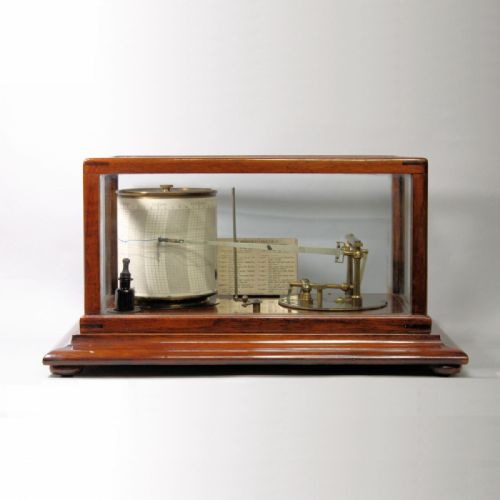


Brass Weather Recorder
A brass weather recorder measures barometric pressure and atmospheric changes mechanically, bringing polished brass and heavy timber into a study or hallway.
Brass Weather Recorder
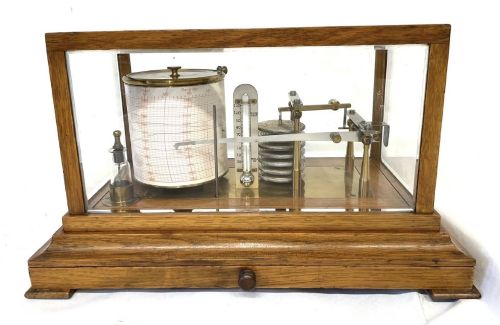
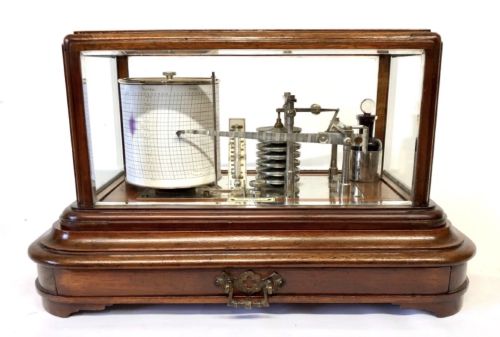
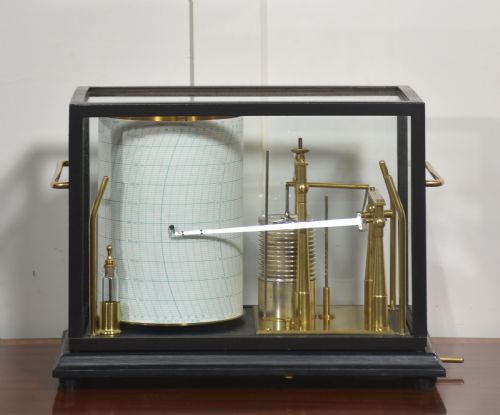
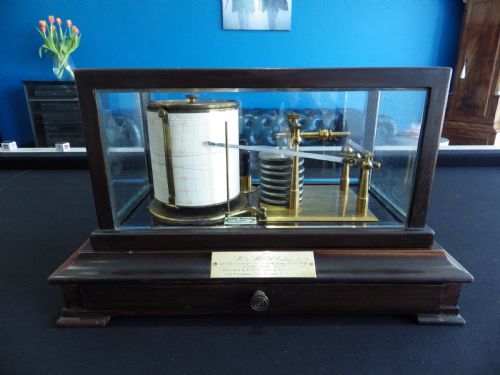
A brass weather recorder sits inside a glazed wooden case, tracing atmospheric pressure continuously onto a paper chart with an ink arm. These mechanical instruments combine scientific utility with traditional cabinet-making, spanning the late Victorian, Edwardian, and interwar periods.
Most examples found here are barographs housed in mahogany or oak five-glass cases, often featuring integrated thermometers and chart drawers in the base. The selection also includes sunshine recorders and combined barometer instruments originating from British and European makers.
How they were made
Mechanisms utilise brass levers and steel stacked aneroid diaphragms to detect minute shifts in air pressure, driving a drum rotated by a clockwork movement. These delicate brass assemblies sit securely upon heavy timber bases.
Cases are constructed from solid mahogany, oak, or walnut, jointed meticulously to house bevelled glass panels that protect the sensitive interior mechanism from drafts while allowing a clear view of the recording arm.
Brass Weather Recorder Retail Price Guide 2026
Typical asking prices for brass weather recorder among the pieces listed under this phrase on Sellingantiques today, from the lower quarter to the upper quarter. They describe what is for sale here now, not the wider market.
Listings feature oak, mahogany, and walnut woods paired with brass and glass across Victorian, Edwardian, and interwar periods.
What varies in quality
The distinction between standard instruments and exceptional pieces lies in the reputation of the maker and the refinement of the case carpentry. Signed movements by notable firms paired with heavy bevelled glass and figured mahogany distinguish the finer pieces from simpler utility instruments.
Short & Mason·Negretti & Zambra·Casella London·Jules Richard·R Fuess
The Brass Weather Recorder Glossary
- Barograph
- A self-recording barometer that graphs atmospheric pressure over a weekly period onto a paper chart. It uses stacked vacuum metal boxes to drive an inked pen arm.
- Aneroid
- Containing no liquid, this mechanism measures pressure through the expansion and contraction of flexible metal capsules. These capsules respond directly to changes in the surrounding air.
- Five-glass case
- A wooden housing featuring a top panel and four vertical sides glazed to display the entire internal mechanism. This design protects the delicate levers from dust.
- Chart drawer
- A shallow compartment built into the wooden base beneath the instrument to store spare recording papers. It keeps weekly charts neatly organised close to hand.
- Sunshine recorder
- An instrument that tracks daily sunlight duration by focusing solar rays through a glass sphere onto a graduated card. It burns a scorched trace to measure bright sunshine hours.
Brass Weather Recorder: Frequently Asked Questions
How does a brass weather recorder work?
A stack of corrugated metal vacuum chambers expands or contracts as atmospheric pressure shifts. This movement transmits through a series of brass levers to an arm holding an inked nib.
The nib records the continuous pressure line onto a paper chart wrapped around a clockwork-driven drum. This rotating drum completes one full revolution every seven days.
Where should I place a barograph at home?
Position your instrument on a stable, level surface away from direct sunlight, radiators, and heavy vibrations. A hallway or study offers an ideal climate where temperature fluctuations remain minimal.
Ensure the location allows easy access to lift the glass cover for winding the clockwork movement and changing the weekly paper chart.
How do I know the age of the instrument?
Examine the timber casing, wood finish, and the style of the maker's signature engraved on the brass bedplate. Edwardian and late Victorian pieces typically feature heavy mahogany or oak cabinetry with bevelled glass.
Signed paper charts, retailer plaques, and serial numbers stamped on the clockwork movement provide further clues to the exact decade of manufacture.
How do I maintain the clockwork mechanism?
Wind the drum movement gently using the attached key every seven days when you replace the recording chart. Avoid over-winding the mainspring to prevent internal damage.
Keep the brass components free from dust using a soft brush and avoid applying liquid polishes near the paper chart or delicate recording nib.