




Brass Two Arm Candelabra
Brass two arm candelabra bring dual-flame illumination and period presence to a room, offering both practical light and decorative weight.
Brass Two Arm Candelabra
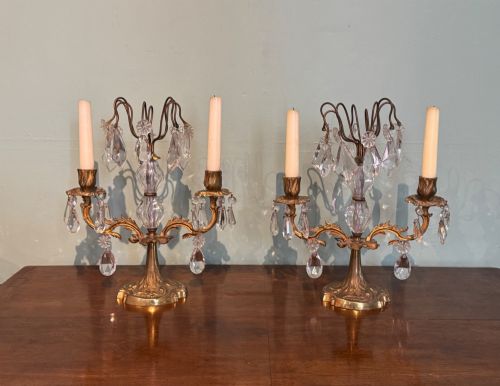
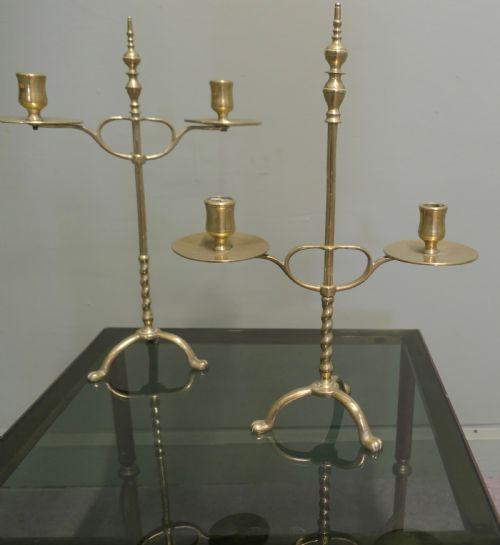
Brass two arm candelabra span the nineteenth and early twentieth centuries, appearing in forms from French Rococo Revival wall sconces to Arts and Crafts student lights. Buyers seeking brass two arm candelabra encounter heavy cast metal work paired with glass drops, crystal accents, or gilded finishes.
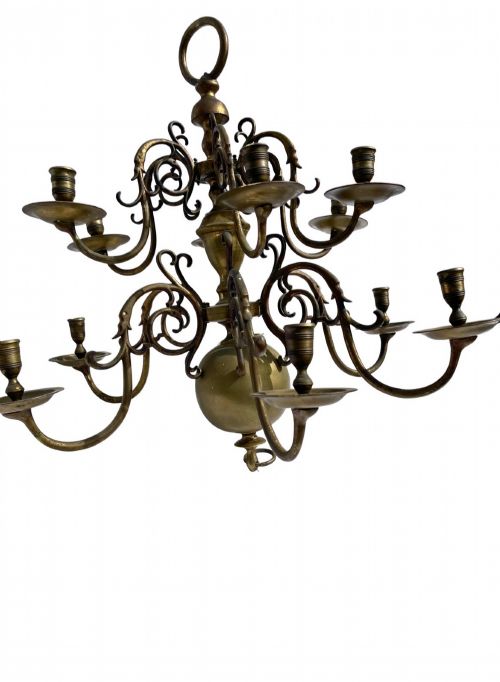
The objects take various functional shapes including table lamps, wall lights, and candlesticks with twin branches. Pieces emerge from diverse aesthetic traditions such as Louis XVI, Dutch Baroque Revival, and Late Victorian design.
How they were made
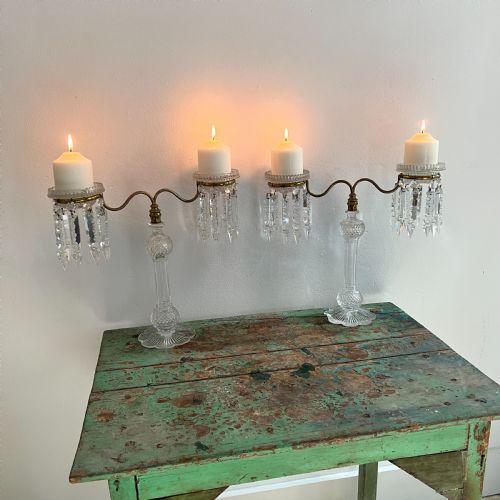
Maker workshops utilised solid brass, gilt bronze, and ormolu, casting the metal into ornate scrollwork, cherub figures, and architectural mounts. These metal foundations were frequently combined with cut crystal and cut glass pendants to catch and refract candlelight.
Surface treatments involved careful gilding, silver gilding, or polished brass finishes that defined the visual character of each piece. Construction methods relied on threaded fittings, pinned joints, and hand-cut glass components assembled by period artisans.
Materials in these listings span solid brass, gilt bronze, cut crystal, and silvered finishes across the nineteenth and early twentieth centuries.
What varies in quality
Quality rests upon the crispness of the metal casting and the depth of the chasing work on the arms and bases. Superior examples display sharply defined ornamentation and substantial weight, whereas lesser pieces show softer surface detail and simpler construction.
The integrity of integrated elements, such as original cut glass prisms or unaltered gilt surfaces, distinguishes finer specimens from those with replacement components or stripped finishes.
The Brass Two Arm Candelabra Glossary
- Ormolu
- A high-zinc brass alloy finished to resemble gold, commonly utilised in French decorative metalwork. It provides a rich, warm surface appearance without relying on solid gold.
- Gilt Bronze
- Bronze metal coated with a thin layer of gold through fire gilding or electroplating. This technique enhances durability while offering a bright metallic sheen.
- Cricklite
- A patented brand of table lamp and candelabra system utilising specialised glassware and small candles. These items often incorporate cut crystal components alongside brass fittings.
- Student Light
- An adjustable desk or table lamp design intended for reading and focused work. Such pieces typically feature articulated arms for directing illumination.
Brass Two Arm Candelabra: Frequently Asked Questions
Where were these placed?
Period lighting of this scale appeared across drawing rooms, dining tables, and hallway walls where dual-flame illumination was required.
Wall-mounted versions provided directional sconce light, while table models served as freestanding centerpieces during evening gatherings.
How do I date them?
Dating relies on stylistic markers, such as the exuberant curves of French Rococo revival or the clean geometric lines of Arts and Crafts pieces.
Material composition and manufacturing techniques, including casting methods and screw thread types, also offer clear chronological clues.
Can I use modern bulbs?
Many examples have been adapted over time to accept electrified wiring and small candelabra-base lamps rather than wax candles.
Unconverted pieces remain suitable for traditional wax use if fitted with appropriate safety measures and stable drip pans.
How do I clean the metal?
Preserving the surface requires dusting with a soft, dry cloth to prevent the accumulation of grime on intricate castings.
Harsh metal polishes should be avoided on gilded or ormolu surfaces to prevent the loss of the original finish.