
Brass Top Table
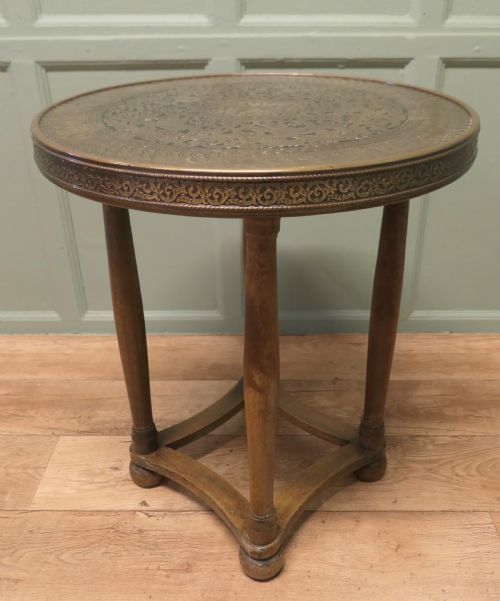
When hunting for a brass top table, collectors find versatile occasional, coffee, and folding tray forms featuring beaten metal surfaces alongside carved wooden bases.
Brass Top Table
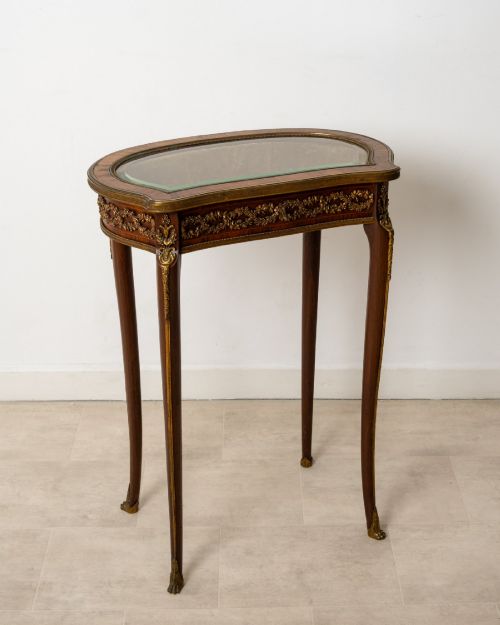
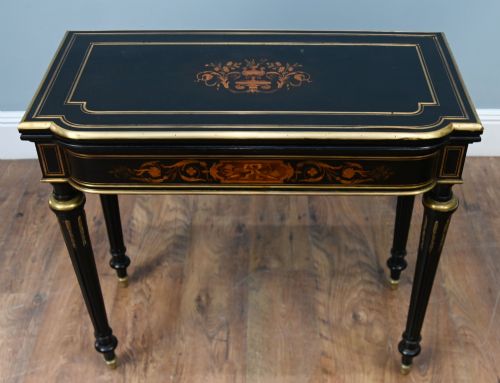
A brass top table brings together functional surface utility and decorative metalwork, spanning compact occasional forms, coffee tables, and folding tray designs. The search phrase reveals a broad sweep of origins, from late nineteenth-century Benares and Anglo-Indian productions to French gilded side pieces and Edwardian campaign furniture.
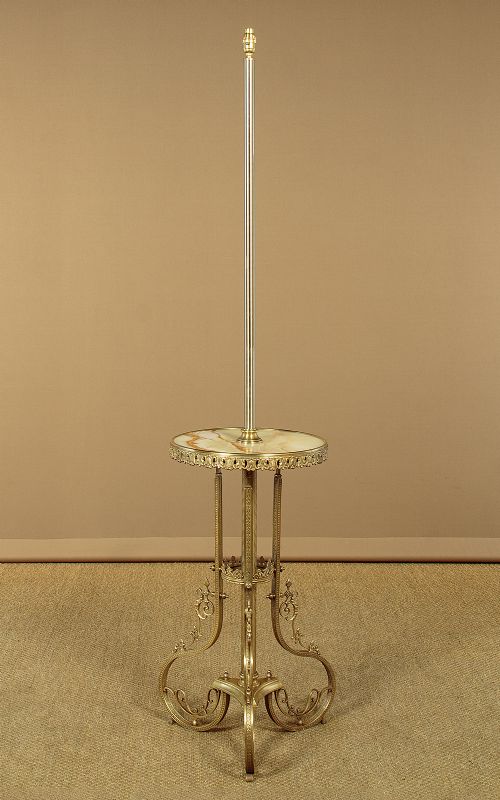
Buyers encounter folding occasional tables with intricately engraved brass trays alongside heavier European lamp and coffee tables featuring marble and brass mounts. These pieces function easily within modern rooms while carrying the distinct craftsmanship of nineteenth and early twentieth-century workshops.
How They Were Made
Construction relies heavily on pairing resilient timber frames in mahogany, oak, rosewood, and walnut with hammered or engraved sheet brass. Makers secured removable trays atop folding wooden bases or mounted fixed brass and gilt-brass plates onto sturdy pedestals and marble slabs.
Detailing often incorporates brass inlays, cast or chased mounts, and tooled leather accents, reflecting both British colonial workshop traditions and continental cabinet-making techniques from the Victorian and Edwardian eras.
Materials recorded across the inventory include brass, mahogany, oak, rosewood, walnut, marble, leather, and glass.
What Varies in Quality
Quality rests upon the crispness of the hand-engraving on the metal surface and the structural integrity of the supporting wooden frame. Superior examples display deeply chased patterns and tightly fitted joints without excessive play in the folding mechanisms.
The choice of secondary timbers, the weight of the brass sheet utilised for the top, and the presence of fine supplementary materials such as mahogany, rosewood, or marble elevate certain pieces above standard utility furniture.
Trollope and sons·Comitti Of London·Maison Millet·François Linke·Mallett of London·William Gard·Mappin and Webb·Webster London·Edwards and Roberts·Thonet of Barcelona
The Brass Top Table Glossary
- Benares table
- An occasional table featuring a folding wooden base and a removable brass tray top engraved with traditional Indian motifs. These pieces gained popularity across Britain during the late nineteenth century.
- Campaign table
- Portable furniture designed for military officers, typically incorporating brass corners, hinges, and inset handles for easy transport. They utilise durable timbers such as mahogany.
- Tray top table
- A table designed with a removable or fixed tray surface featuring raised edges to prevent items from sliding off. They appear frequently in Edwardian and twentieth-century occasional forms.
- Ormolu
- Gilded bronze or brass mounts applied to furniture for decorative effect. French cabinet-makers utilised this technique extensively during the nineteenth century.
- Occasional table
- A small, versatile table intended for light, intermittent use around a living space. These pieces appear in numerous period styles.
Brass Top Table: Frequently Asked Questions
What is a brass top table used for?
These tables serve primarily as occasional surfaces for holding lamps, drinks, or decorative items within domestic living spaces. Many folding versions offer the practical benefit of easy storage when not in use.
Their decorative metal surfaces also allow them to function as striking focal points in a room, combining utility with distinct artisan character.
How do I care for a brass top table?
Maintenance involves dusting the metal surface regularly with a soft, dry cloth to prevent the accumulation of dirt within the engraved recesses. Avoid harsh chemical cleaners that might strip the natural patina accumulated over the decades.
For the wooden bases, standard furniture wax applied sparingly keeps the grain nourished. Protecting the brass from prolonged moisture prevents spotting and corrosion.
Are brass top tables stable?
Stability depends heavily on the base construction, particularly on folding models where the wooden X-frame supports the tray. Well-adjusted joints and solid timber legs ensure the surface remains level during daily use.
Heavier examples featuring marble and brass or solid pedestals offer a firm, stationary platform. Checking the tightness of any original fittings helps maintain overall rigidity.
How do I distinguish Benares tables?
Benares tables typically feature a collapsible wooden stand decorated with pierced or carved fretwork details. The top consists of a tinned or brass tray densely hand-engraved with floral, animal, or geometric motifs.
These characteristic Indian export pieces date predominantly from the late nineteenth and early twentieth centuries.