

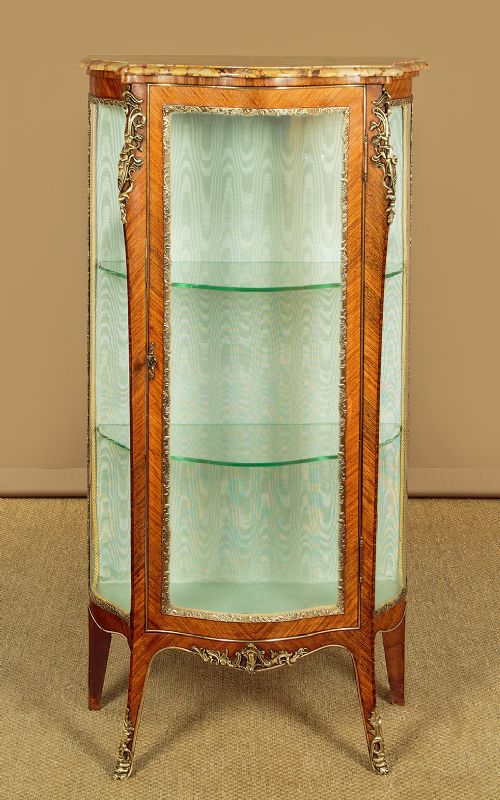


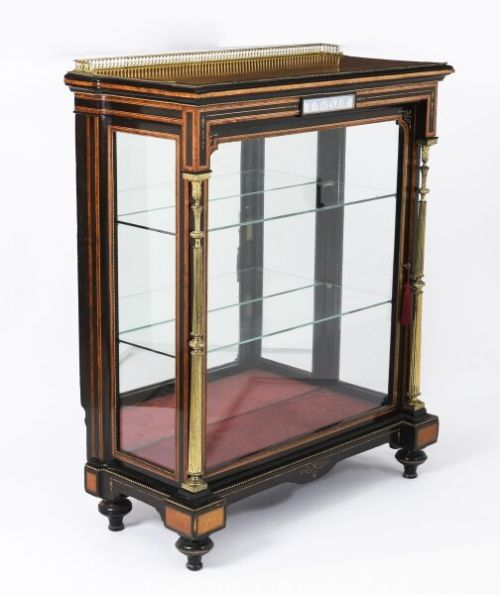


Brass Showcase
A brass showcase frames small treasures behind glass, catching the light and holding the eye in any room.
Brass Showcase
When you search for a brass showcase, you are looking at glazed display vessels built to hold and exhibit precious objects. These pieces range from small countertop jewellery boxes lined in velvet to substantial free-standing shop counters and tall vitrines.
The selections span the nineteenth century through the Edwardian era and into the nineteen-twenties. You will find domestic table cabinets alongside commercial counters and maritime industrial pieces.
Makers such as F. Sage and Co. and Siegel produced commercial counters and cabinets, while domestic pieces often emerged from French workshops and British cabinet makers. The forms include oval vitrines, pier display cabinets, and bijouterie tables.
Judging quality
Quality rests on the weight and crispness of the brass castings, the precision of the mitred joints, and the selection of timber veneers like burr walnut or kingwood. Finer pieces show meticulous parquetry and substantial ormolu mounts rather than light stamped metal.
Commercial provenance and maker attribution elevate certain counters and vitrines, particularly those bearing the marks of established shopfitters like F. Sage and Co. or Siegel. The integration of mirrored interiors and intact velvet lining also marks superior examples.
Brass Showcase Retail Price Guide 2026
Typical asking prices for brass showcase among the pieces listed under this phrase on Sellingantiques today, from the lower quarter to the upper quarter. They describe what is for sale here now, not the wider market.
Listings feature brass showcases spanning the nineteenth century, the Edwardian era, and the nineteen-twenties, incorporating mahogany, walnut, and ebonised wood.
F. Sage and Co.·Siegel
The Brass Showcase Glossary
- Vitrine
- A glass-sided display cabinet designed for porcelain, silver, or curiosities. These pieces often feature glazed doors and delicate framing.
- Bijouterie table
- A low display table with a glass top and a glazed or velvet-lined compartment for jewellery and small ornaments. They are sometimes called collectors tables.
- Ormolu
- Gilded bronze used for decorative mounts and framing on furniture. This technique was favoured by French cabinet makers in the nineteenth century.
- Pier cabinet
- A narrow display cabinet designed to stand against the wall space between windows. They typically feature single glazed doors and wooden carcases veneered in exotic timbers.
- Parquetry
- Geometric wood inlay patterns forming decorative surfaces on cabinet doors and tabletops. It contrasts with plain veneers by utilising contrasting wood grains.
Brass Showcase: Frequently Asked Questions
What is a brass showcase used for?
These cases were originally built for retail shops and affluent homes to display jewellery, silver, medals, and fine curiosities.
The glass enclosure protected delicate items from dust while allowing customers or guests to inspect them from all angles.
How do I clean the glass and brass?
Dust the brass frames gently with a dry microfibre cloth to avoid disturbing historic patination. Use a specialised glass cleaner applied to a cloth rather than the glass directly to protect surrounding wood and fabric.
Avoid abrasive metal polishes that can strip the original finish from antique brass and ormolu.
Can I use a shop counter at home?
Shop display counters and commercial vitrines integrate well into modern domestic interiors as kitchen islands, sideboards, or hallway consoles.
Their robust construction and large glass areas make them practical for displaying modern collections or vintage pottery.
How do I date a brass showcase?
Dating relies on stylistic clues, construction methods, and materials such as the transition from solid mahogany to complex burr walnut veneers. Nineteenth-century examples often feature heavy ormolu and French styling, while nineteen-twenties pieces lean toward commercial oak and streamlined brass framing.
Maker stamps or labels on the underside or within the doorframes can also pinpoint the origin and decade.