





Brass Shelving Unit
A brass shelving unit brings metalwork structure and open display to a room, offering functional storage with decorative presence.
Brass Shelving Unit
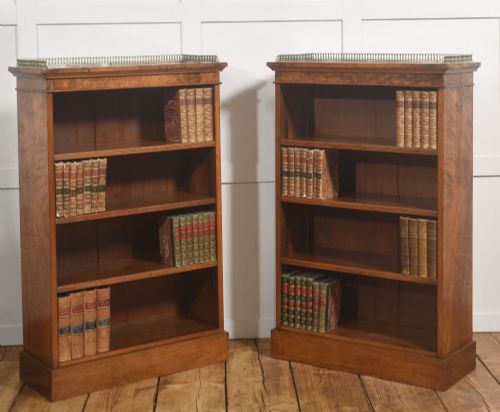
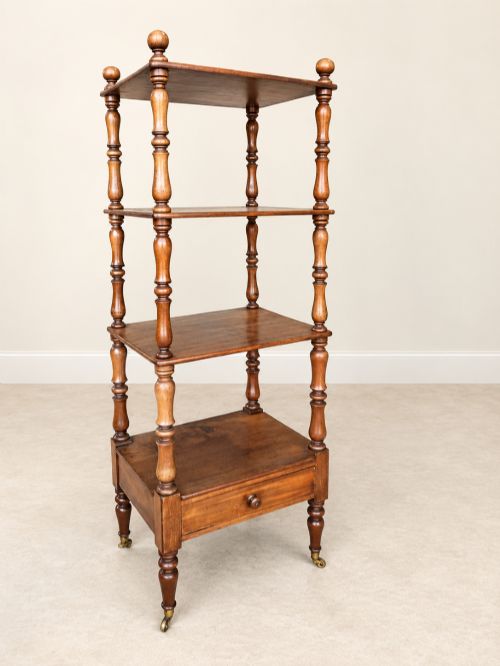
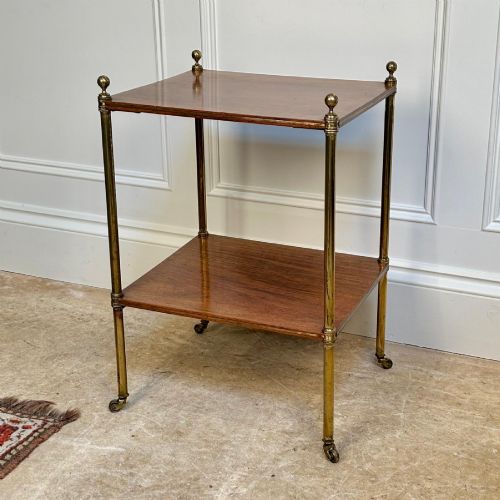
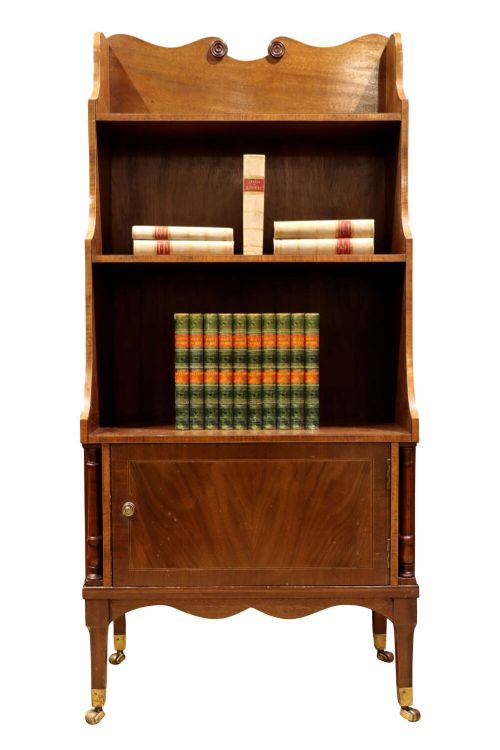
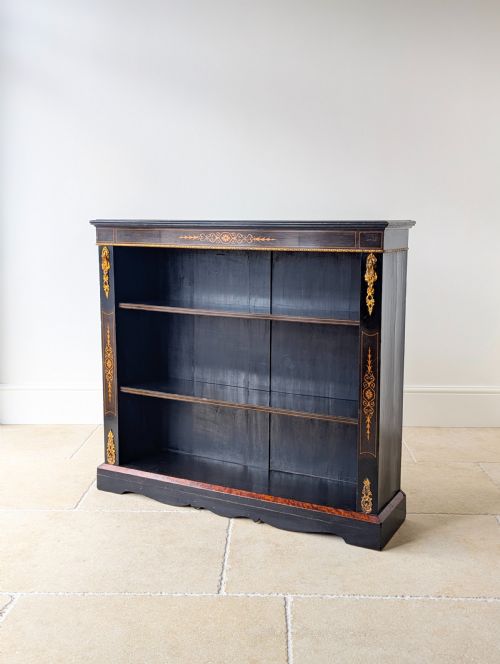
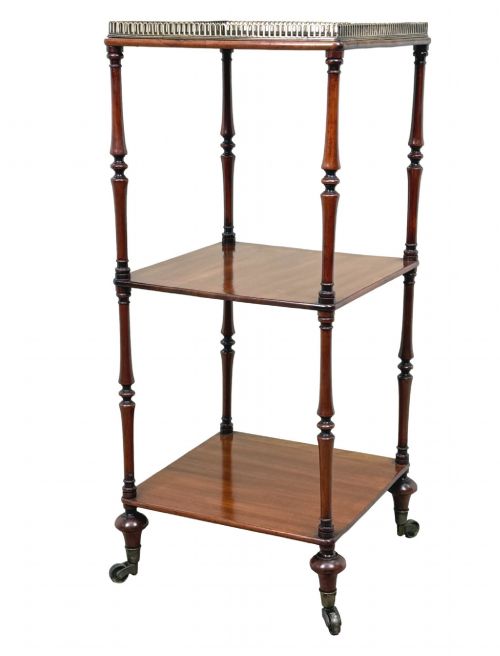
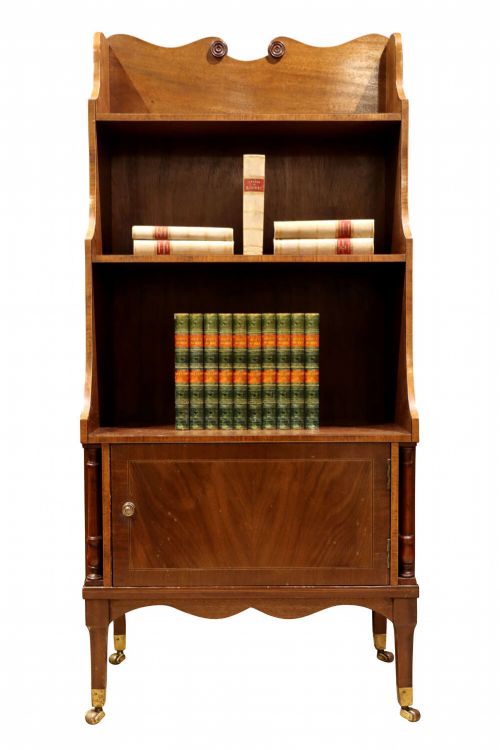
A brass shelving unit encompasses varied forms from open bookcases and etagere units to bakers racks and whatnots, spanning the nineteenth century through the early twentieth century. Buyers seeking a brass shelving unit will encounter pieces executed in mahogany, rosewood, and wrought iron alongside brass galleries, mounts, and castors.
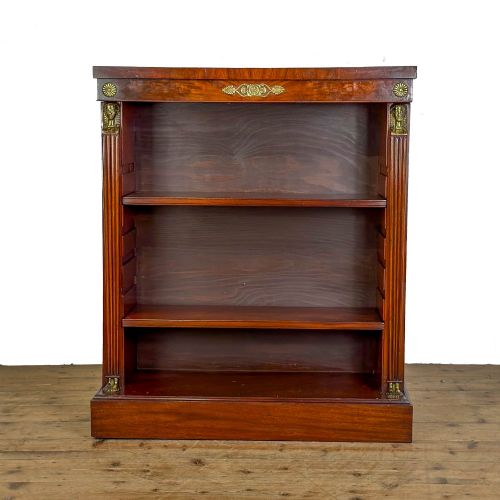
The selection ranges from Regency and Victorian mahogany bookcases with brass details to French bakers racks and Edwardian rosewood etageres. These pieces served diverse domestic and commercial roles, functioning as display stands, shop fittings, and library furniture.
Materials and construction
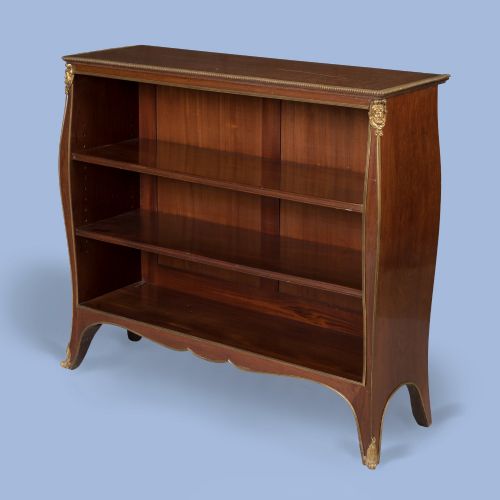
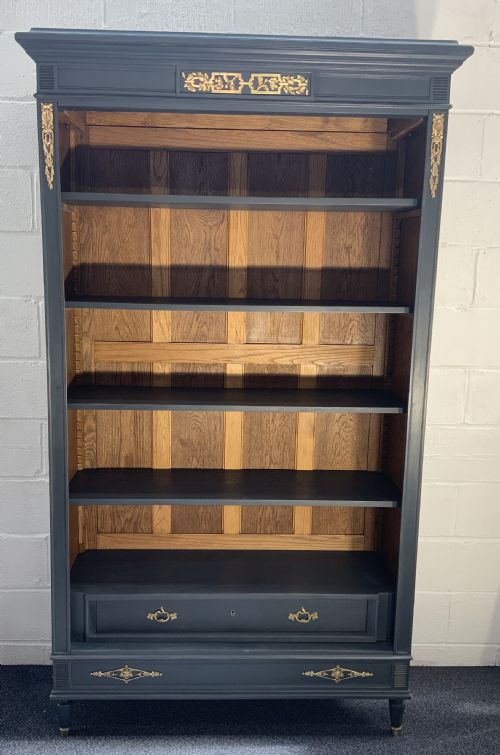
Construction combines dense hardwoods like mahogany and rosewood with structural metal elements such as brass, wrought iron, and bronze. Timber frames often feature inlaid brass lines, marquetry, and ebonised finishes.
Metal components include cast brass castors, ormolu mounts, and galleries secured to wooden shelves, alongside utilitarian iron and brass frames used in bakers racks and shop display stands.
Brass Shelving Unit Retail Price Guide 2026
Typical asking prices for brass shelving unit among the pieces listed under this phrase on Sellingantiques today, from the lower quarter to the upper quarter. They describe what is for sale here now, not the wider market.
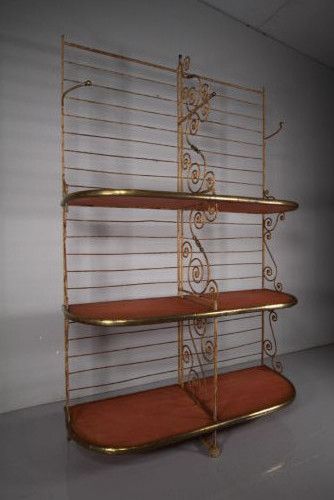
Several heavy iron bread racks previously destined for French bakeries now happily hold kitchen cookbooks.
Judging quality and finish
Quality rests on the selection of timbers such as birdseye maple, burr walnut, and kingwood, paired with refined cabinetmaking details like inlaid brass work and fine marquetry. Superior examples exhibit balanced proportions and integrated metal mounts rather than applied decoration.
Structural integrity distinguishes utilitarian commercial pieces, such as French patisserie racks and shop display stands, from domestic library bookcases and drawing room etageres designed with greater decorative care.
Robert Strahan
The Brass Shelving Unit Glossary
- Etagere
- A set of open shelves for displaying small objects or books. These freestanding pieces often feature multiple tiers supported by slender columns.
- Whatnot
- A multi-tiered piece of furniture designed for displaying ornaments. Originating in the eighteenth century, they became popular in the Victorian period.
- Ormolu
- Gilded bronze applied as a decorative mount on furniture. It provides bright metallic contrast to dark woods like mahogany and rosewood.
- Bakers rack
- A tall metal and wire framework originally used in French boulangeries for cooling bread. They provide robust industrial shelving.
- Gallery
- A raised rim surrounding the top shelf of a cabinet or table. They are commonly fashioned from pierced brass to prevent items from sliding off.
Brass Shelving Unit: Frequently Asked Questions
What is a brass shelving unit?
A brass shelving unit is an open storage piece incorporating brass frames, galleries, mounts, or castors combined with wood or iron.
These versatile fixtures range from formal nineteenth-century mahogany bookcases to utilitarian French bakers racks and multi-tiered etageres.
How were etageres used historically?
Etageres were used in drawing rooms and parlours to display ornaments, porcelain, and books where light and visibility were desired.
Their open tiers allowed decorative items to be viewed from multiple angles rather than enclosed behind wooden or glass doors.
Where do bakers racks come from?
Bakers racks originate in nineteenth-century France, where they were utilised in bakeries and patisseries for cooling bread and pastries.
Their robust wrought iron and brass construction made them durable enough for commercial food preparation before entering domestic interiors.
How do I care for brass mounts?
Brass mounts and galleries require gentle dusting with a soft cloth to preserve their finish without abrasive cleaning.
Avoiding harsh chemical polishes protects the surrounding timber surfaces, such as rosewood, mahogany, and ebonised wood.