



Brass Reading Glass
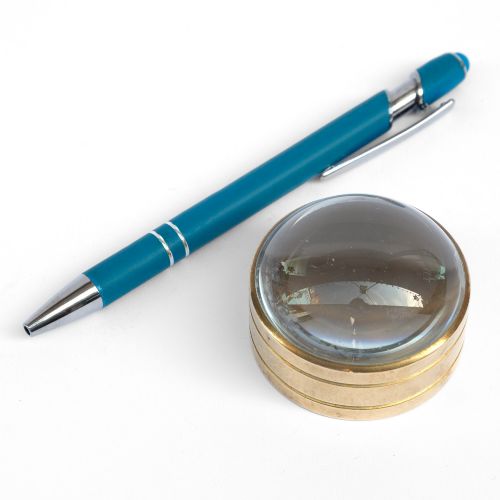
A brass reading glass brings focused clarity to text while offering a pleasing, functional metal object for the desk.
Brass Reading Glass
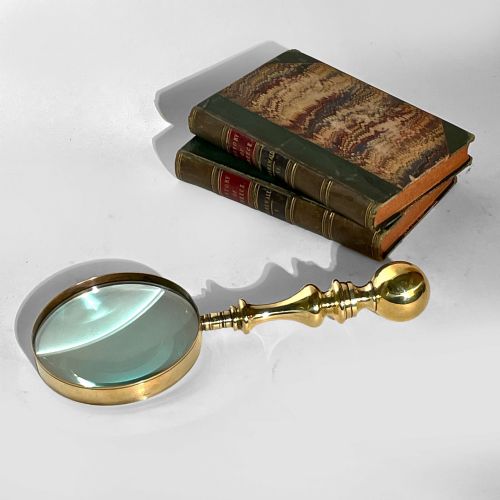
A brass reading glass combines a clear magnifying lens with a durable metal mount, designed for close inspection of text and small objects. When searching for a brass reading glass, you encounter items ranging from handheld magnifiers to pivoting desk lenses mounted on stands.
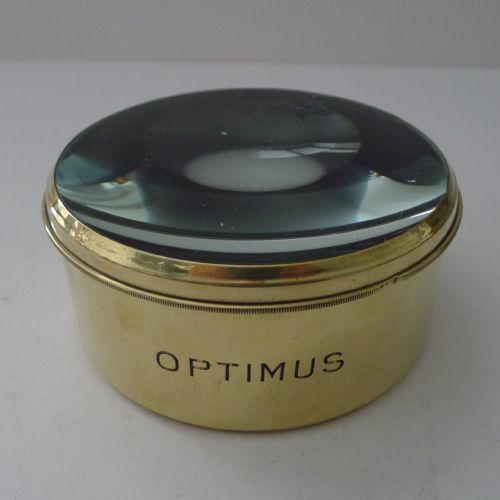
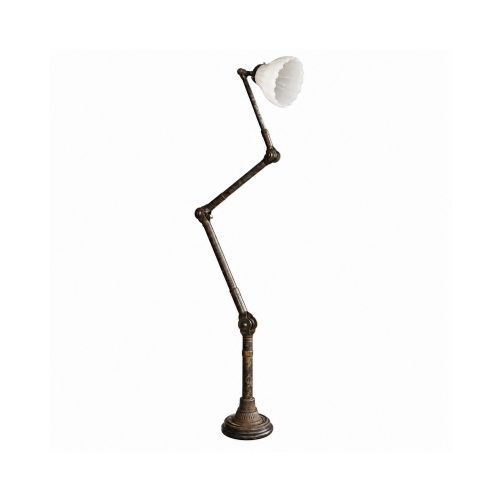
The pieces available span from the late nineteenth century through the Edwardian period and into the Art Deco era. Common forms include large library magnifiers, angle-poise desk lenses, and bullseye magnifying glasses supported by brass stands.
Many examples originate from British and French makers, reflecting the styles of their respective periods, such as Arts and Crafts or Neoclassical Revival. The primary function remains straightforward, serving as both a practical desktop tool and an ornamental object.
How they were made
Construction relies heavily on cast and spun brass, often paired with clear or optical glass lenses. Makers utilised solid brass for mounts, stems, and frames to ensure sufficient weight and stability for the glass element.
Joinery typically involves threaded screws, pivoting joints, or weighted bases that allow the lens angle to be adjusted. Bronze, copper, and marble occasionally appear as secondary materials in the bases and mountings.
Brass Reading Glass Retail Price Guide 2026
Typical asking prices for brass reading glass among the pieces listed under this phrase on Sellingantiques today, from the lower quarter to the upper quarter. They describe what is for sale here now, not the wider market.
Some desk magnifiers are heavy enough to double as paperweights, keeping your maps from wandering off while you examine the fine print.
What varies in quality
Quality in a brass reading glass rests on the optical clarity of the lens and the heft of the metal components. Heavier cast brass frames and distortion-free glass indicate superior production compared to lighter, stamped alternatives.
The precision of the mechanical joints also dictates value. Smoothly pivoting arms and securely seated lenses demonstrate careful craftsmanship, whereas loose fittings or poor alignment lower the overall standard.
P H Vogel & Co·Karl Ens·Anton Buschelberger·Joseph Hinks·Wild & Wessel
The Brass Reading Glass Glossary
- Bullseye magnifying glass
- A thick, convex lens mounted on a pivoting stand designed to concentrate light or magnify specific areas of a page. This form appears frequently in early twentieth-century desk accessories.
- Angle-poise
- A mechanical arm arrangement utilising springs or friction joints to hold a lens or lamp in various positions. It provides flexible adjustment for reading and close work.
- Ormolu
- Gilded bronze or brass applied as a decorative mount or finish. It adds a bright, golden decorative layer to the metalwork.
- Patina
- The surface sheen and coloration developed by brass and bronze through age and handling. A natural patina shows the authentic history of the metal.
Brass Reading Glass: Frequently Asked Questions
What is a brass reading glass used for?
A brass reading glass is primarily used to magnify small text, maps, and fine details on documents.
Beyond its optical use, it serves as a decorative paperweight and a functional accessory for a traditional desk.
How do I date a brass reading glass?
Dating relies on examining the manufacturing style, the weight of the brass, and the mounting technique. Pieces from the Edwardian era often feature simpler, functional lines, while nineteenth-century versions may display heavier cast ornamentation.
Maker marks, where present on the brass frame or handle, provide the most precise indication of origin and age.
Are these magnifiers adjustable?
Many desk-mounted versions include pivoting frames, swan necks, or angle-poise arms designed for movement.
Handheld varieties rely on the user's hand for positioning, though standalone lenses can be angled to suit the reader.
How should I clean brass and glass?
The glass lens requires a soft cloth and standard glass cleaner to maintain clarity without scratching the surface.
Brass parts benefit from dusting and gentle wiping, leaving the aged patina intact rather than polishing it to a bright shine.