

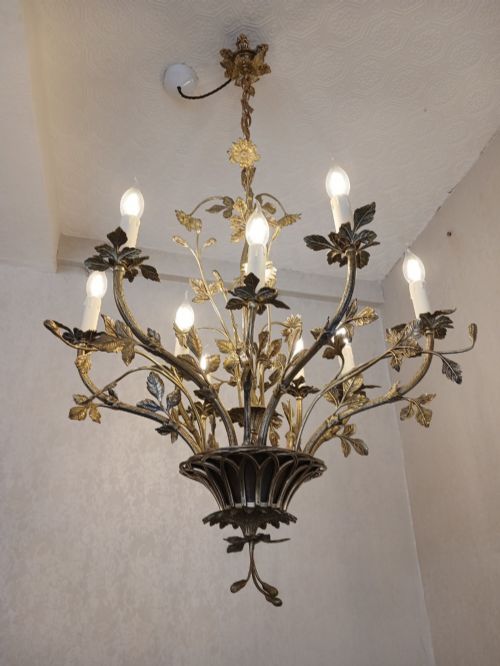

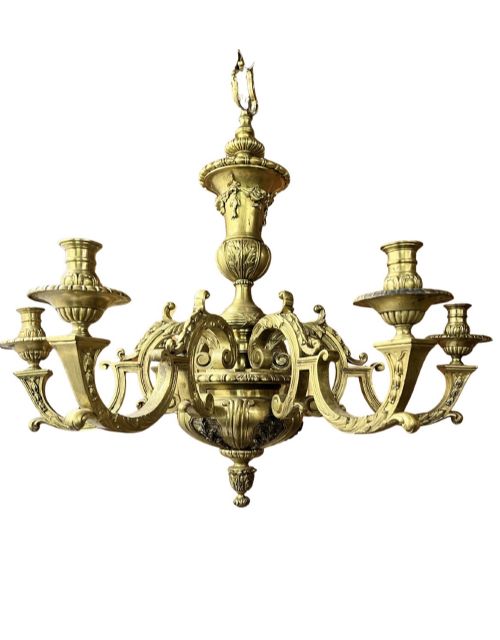
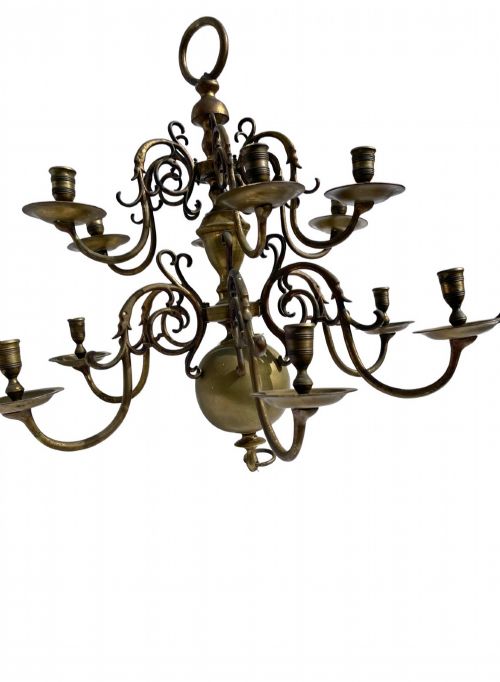
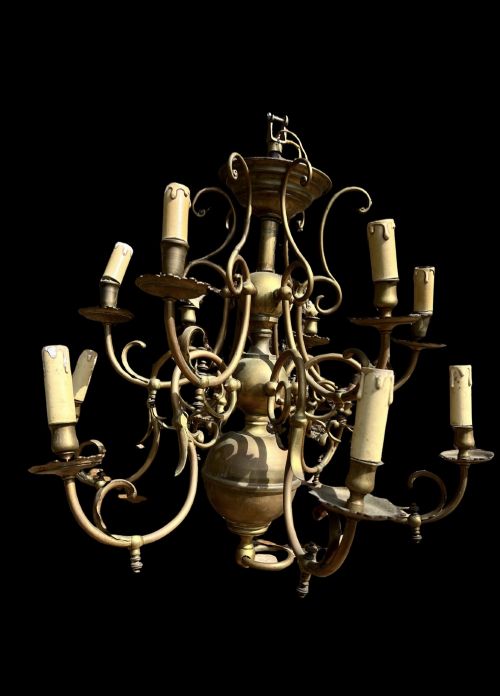

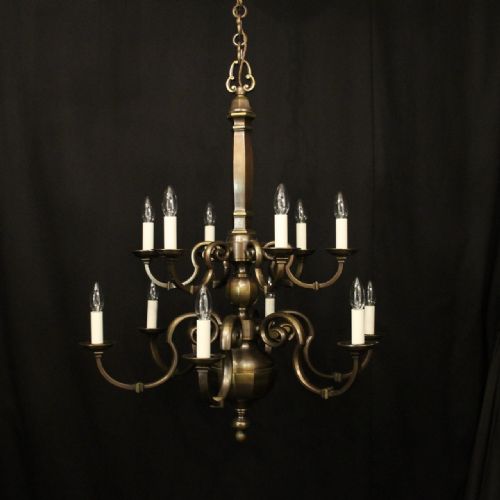


Brass Multi Light Pendant
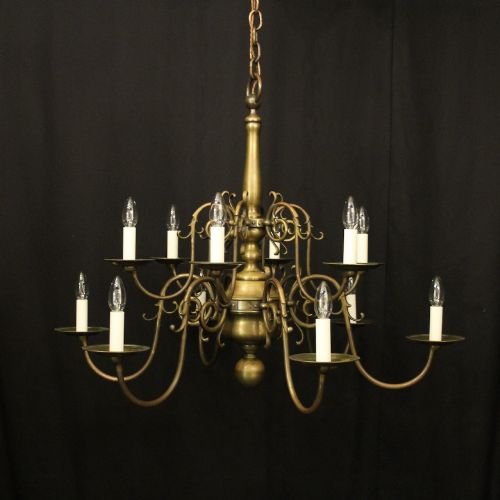
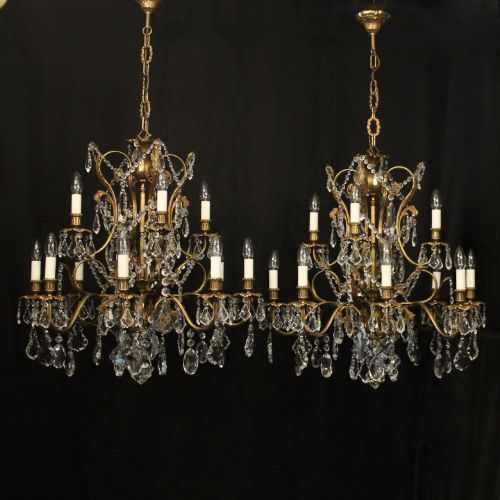
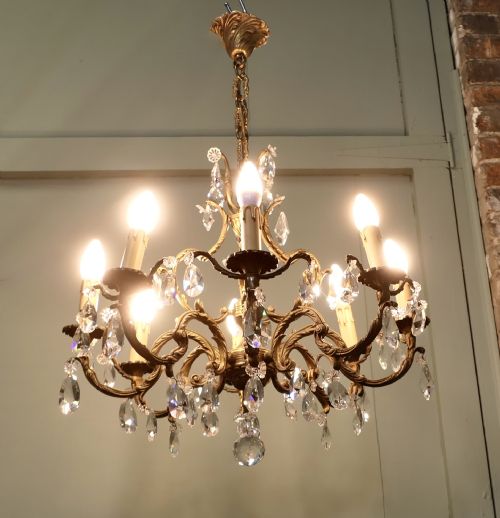
These brass multi light pendant fixtures bring warmth and illumination to high ceilings, drawing the eye upwards with their elaborate metalwork and suspended crystal drops.
Brass Multi Light Pendant
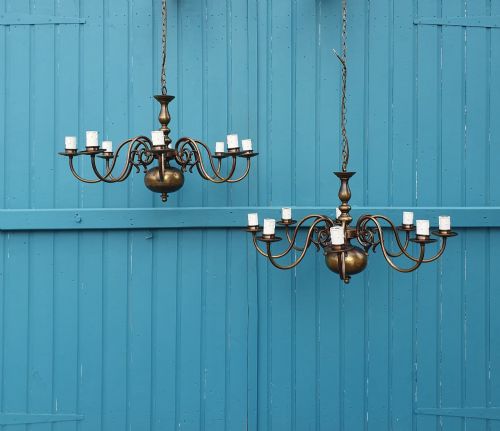
A brass multi light pendant typically takes the form of a grand chandelier or ceiling light, designed to distribute illumination across principal rooms. Buyers searching this phrase encounter multi-armed fixtures dating from the nineteenth and early twentieth centuries, spanning Edwardian, Victorian and 1930s periods.
Many examples incorporate glass, crystal, bronze and copper elements alongside the primary brass structure. These materials combine to create reflective surfaces that amplify the spread of light within a space.
How they were made
Construction relies heavily on cast and spun brass, often complemented by bronze elements or copper components to build robust structural frames. Metal arms are formed with scrollwork or multi-tier designs, secured by central stems designed to bear the weight of numerous candle or electric bulb fittings.
Pendants are frequently adorned with cut glass, crystal lustres and coloured teardrops, suspended from the metal framework using wire or pinned links. Certain pieces also integrate leaded stained glass or opaque glass shades featuring moulded grapes and floral motifs.
Brass Multi Light Pendant Retail Price Guide 2026
Typical asking prices for brass multi light pendant among the pieces listed under this phrase on Sellingantiques today, from the lower quarter to the upper quarter. They describe what is for sale here now, not the wider market.
Listings feature brass multi light pendant options from the Edwardian period, the 1920s, and the nineteenth century.
What varies in quality
Substantial weight and solid brass or bronze construction distinguish the most substantial fixtures from lighter alternatives. The intricacy of the metal casting, particularly on scroll arms and decorative mounts, determines the refinement of the piece.
The abundance, clarity and cutting of crystal lustres and glass drops influence the overall visual impact of the pendant. Complete multi-tier assemblies with uniform components demonstrate superior original design and manufacture.
Joseph Wilmotte·G.E.C
The Brass Multi Light Pendant Glossary
- Gasoliere
- An early form of ceiling light designed to burn gas before the widespread adoption of electricity. These fixtures often feature rigid distribution pipes configured as arms.
- Crystal lustre
- A cut glass pendant or droplet hung from the arms of a chandelier to reflect and refract light. They appear in various shapes including teardrops and swags.
- Birdcage
- A style of chandelier frame characterised by curved metal straps forming an enclosure around the central stem, often densely hung with crystal beads.
- Scroll arm
- A curved, S-shaped metal branch extending from the central body of the pendant to hold a light fitting or candle pan.
- Porch lantern
- An enclosed ceiling light fixture designed for exterior entranceways, frequently constructed with leaded glass panels and a protective metal housing.
Brass Multi Light Pendant: Frequently Asked Questions
How do I hang a heavy brass chandelier safely?
Suspension requires fixing directly into ceiling joists or installing a dedicated metal support brace capable of bearing the substantial weight of multi-arm bronze and crystal fixtures.
Professional electrical installation is strongly recommended to handle the multi-bulb wiring safely while ensuring the fixture hangs at the correct height for the room.
What is the difference between a gasoliere and a standard pendant?
A gasoliere is an antique lighting fixture originally built to carry gas rather than electricity, often retaining heavier central supply tubes and specialised key valves.
Many of these older gas fixtures have been carefully converted to electricity for modern domestic use without losing their distinctive historical framework.
How do I identify an Edwardian brass pendant?
Edwardian lighting often combines classical revival motifs with lighter proportions than heavy Victorian pieces, frequently utilising clean lines alongside traditional brass scrollwork.
These fixtures commonly date from the early twentieth century and may incorporate pressed brass components and delicate crystal drops.
Can I clean crystal drops without removing them?
Pendant crystal lustres and swags can be gently wiped in place using a cloth dampened with a mild water and vinegar solution to restore their reflective brilliance.
For thorough cleaning, individual glass drops are detached, washed carefully by hand, and reattached to the metal frame using secure wire links.