

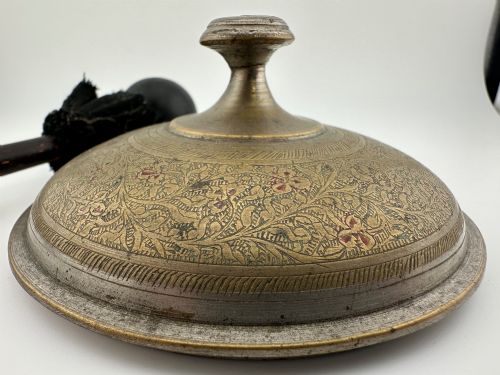
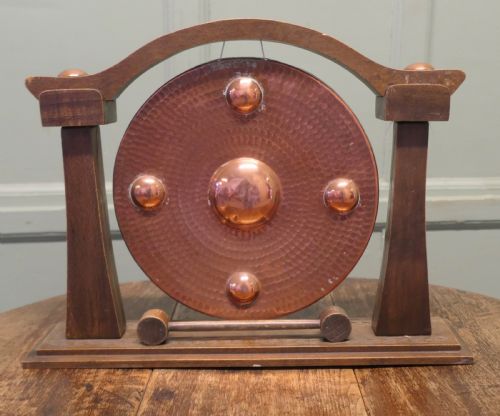


Brass Metal Gong
A brass metal gong brings a resonant tone and striking presence to a hall or dining room, spanning Victorian designs to oriental forms.
Brass Metal Gong
A brass metal gong serves as a traditional call to dinner or a decorative focal point in a domestic interior. These objects range from compact table top examples to substantial framed dinner gongs designed to stand on the floor or hang from a wall bracket.
Many items pair a resonant metal disc or bell with a supporting frame, often supplied with a matching wooden striker. Materials extend beyond brass to include bronze, copper, silver plate, wrought iron, and carved hardwood elements.
How they were made
Makers shaped the sounding vessels through metalcasting, hammering, and engraving, producing resonant bronze and brass structures. Artisans utilised techniques such as surface chasing and detailed pattern work, particularly visible in Anglo-Indian and oriental examples.
Supporting structures combine metalwork with carpentry, utilising carved oak and other hardwoods for frames and wall mounts. Wrought iron and cast iron also provide structural support, while cord and cordage suspend the gongs within their frames.
Brass Metal Gong Retail Price Guide 2026
Typical asking prices for brass metal gong among the pieces listed under this phrase on Sellingantiques today, from the lower quarter to the upper quarter. They describe what is for sale here now, not the wider market.
Listings feature items spanning the nineteenth century through to nineteen twenty, incorporating materials such as brass, bronze, silver plate, and hardwood.
What varies in quality
The refinement of the casting and the depth of the engraving separate standard production from superior examples. Crisp detailing on figural mounts and clean lines on Aesthetic Movement or Art Nouveau frames indicate higher craftsmanship.
The resonance and clarity of the metal tone depend on the alloy composition and the wall thickness of the bell or disc. Substantial hardwood framing and well-preserved original strikers also contribute to a piece's overall integrity.
The Brass Metal Gong Glossary
- Dinner gong
- A hanging bell or metal disc struck with a mallet to announce meals in large households. These often feature elaborate wooden or iron frames.
- Aesthetic Movement
- A late nineteenth-century design style emphasising visual beauty over narrative subject matter. Pieces in this style often incorporate stylised natural motifs and disciplined geometric forms.
- Art Nouveau
- A design movement popular around nineteen hundred characterised by fluid, organic lines and floral motifs. Objects display sinuous curves derived from natural growth.
- Striker
- The mallet or beater used to sound the gong, typically featuring a wooden handle and a padded or rounded head. Original matching strikers enhance the completeness of an antique piece.
- Temple bell
- A sacred or ritual bell originating from oriental traditions, often cast in bronze with symbolic ornamentation. These function similarly to domestic gongs when suspended in decorative frames.
Brass Metal Gong: Frequently Asked Questions
How do you mount a wall gong?
Wall gongs require secure fixing to a solid wall or stud using appropriate screws and rawlplugs to support the weight of the metal disc and wooden or iron frame.
Ensure the hanging bracket or cord is robust enough to bear the load before suspending the piece.
What is the best way to clean brass?
Dust the surface regularly with a soft, dry cloth to prevent the accumulation of grime without disturbing the aged patina.
Avoid harsh chemical polishes that strip away historical character and leave an overly bright, unnatural finish.
Are these gongs meant for daily use?
These antiques can still produce a clear, resonant tone when struck gently with the appropriate wooden striker.
Treat them with care to preserve fragile cord suspensions and aged metal components over time.
How do you date an antique gong?
Examine the construction methods, such as hand-cut screws, cast iron properties, and stylistic markers like Art Nouveau curves or Victorian framing.
Compare the decorative motifs and materials against documented examples from the nineteenth and early twentieth centuries.