

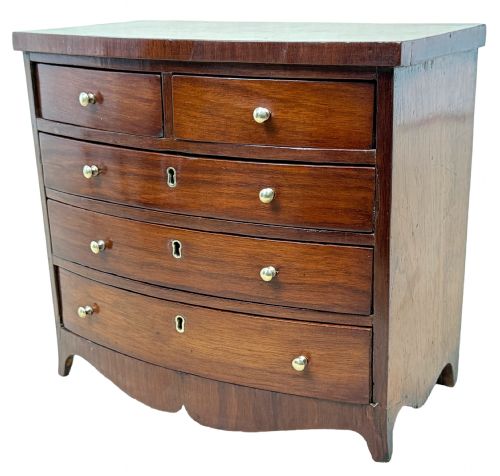


Brass Jewellery Cabinet
A brass jewellery cabinet brings tactile elegance to a room, holding precious trinkets in glazed, metal-framed compartments.
Brass Jewellery Cabinet
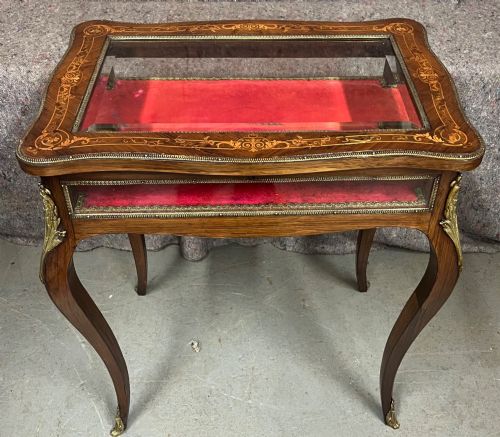
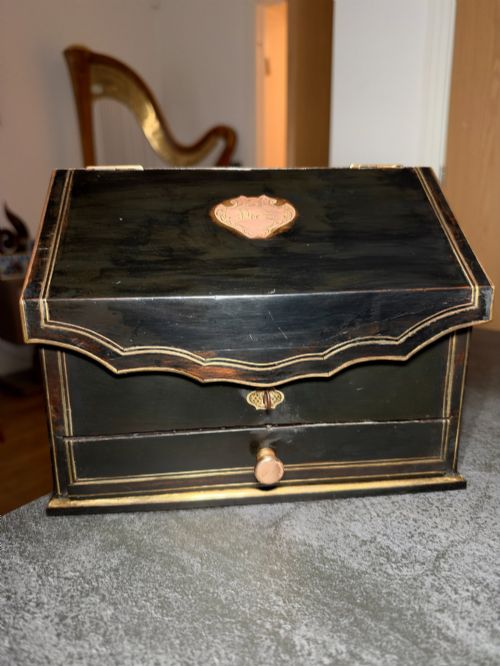
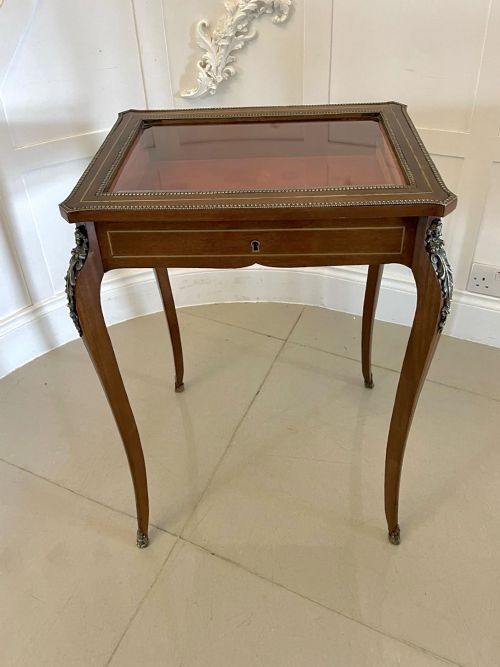
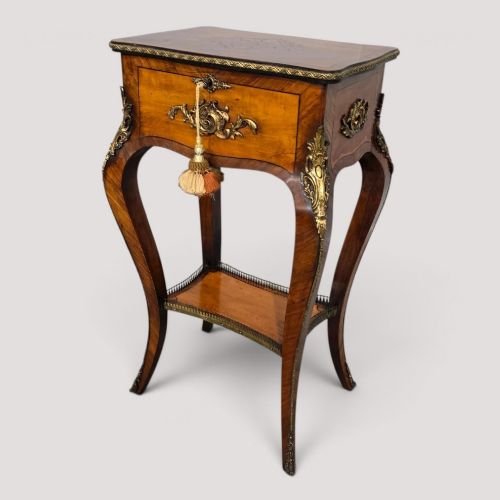
A brass jewellery cabinet encompasses compact table cabinets, miniature chests of drawers, and glazed bijouterie tables designed for precious items. These pieces emerge from periods spanning the seventeenth century through the Edwardian era and mid-twentieth century.
The versions most commonly met on this page include nineteenth-century French and Victorian table cabinets alongside glazed display vitrines. They function as desktop or freestanding receptacles lined in fabrics such as velvet to protect small valuables.
Originating across European and continental workshops, these items integrate display glass with secure compartments. They serve as functional storage and decorative centrepieces for dressing rooms or studies.
What varies in quality
The refinement of the brass mounts and ormolu chasing dictates the visual impact of the piece. Crisp, deeply detailed metalwork distinguishes superior examples from simpler, cast variants.
Cabinetmaking precision determines longevity, evident in the flush fit of glazed doors and the smooth action of miniature drawers. The selection of timber veneers, such as figured walnut or kingwood, also elevates the tier of the object.
Interior execution, including the quality of velvet linings and the integration of internal compartments, marks the distinction between standard utilitarian boxes and fine collectors' vitrines.
Brass Jewellery Cabinet Retail Price Guide 2026
Typical asking prices for brass jewellery cabinet among the pieces listed under this phrase on Sellingantiques today, from the lower quarter to the upper quarter. They describe what is for sale here now, not the wider market.
Some miniature chests hide velvet drawers intended for secretive owners to stash miniature treasures.
François Linke
The Brass Jewellery Cabinet Glossary
- Bijouterie table
- A glass-topped display table designed specifically for showcasing small valuable objects and jewellery. These pieces often feature hinged lids and velvet-lined interiors.
- Ormolu
- Gilded bronze mounts applied to furniture and cabinets for decorative accent. This technique was widely utilised in French revival styles during the nineteenth century.
- Vitrine
- A glass-fronted or glass-sided cabinet intended for the display of curiosities or precious items. They allow visibility from multiple angles while protecting contents from dust.
- Kingwood
- A dense, heavily figured exotic timber prized for its rich brown colour and contrasting dark streaks. It frequently appears in finely veneered nineteenth-century cabinets.
- Table cabinet
- A portable or surface-standing storage piece designed to sit on top of furniture rather than rest on the floor. These often incorporate multiple small drawers or a glazed door.
Brass Jewellery Cabinet: Frequently Asked Questions
What is a brass jewellery cabinet used for?
These cabinets serve as secure, decorative receptacles for storing and displaying rings, brooches, and small trinkets. The glazed panels allow owners to view collections without opening the compartments.
They function equally well on dressing tables, desks, or specialised display stands within a room.
How do I clean the velvet interior?
Velvet linings require gentle maintenance using a soft brush or low-suction vacuum attachment to lift dust. Moisture should be avoided to prevent staining or shrinking the fabric.
Professional textile cleaning may be necessary for historic linings that show deep accumulation of debris.
Are these cabinets meant for the floor or table?
The pieces listed encompass both surface-standing table cabinets and freestanding display tables. Table cabinets are designed to rest upon larger pieces of furniture, whereas bijouterie tables stand on their own legs.
Reviewing the dimensions helps determine the correct placement within a domestic space.
How can I tell a Victorian piece from an Edwardian one?
Victorian cabinets often display heavier proportions and rich wood grains like burr walnut alongside ornate ormolu mounts. Edwardian examples frequently reflect lighter revival styles with more restrained brass detailing.
Comparing the timber selection and decorative motifs offers clues to the specific period of manufacture.