

Brass Hall Furniture
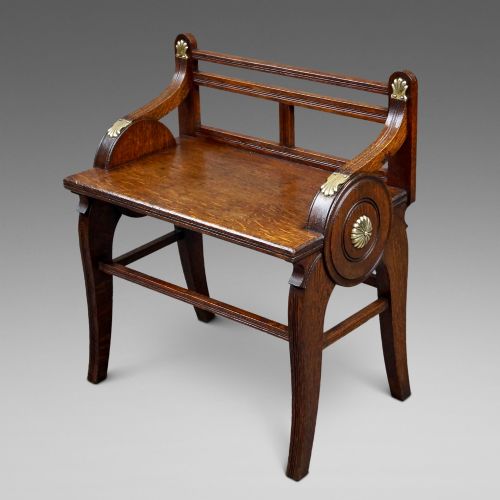
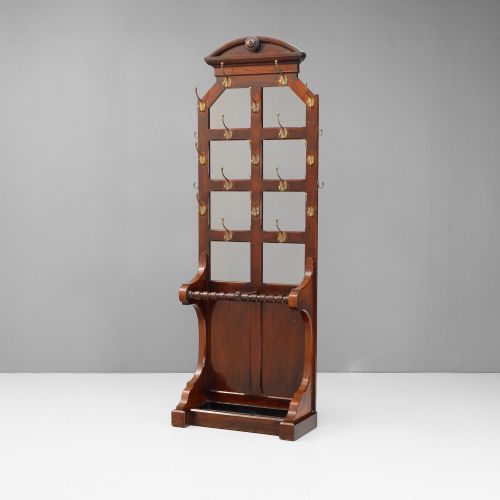
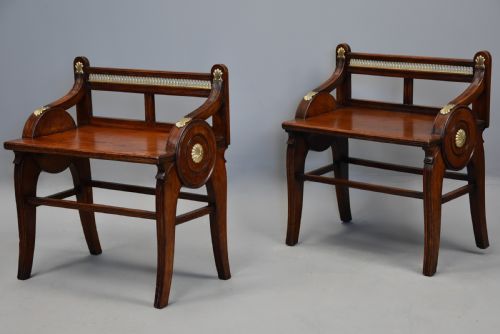
Brass hall furniture brings together sturdy timbers and gleaming metal accents to organise your entranceway with period character.
Brass Hall Furniture
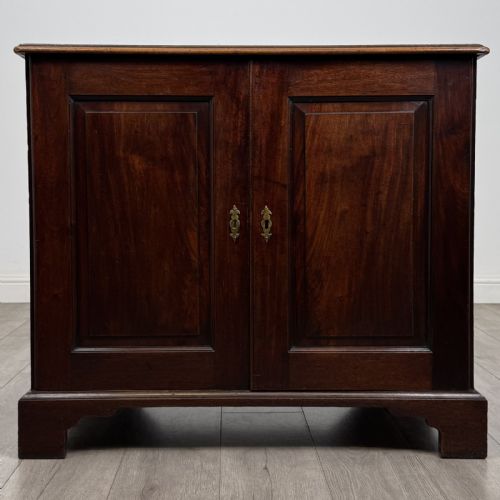
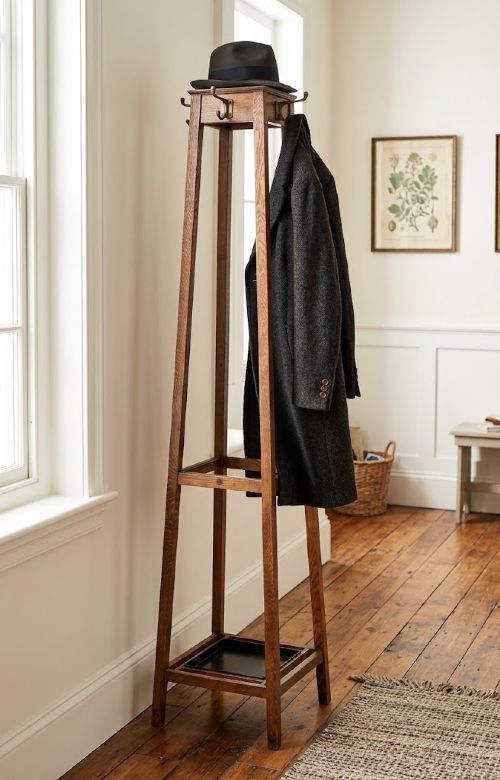
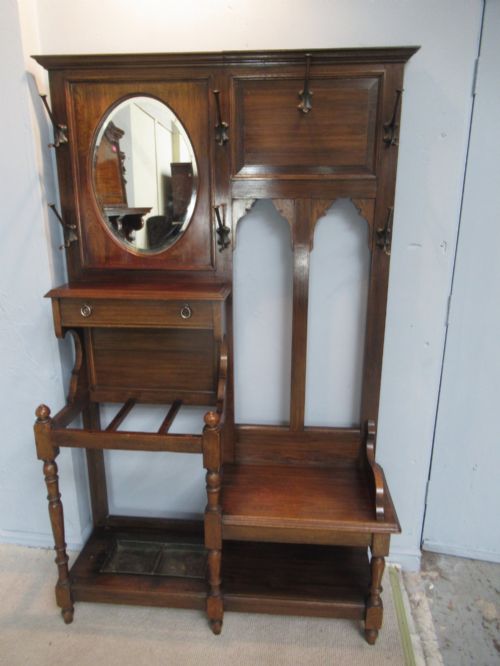
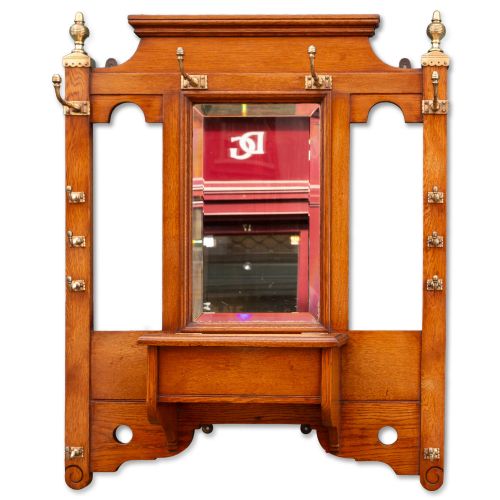
Brass hall furniture encompasses pieces designed for the entrance of a home, frequently combining structural timbers such as oak or mahogany with brass mounts, hooks, and fittings. When exploring brass hall furniture, you will encounter items originating from the 18th century through to the Edwardian and later periods, reflecting changing domestic requirements for hanging coats, storing umbrellas, and setting down hats.
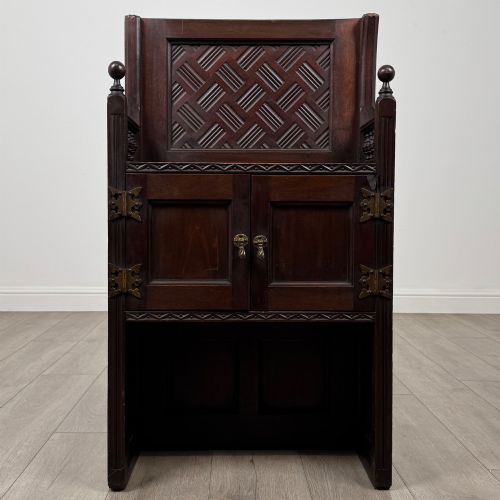
The selections available range from umbrella and stick stands cast in iron and brass to timber hall stands, benches, and console tables fitted with brass hardware. Pieces span various design movements including Georgian, Regency, Victorian, and Gothic Revival, demonstrating how makers integrated metal details into everyday hallway furnishings.
How they were made
Construction relies heavily on durable hardwoods like oak, mahogany, and walnut, often paired with cast iron and brass for structural strength and decorative contrast. Metal components such as hooks, rods, and drip pans were cast or hammered and then secured to timber frames using traditional joinery and brass screws.
Surface finishes vary from dry, unpolished timber surfaces to rich rosewood and polished mahogany, reflecting the cabinetmaker's choice for each specific commission. Brass mounts and inlay work provide a bright metallic finish against the darker tones of walnut and mahogany.
Listings feature oak, mahogany, walnut, and rosewood timbers alongside cast iron and brass elements across the Georgian, Victorian, and Edwardian periods.
What varies in quality
Quality in these pieces is determined by the selection of timber and the precision of the brass work integrated into the design. Master cabinetmakers utilised choice grains of mahogany and figured walnut, pairing them with robust, well-cast brass hardware that remains secure over generations.
Design complexity and the integration of maker-marked components distinguish standard utility items from higher-end commissions. Pieces produced by recognised cabinetmakers display superior proportions, finer carving, and more elaborate brass mounts compared to simpler country workshop examples.
Shoolbred and Co·James Shoolbred and Co·W Williamson and Sons of Guildford·Muirhead Moffat and Co·Jenners
The Brass Hall Furniture Glossary
- Gueridon
- A small circular table on a central pillar or tripod base, originating in the 17th century. Examples from the 19th century often incorporate marble tops and brass-mounted bases.
- Console table
- A table designed to be fixed against a wall, sometimes supported by brackets or front legs. Regency and later versions often feature rosewood veneers and brass inlay.
- Stick stand
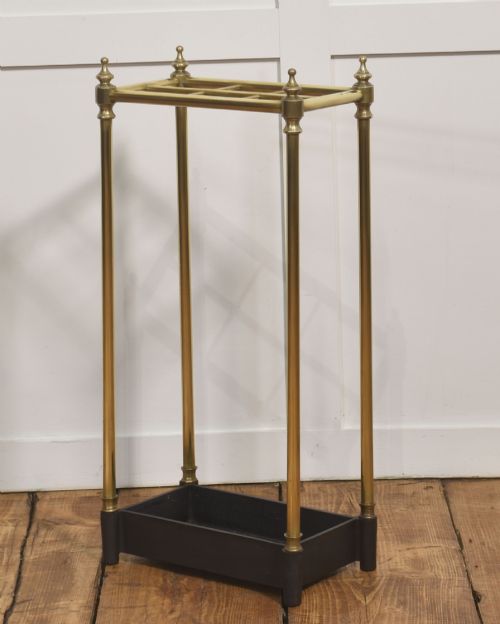
- A compact piece designed specifically for holding walking sticks and umbrellas. Nineteenth-century versions commonly employ cast iron and brass components with removable metal drip trays.
- Campaign style
- Furniture constructed for portability, characterised by recessed brass handles and corner brackets. Pieces in this style utilise sturdy timbers to withstand travel.
Brass Hall Furniture: Frequently Asked Questions
What is a lowboy used for?
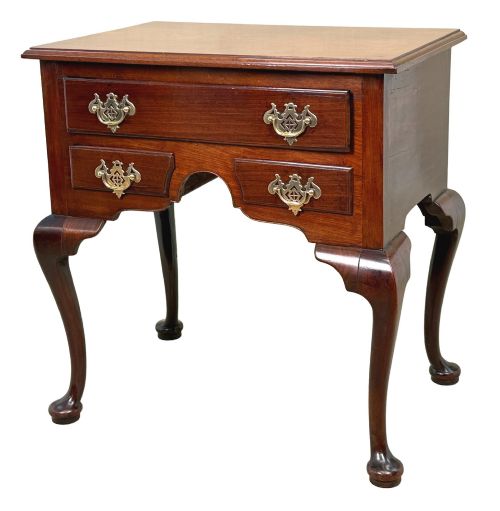
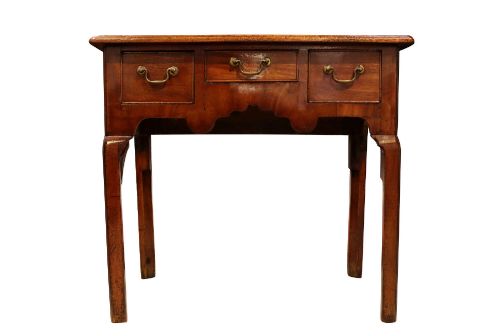
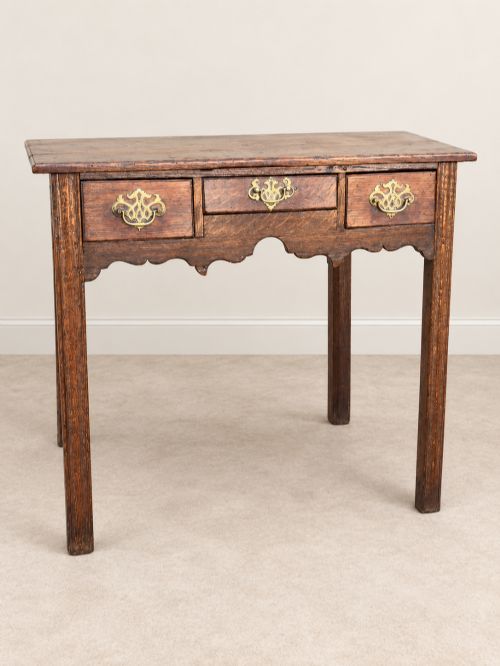
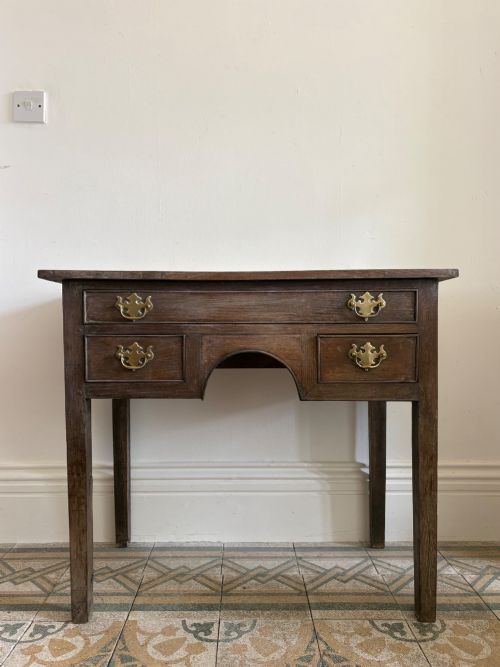
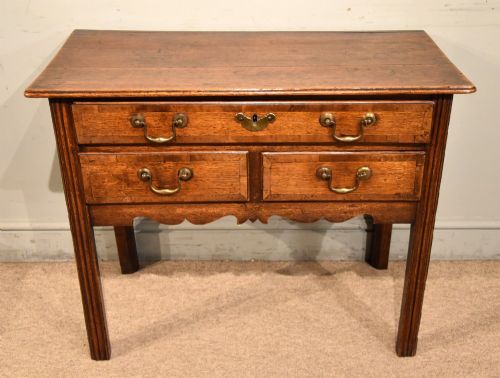
A lowboy functions as a small side table or dressing table equipped with drawers. In a hallway or reception room, it provides surface space and discreet storage for small items.
Historically, these tables were placed against walls in parlours and halls, constructed primarily in oak and mahogany during the 18th and early 19th centuries.
How do I identify Regency brass furniture?
Regency pieces often display classical motifs, dark rosewood veneers, and precise brass inlay or mounts. The design language draws heavily on Greek and Roman architectural influences.
Makers of this period focused on clean lines balanced by rich timber grains and gleaming metallic contrasts.
What materials make up umbrella stands?
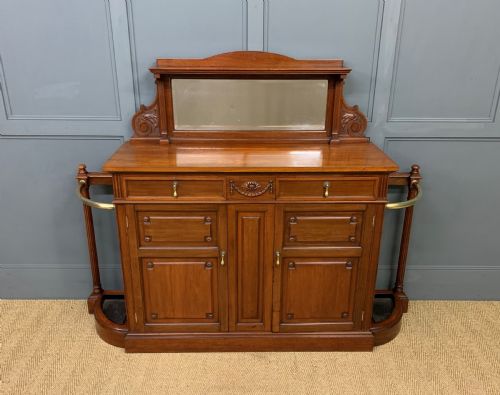
Umbrella and stick stands typically combine cast iron frames with brass rails, rings, and removable drip trays. This combination provided the heavy base required to support wet umbrellas without tipping.
Iron provided structural stability while brass added decorative brightness and resistance to water corrosion.