


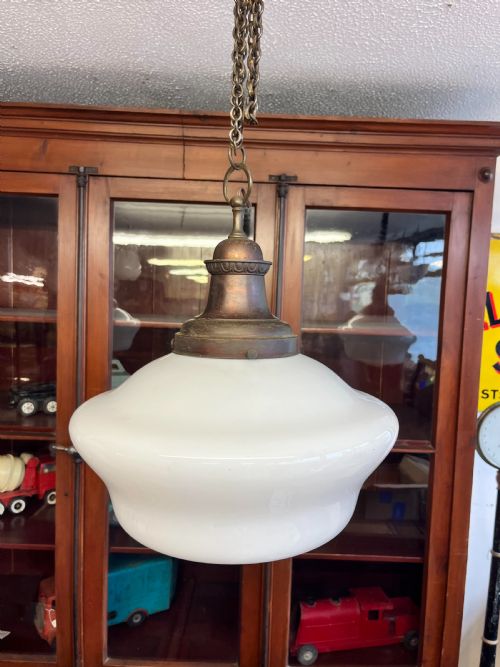


Brass Globe Pendant
A brass globe pendant brings focused light and simple geometry into a room, suspended from a ceiling to anchor a space with functional age.
Brass Globe Pendant
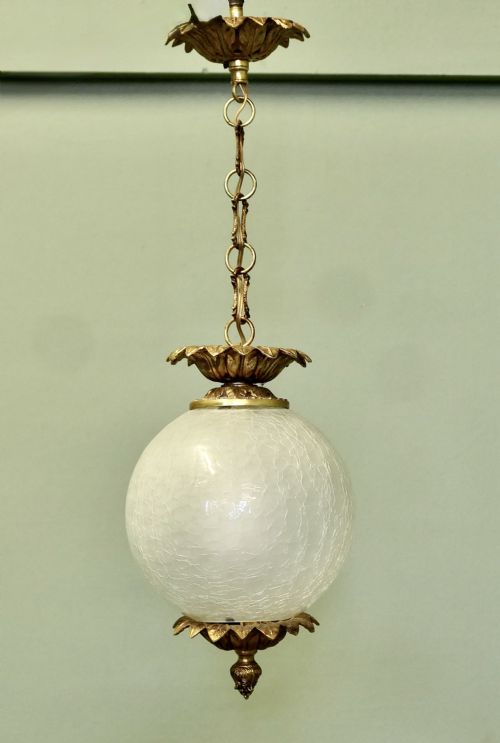
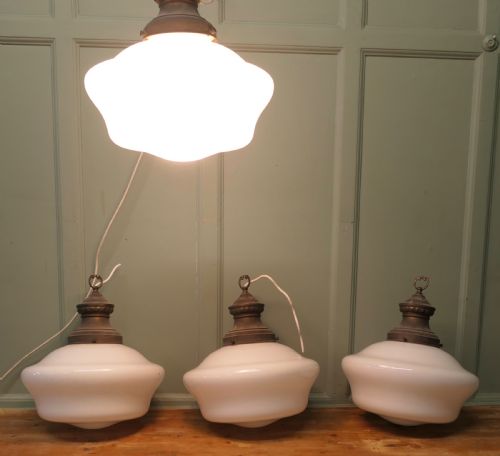
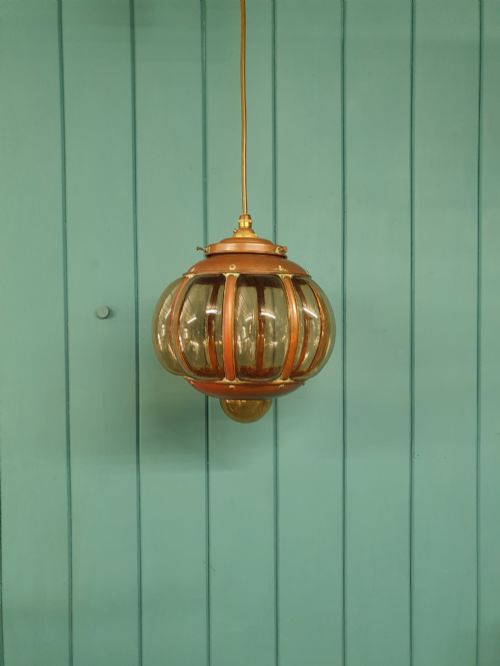
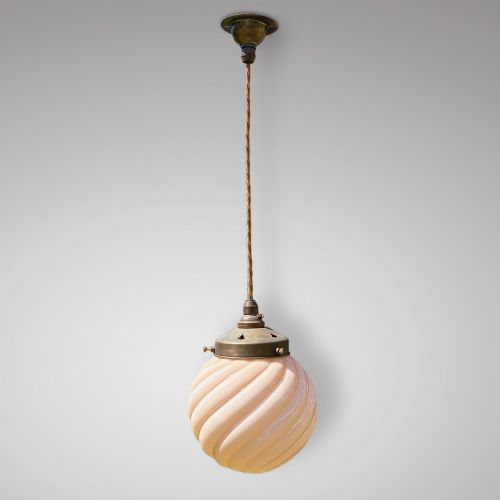
When you search for a brass globe pendant, you are looking at overhead lighting fixtures that combine metalwork with spherical glass shades. These fixtures date across the Victorian, Edwardian, and Art Deco periods, reaching through the nineteen-twenties and nineteen-thirties.
The versions you are most likely to meet on this page include industrial pharmacy lights, nautical fixtures, and decorative hallway lamps. They take forms from simple spherical shades to caged designs and chapel lights, originating from English and French workshops.
How they were made
Makers formed these fixtures using solid brass and copper for the structural frames, galleries, and suspenders. Metal components often received gilt finishes or industrial treatments to suit domestic or commercial interiors.
The spherical diffusers rely on opaline glass, opal glass, smoked glass, or crackle glass, sometimes shaped into prismatic or double prismatic patterns. These glass globes work alongside fabric flex wiring to hang safely from ceilings.
Ceiling lights on this page span from nineteen-hundred through the nineteen-thirties, including French and English origins.
What varies in quality
The distinction between ordinary and exceptional examples lies in the weight of the metal casting and the depth of the glass. Heavier brass mountings and thick, evenly blown opaline or moonstone glass separate standard production from superior work.
Proportion and detail also set pieces apart, particularly where galleries meet the glass sphere with precise threading and secure fixings. Finer pieces retain original surface patination and specialised glass textures such as prismatic ribs.
Perry & Co
The Brass Globe Pendant Glossary
- Opaline glass
- A milky, semi-translucent glass that diffuses light softly without harsh glare. It was widely used in Victorian and Edwardian lighting to create an even glow.
- Prismatic glass
- Glass moulded with small optical ridges or prisms designed to refract and scatter light efficiently. Holophane production famously utilised this technique in early twentieth-century industrial lighting.
- Gallery
- The metal collar or ring that grips the top of a glass shade and connects it to the suspension rod or flex. It provides structural support for the hanging weight.
- Gilt bronze
- Metalwork coated with a fine layer of gold or gold-coloured alloy to give a rich metallic sheen. This finish appears frequently on high-status Victorian and Edwardian hanging lanterns.
Brass Globe Pendant: Frequently Asked Questions
How do I hang a brass globe pendant?
These fixtures suspend from ceilings using cord, chain, or fabric flex attached to a matching ceiling rose. You should ensure the ceiling structure and wiring can support the combined weight of the metal and glass.
Professional electrical installation is recommended to safely connect older brass fittings to modern domestic mains supply.
Where should I place a ceiling light?
Pendant lights suit hallways, kitchens, and dining spaces where direct overhead illumination is practical. Their spherical drop works well centred in rooms with high ceilings.
Take care to hang the fixture at a height that clears head height while providing the correct pool of light for the floor or table below.
How do I clean opaline glass shades?
Dust the exterior regularly with a soft, dry cloth to prevent grime build-up on the glass surface. For deeper cleaning, remove the shade from the brass gallery and wash it in warm, soapy water.
Avoid abrasive scrubbers that might scratch the surface, and ensure the glass is completely dry before reattaching it to the metal fittings.