




Brass Gallery Lamp Table
A brass gallery lamp table brings practical surface space and polished metal detail to a room, holding a lamp or book with quiet elegance.
Brass Gallery Lamp Table
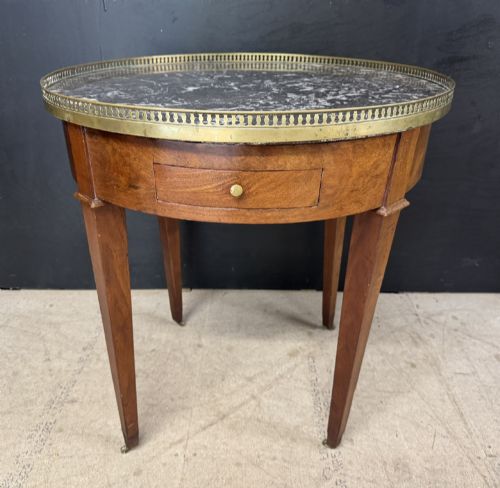
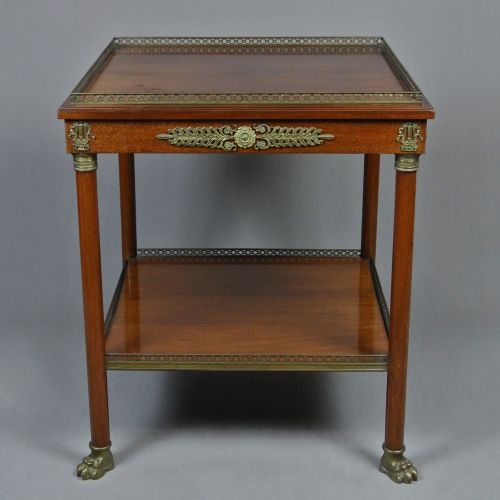
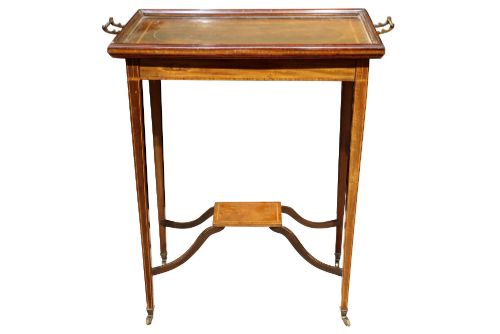
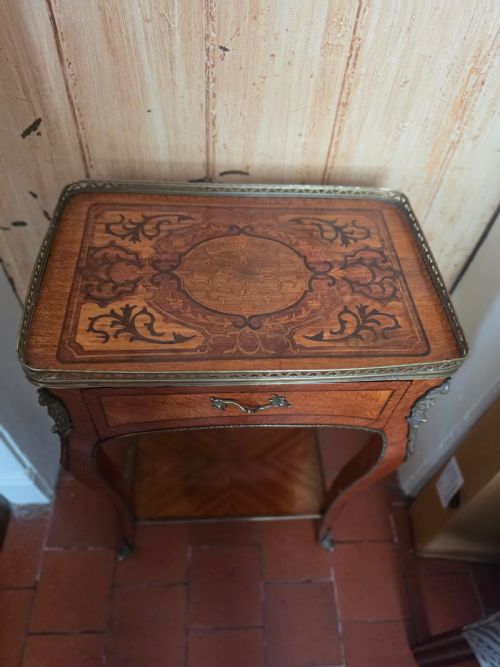
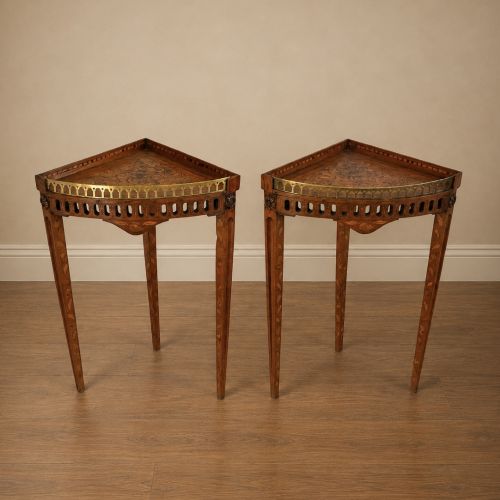
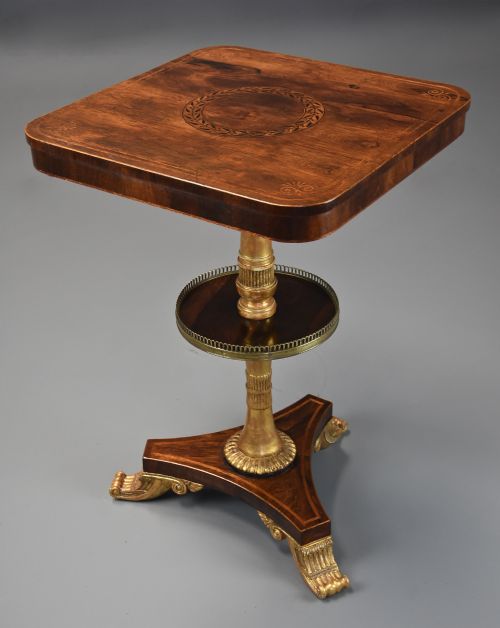
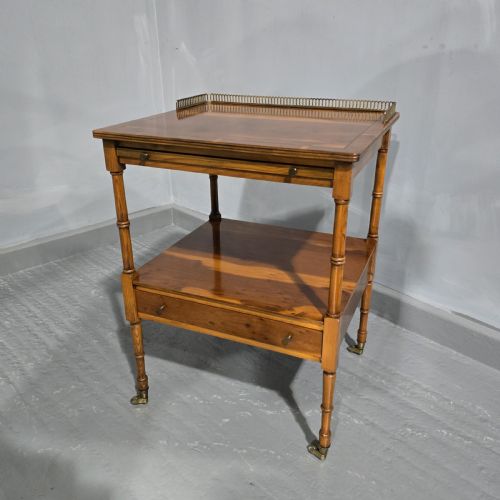
A brass gallery lamp table is a small surface designed to hold lighting or decorative objects, typically featuring a raised metal rail around the edge to keep items secure. These pieces appear in forms such as occasional tables, gueridons, side tables, and bouillotte tables, spanning periods from the eighteenth century through to the early twentieth century. The selection leans heavily towards French circular designs alongside Edwardian and Georgian mahogany iterations.
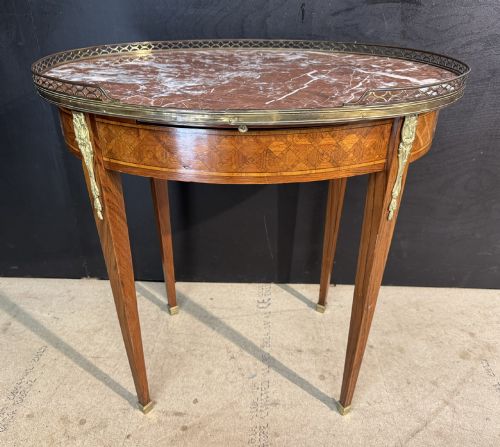
Makers and designers from various European traditions shaped these forms, incorporating details from Regency, Louis XVI, and Empire styles. The listings include circular marble tops, oval satinwood surfaces, and multi-tiered occasional furniture designed for specific corners or bedside use. Buyers encounter both restrained British mahogany pieces and more ornate continental marquetry and parquetry examples.
Materials and construction
Cabinetmakers built these tables using solid and veneered timbers including mahogany, walnut, rosewood, satinwood, kingwood, and yew wood. Surfaces often display intricate marquetry, parquetry, or Chinoiserie lacquer work, supported by finely turned or fluted legs. The defining characteristic involves the integration of cast or polished brass galleries fixed to the perimeter of the top.
Circular and oval tops frequently incorporate inset slabs of white marble or onyx rather than timber alone. Structural joints rely on traditional woodworking techniques while metal components utilise cast and gilt bronze or brass fittings secured directly to the wooden rim or marble edge.
Some tables were built narrow enough simply to squeeze beside a fainting couch.
Evaluating craftsmanship
Quality rests in the crispness of the timber inlay, the weight and finish of the brass gallery, and the precision of the joinery. Superior examples maintain tight, flush joints between the timber top and the surrounding metal rail, whereas lesser pieces show uneven gaps or replacement fixings.
The choice of materials dictates the upper tier of the range, with selected burr walnut, kingwood, and figured mahogany paired with heavy, finely pierced brass galleries. Finer tables display hand-turned legs and subtle proportions that balance the reflective metal rim without feeling top-heavy.
George Bullock·A Hugnet Paris·Haentgos Freres Paris
The Brass Gallery Lamp Table Glossary
- Brass gallery
- A raised metal railing fitted around the edge of a tabletop to prevent items from sliding off. It is typically pierced or cast in openwork patterns.
- Guéridon
- A small French occasional table, frequently circular with a central pedestal or three legs, popular for holding lamps or decorative objects. Many examples feature marble tops and brass galleries.
- Bouillotte table
- A small French neoclassical side or card table with a raised brass gallery, traditionally used for the card game bouillotte. They often include marble tops and small pull-out candle slides.
- Marquetry
- The art of forming decorative patterns by fitting together thin veneers of different coloured woods, ivory, or shell. This technique appears on the tops and drawers of many fine occasional tables.
- Etagere
- A piece of furniture consisting of a set of open shelves for displaying small objects or books. These occur in multi-tiered occasional formats with brass supports.
Brass Gallery Lamp Table: Frequently Asked Questions
What is a brass gallery lamp table used for?
These tables provide a stable, compact surface positioned beside seating or beds to hold lighting, drinks, or small decorative items. The raised metal rim prevents objects from sliding off the edge.
Historically, similar small tables served specialised functions like card games or holding portable lamps in drawing rooms and boudoirs.
How do I identify French styles?
French tables of this type often exhibit marble or onyx inset tops, kingwood or walnut veneers, and specific stylistic cues from the Louis XVI or Empire periods. Look for tapered fluted legs, parquetry patterns, and refined proportions.
British equivalents from the Georgian or Edwardian eras tend to rely more on solid mahogany, satinwood, and subtle stringing inlay rather than heavy mounts.
Are marble tops original to these tables?
Many circular and oval occasional tables were constructed specifically to house inset white marble or onyx slabs from the workshop. The weight of the stone provides stability for a small footprint.
Examine the underside of the top to check how the stone or timber panel rests within the rebated frame and brass gallery.
How do I care for inlaid wood surfaces?
Keep wooden occasional tables away from direct sunlight and strong heat sources to prevent the fine veneers from drying out or splitting. Gentle dusting with a dry cloth preserves the polished finish.
Avoid placing damp items directly onto antique timber or polished veneer without using protective coasters.