

Brass Drop Pendant Light
A brass drop pendant light brings distinct illumination and period character to a room, drawing the eye upward with metal and glass.
Brass Drop Pendant Light
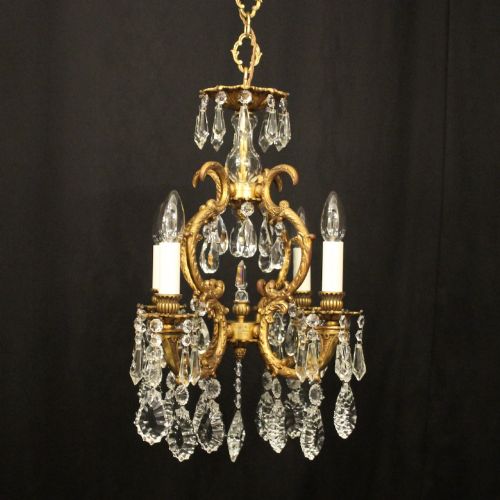
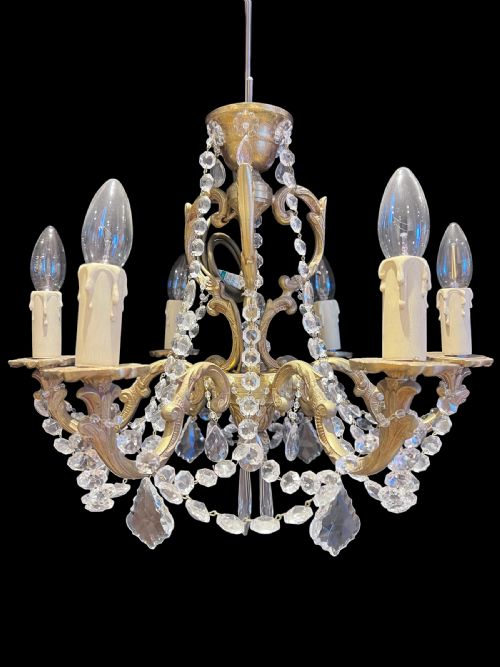
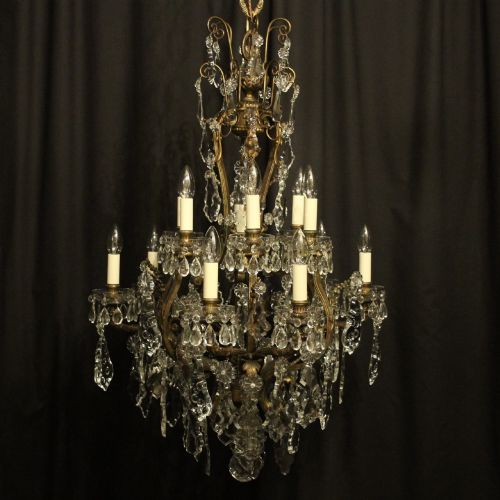
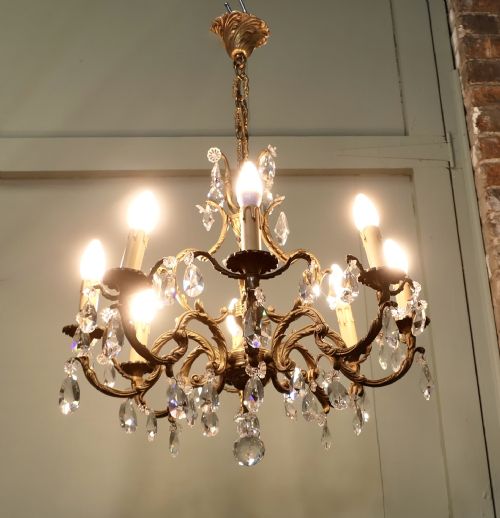
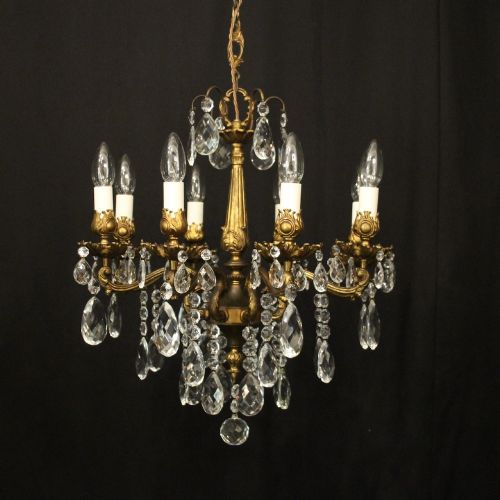
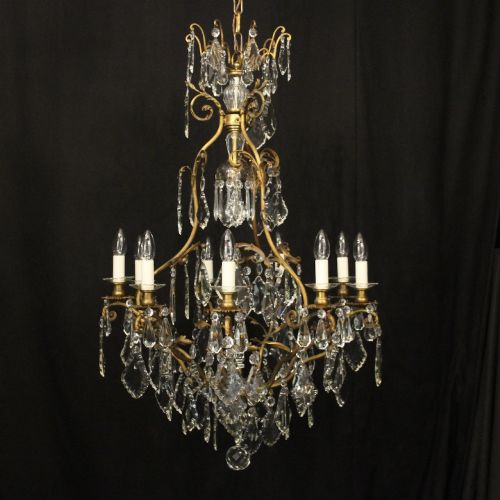
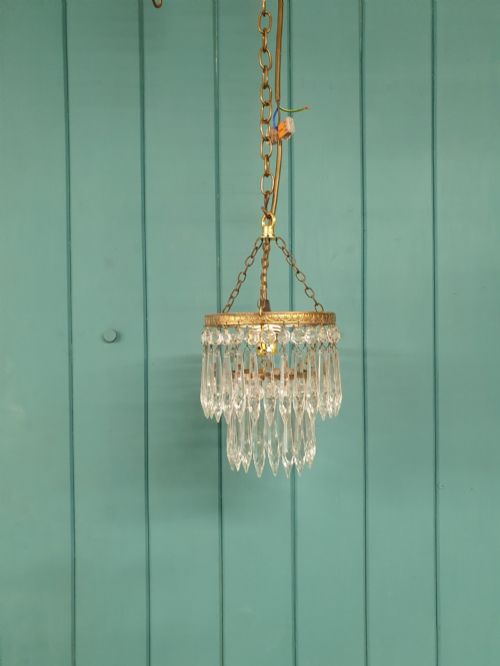
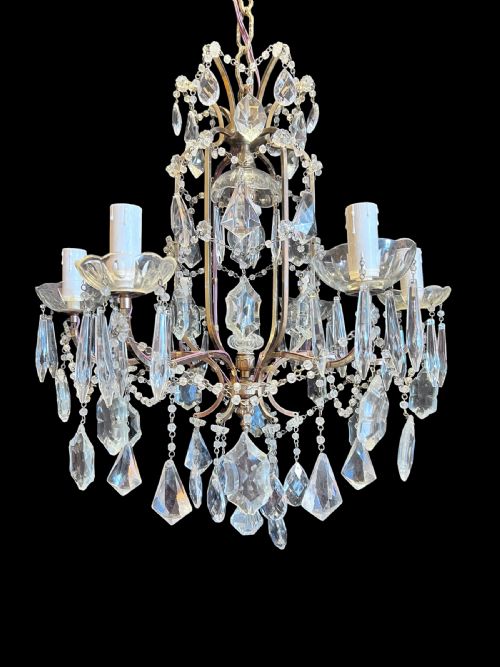
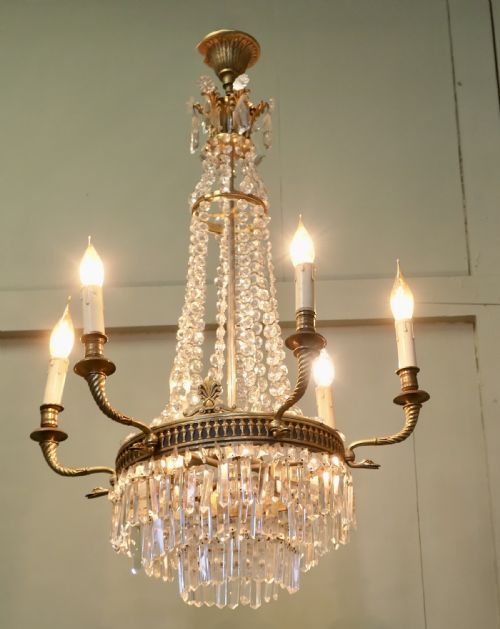
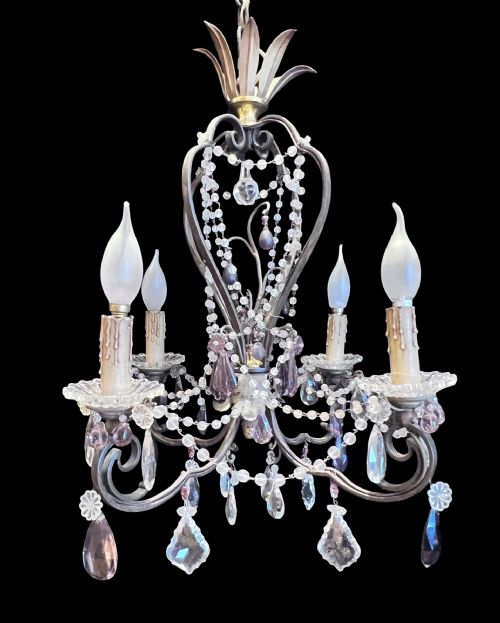
A brass drop pendant light spans various forms from the nineteenth and early twentieth centuries, including multi-arm fixtures and ceiling lights. These pieces frequently incorporate brass frames paired with hanging crystals or cut glass elements.
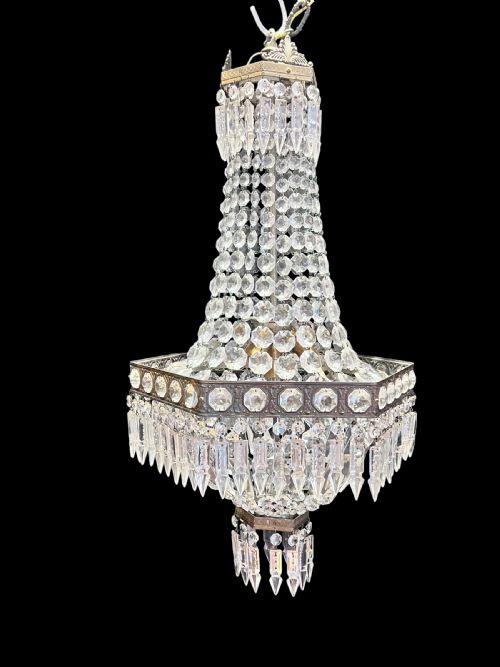
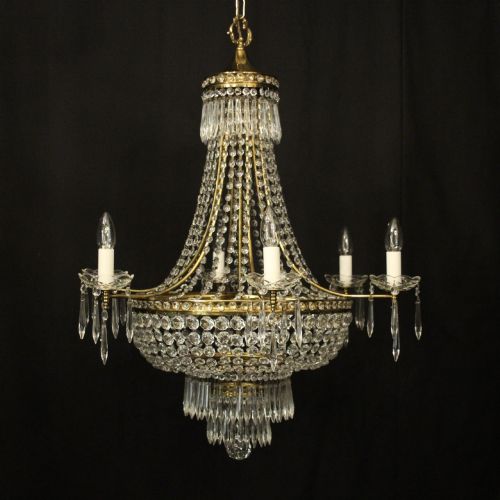
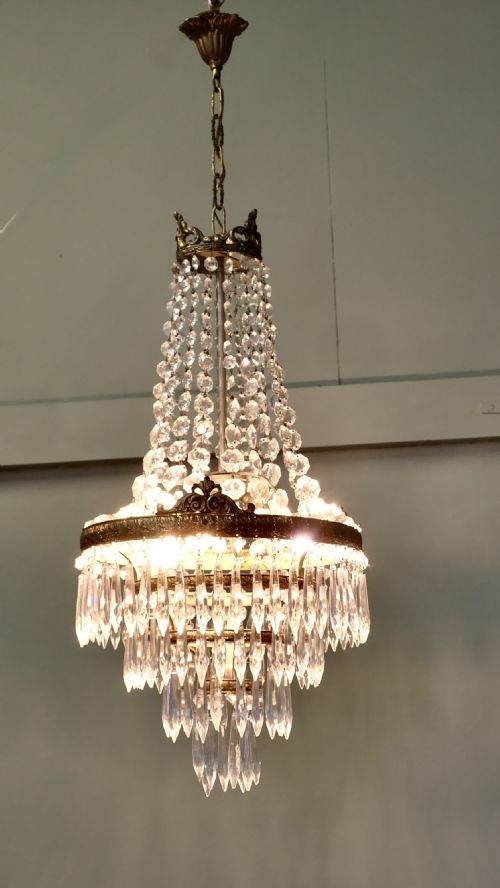
The selection on this page centres heavily on French and Italian designs spanning the nineteenth century up through the nineteen-thirties. Buyers encounter styles ranging from Empire tent and waterfall configurations to Edwardian spike chandeliers and industrial ceiling lights.
Materials and construction
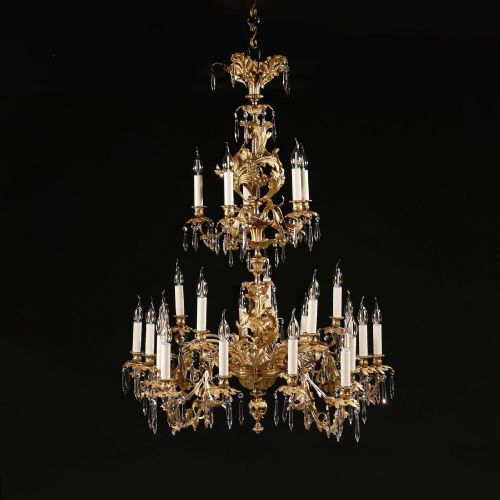
The primary structural framework relies on brass, gilded brass, and gilt bronze shaped into arms, frames, and decorative mounts. Metal casting and gilt work define the structural integrity and surface finish of each fixture.
Glass and crystal components complete the lighting assemblies. Cut glass, crystal lustres, beads, and prisms are suspended from the metal frames to refract light across the room.
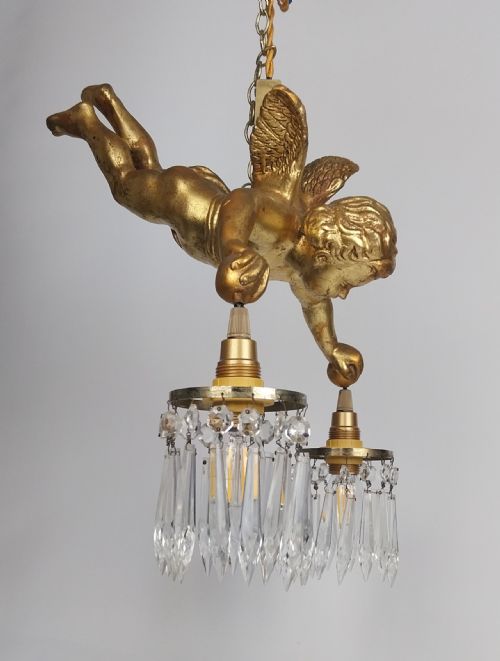
Keep an eye out for gilded winged cherubs and turquoise crystals hiding amongst the standard brass and glass.
Factors of distinction
The intricacy of the metalwork and the clarity of the hanging glass elements separate different examples. Finer pieces demonstrate careful casting, detailed leaf or winged cherub motifs, and precise cutting on crystal prisms.
Scale and proportion also define the range. Larger multi-light configurations with complex tent and waterfall arrangements or extensive crystal drops require greater structural coordination than smaller single-light or spike chandeliers.
The Brass Drop Pendant Light Glossary
- Brass
- A metal alloy of copper and zinc commonly utilised for the structural framework of antique lighting. It provides a durable base that is frequently gilded or polished.
- Crystal
- A high-clarity glass used for decorative drops, lustres, and prisms. It is cut and polished to maximise light refraction.
- Tent and Waterfall
- A lighting silhouette where strings of crystal beads form an upper tent shape above a cascading waterfall of further crystals. This configuration is typical of Empire style fixtures.
- Spike Chandelier
- A compact lighting form featuring a central vertical spike surrounded by radiating arms and glass drops. These smaller fixtures are frequently seen in Edwardian pieces.
- Lustre
- A hanging glass pendant or drop suspended from the arms or frame of a chandelier. Lustres catch and reflect the illumination from the bulbs or candles.
Brass Drop Pendant Light: Frequently Asked Questions
How do I hang a brass drop pendant light?
These fixtures suspend from ceilings using chains or matching brass rods connected to a ceiling rose. Professional installation ensures the electrical wiring and ceiling support safely bear the weight of the metal and glass.
Placement depends on room height and furniture arrangement. Hanging a fixture over a dining table or in a central hallway provides balanced illumination while keeping the lower tiers clear of foot traffic.
What periods do these pendant lights come from?
The lighting options span the nineteenth century through the early twentieth century, including Edwardian examples and pieces from the nineteen-twenties and nineteen-thirties.
Stylistic indicators such as French Empire tent configurations, Rococo revival details, and Art Deco lines help identify the specific era of manufacture.
How do I clean a crystal and brass light?
Routine maintenance involves dusting the brass frame and glass elements with a soft cloth. Removing individual crystals for gentle washing in warm soapy water restores their clarity when deeper cleaning is necessary.
Harsh chemical cleaners should be avoided on both the metal gilding and the delicate glass surfaces to preserve the original finish.
Are these lights electrified or for candles?
Most surviving examples from the nineteenth and early twentieth centuries have been adapted for modern electrical wiring while retaining their period appearance. Some earlier candle-form chandeliers remain available for specialised settings.
Checking the individual listing details clarifies whether a piece uses standard electrical lamp holders or preserves antique candle sockets.