
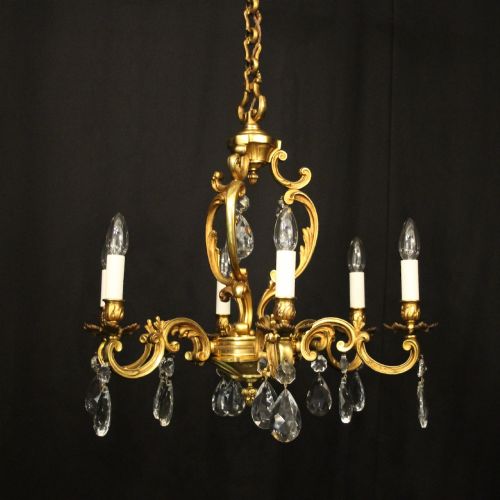
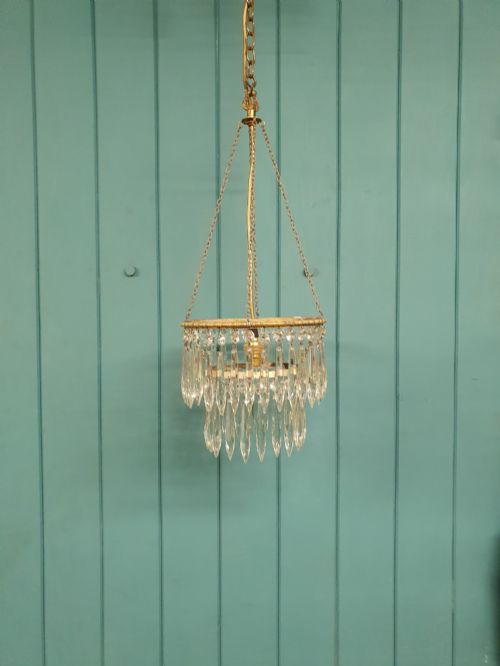
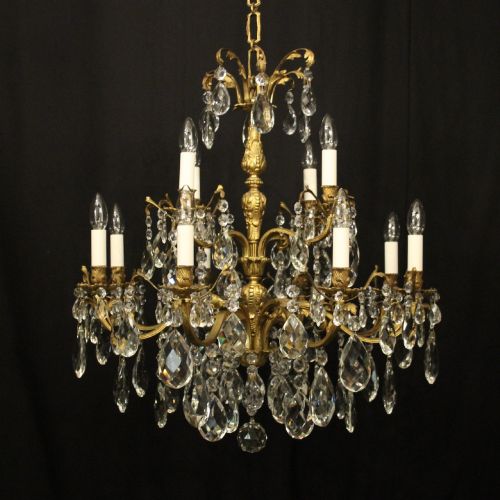
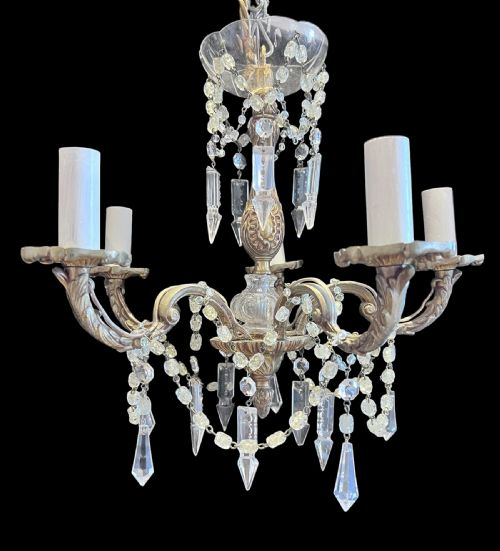
Brass Crystal Pendant Fixture
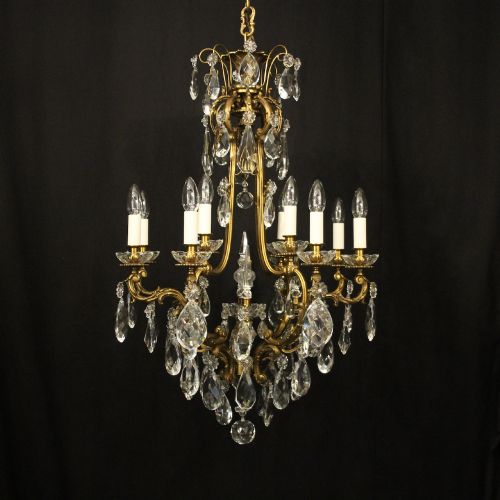
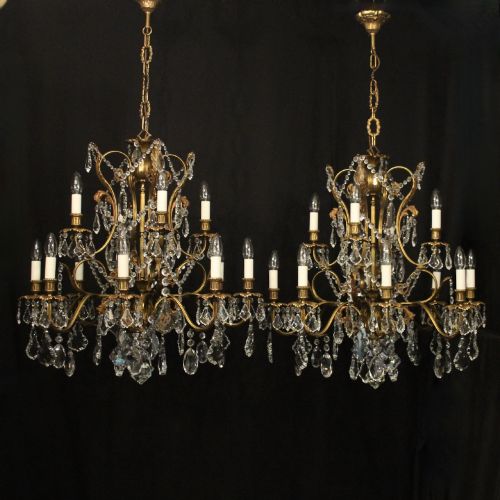
These brass crystal pendant fixtures illuminate spaces with historic French and Italian design, bringing cut glass and metalwork together overhead.
Brass Crystal Pendant Fixture
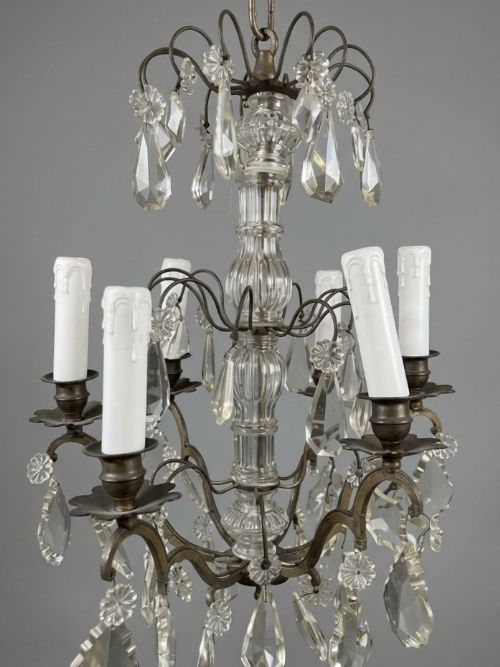
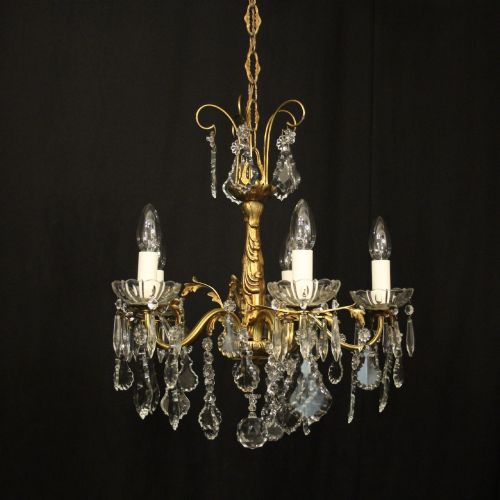
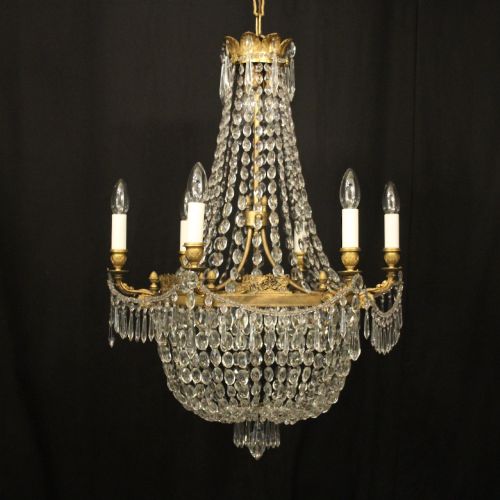
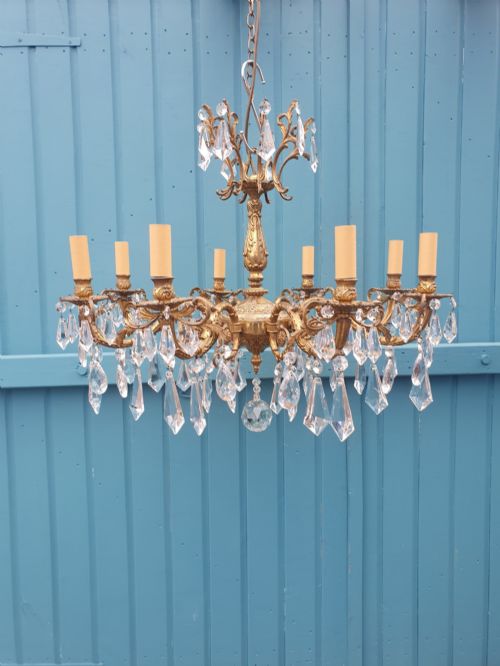
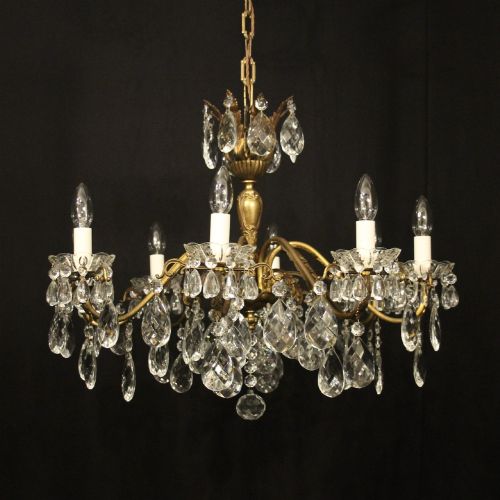
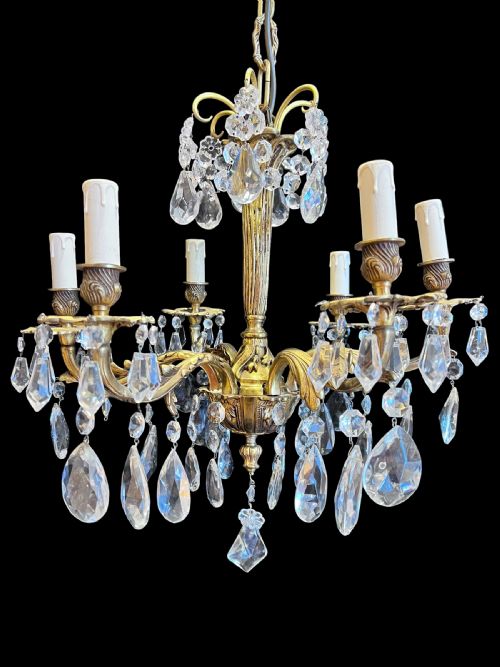
A brass crystal pendant fixture delivers overhead illumination through a combination of metallic frames and suspended glass elements. When looking for a brass crystal pendant fixture, one encounters a strong representation of French and Italian ceiling lighting originating from the late nineteenth century through the 1930s.
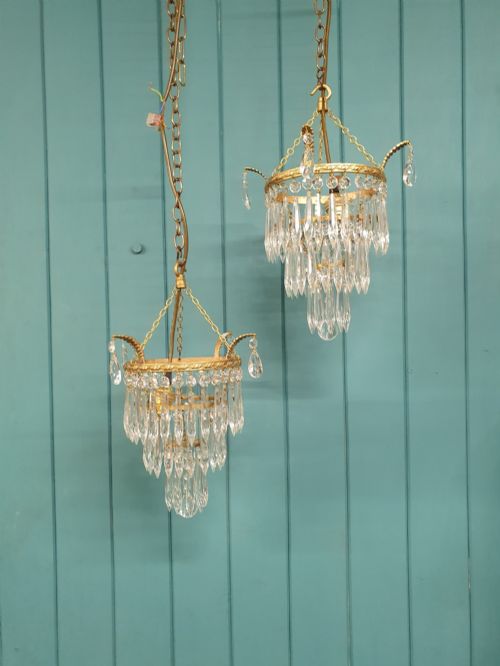
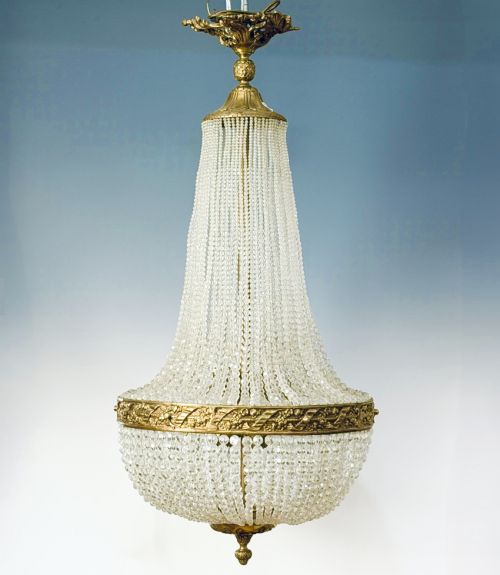
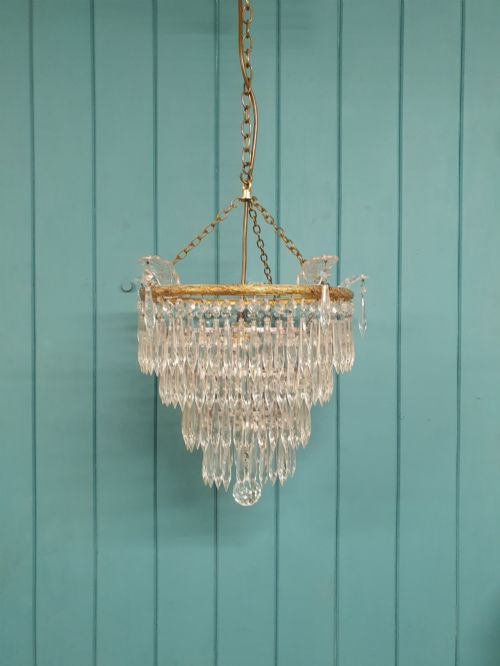
The selection ranges from multi-light chandeliers and tent and waterfall configurations to smaller dome top plafonniers and spike chandeliers. Pieces often incorporate distinct regional styles, including French Empire, Rococo, and Florentine designs alongside Edwardian English examples.
How they were made
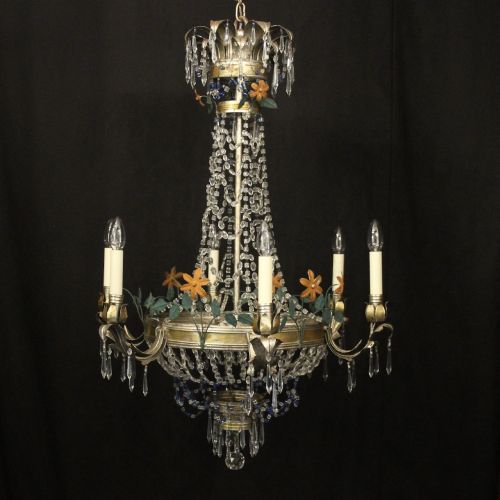
Makers constructed the structural framework using cast brass, gilt bronze, and gilded metal, frequently incorporating decorative elements like lion masks, porcelain flowers, or leaf motifs. Frames were then populated with glass, cut glass, and crystal drops, prisms, or lustres to refract the light.
Lighting designs relied on mechanical assembly to secure cascading crystal strands, coffin prisms, and acorn-shaped plafonniers to the metal armature. Artisans balanced the heavy metal frames with precise arrangements of coloured and clear crystals to create structured forms such as tent and waterfall arrays.
What varies in quality
Quality differentiates through the precision of the metal casting and the clarity of the glass elements. Heavier gilt bronze frames and hand-cut crystal drops indicate a higher standard of production compared to lighter stamped metal and pressed glass.
The complexity of the configuration alters the character of the piece, moving from simple single-tier fixtures to multi-light arrangements with intricate bronze work, cascading crystal drops, and integrated decorative hardware.
The Brass Crystal Pendant Fixture Glossary
- Plafonnier
- A ceiling light that sits flush or close to the ceiling surface. These fixtures often feature dome or bowl-shaped glass secured in metal mounts.
- Tent and waterfall
- A lighting configuration where strings of crystals form a triangular tent shape at the top before cascading down the sides in a waterfall effect. This style derives from French Empire designs.
- Lustre
- A cut glass pendant or hanging prism suspended from a chandelier to catch and reflect light. Lustres appear in various geometric cuts.
- Gilt bronze
- Bronze coated with a thin layer of gold or gold-coloured alloy. This material provides durability and a rich metallic finish for decorative frames.
Brass Crystal Pendant Fixture: Frequently Asked Questions
What periods do these fixtures come from?
The listings span from the late nineteenth century through the Edwardian era and into the 1920s and 1930s. Most pieces date from this broader turn-of-the-century window.
French and Italian workshops dominate this period, producing diverse regional styles that range from ornate Empire designs to simpler dome top plafonniers.
How were these ceiling lights originally used?
These fixtures served as primary illumination for reception rooms, hallways, and dining spaces in period homes. Their suspended crystal elements helped distribute light effectively throughout large rooms.
Many designs functioned as decorative centerpieces, combining metal frames with elaborate glass drops to signal the status of the interior.
What is the difference between a chandelier and a plafonnier?
A chandelier suspends downward from the ceiling on a chain, drop, or stem, holding multiple arms and exposed light sources. It creates a vertical focal point in a room.
A plafonnier mounts much closer to the ceiling as a flush or semi-flush fixture, typically enclosing the light source within a glass dome or bowl.