



Brass Corinthian Capital Lamps
Brass corinthian capital lamps bring architectural presence to a room, channelling neoclassical grandeur into steady interior illumination.
Brass Corinthian Capital Lamps
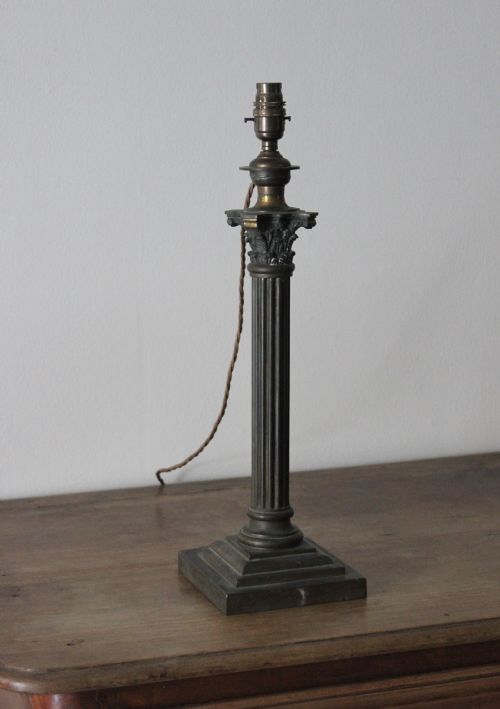
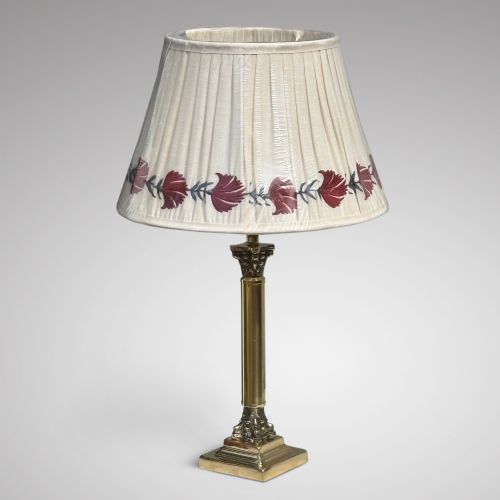
Brass corinthian capital lamps combine classical column shafts with the ornate, acanthus-leaf capitals characteristic of ancient temple architecture. You will encounter these pieces primarily as table lamps or standard lamps dating from the nineteenth and early twentieth centuries, spanning the Victorian and Edwardian periods.
The inventory on this page consists entirely of column lamps rendered in brass, silver plate, and electroplated metal. Makers adapted the neoclassical vocabulary to domestic lighting, producing single examples and matched pairs for parlours and libraries.
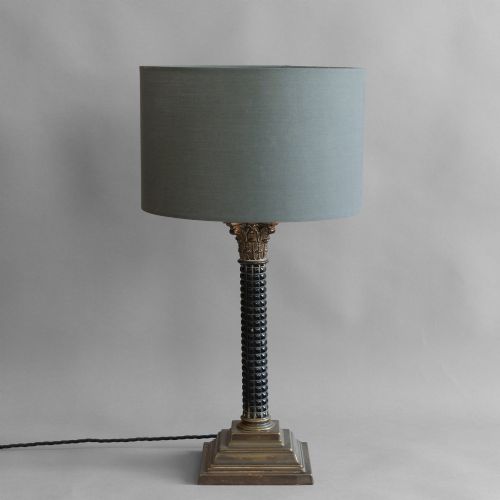
Makers experimented with materials beyond plain metal, incorporating cut glass reservoirs, onyx shafts, and patinated finishes. Standard lamps sit alongside smaller table versions, offering versatile options for period interiors.
Materials and construction
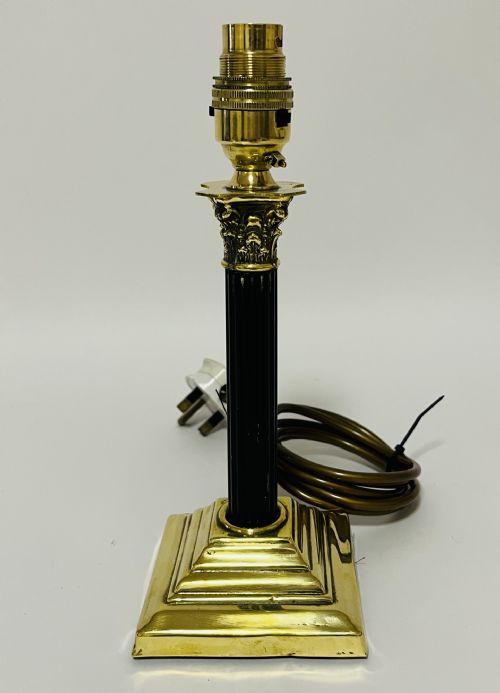
Foundries utilised cast brass for the intricate foliage of the corinthian capitals, securing crisp detail in the acanthus leaves and volutes. Shafts were turned or cast as fluted columns, resting upon stepped square bases that provided stability for heavy metalwork.
Makers occasionally combined brass with contrasting substances, mounting onyx bodies or integrating cut glass reservoirs to catch the light. Silver plate and electroplate finishes offered alternative gleaming surfaces alongside warm patinated brass.
Brass Corinthian Capital Lamps Retail Price Guide 2026
Typical asking prices for brass corinthian capital lamps among the pieces listed under this phrase on Sellingantiques today, from the lower quarter to the upper quarter. They describe what is for sale here now, not the wider market.
Birmingham founders ensured that even a humble reading light could boast the architectural dignity of a Roman temple.
Evaluating quality and execution
Quality in these lamps rests upon the sharpness of the casting in the capital and the weight of the metal used throughout the column. Superior pieces display deeply undercut foliage on the capital and substantial brass thickness rather than thin, pressed sheet metal.
Proportion and scale distinguish finer examples, particularly in matched pairs where the fluting and base mouldings maintain rigorous symmetry. The inclusion of secondary materials like onyx or cut glass adds complexity to the construction that elevates the piece.
James Hinks of Birmingham
The Brass Corinthian Capital Lamps Glossary
- Corinthian capital
- The uppermost member of a classical column, decorated with carved or cast acanthus leaves and small scrolls. It forms the defining decorative feature of these lamps.
- Fluted column
- A vertical shaft cut with parallel hollow grooves running down its length. This architectural detail mimics ancient stone masonry in metal.
- Patinated brass
- Metal surfaces showing a darkened, aged tone developed through time or chemical treatment. This finish subdues the bright yellow glare of raw brass.
- Cut glass reservoir
- A glass container for oil or paraffin positioned beneath the burner, cut with geometric patterns. It reflects light through the translucent material.
Brass Corinthian Capital Lamps: Frequently Asked Questions
How do I date these lamps?
Dating relies on stylistic markers, construction methods, and material choices recorded across the Victorian and Edwardian periods. Nineteenth-century examples often display heavier cast brass and hand-finished patination.
Later pieces from the early twentieth century may incorporate silver plating or electroplated finishes. Examining the base construction and the switches or fittings provides further clues to the decade of manufacture.
Are these lamps safe for modern wiring?
Most antique lamps require rewiring to meet contemporary electrical standards before daily use in a home. Professional electricians can update internal flexes and lampholders while preserving the historic exterior metalwork.
Original brass tubing and threaded components usually accommodate modern wiring safely. It is standard practice to check the interior path for insulation during any restoration work.
Where should I place a standard lamp?
Standard lamps suit corners of reception rooms or beside reading chairs where their height distributes light effectively. Their classical columns demand space to function as architectural accents rather than hidden background objects.
Pairing them with appropriate fabric shades balances the visual weight of the heavy brass base. Consideration of ceiling clearance helps integrate tall standard lamps safely into existing room layouts.