

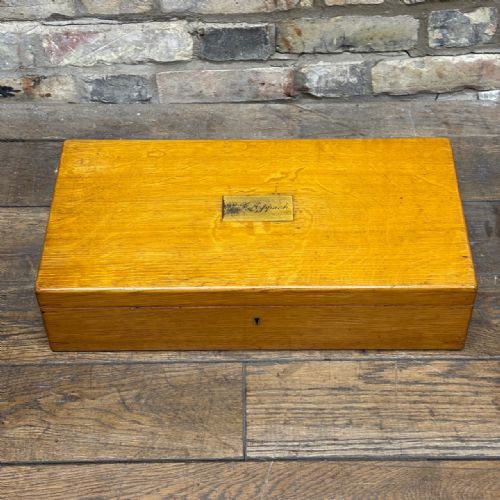


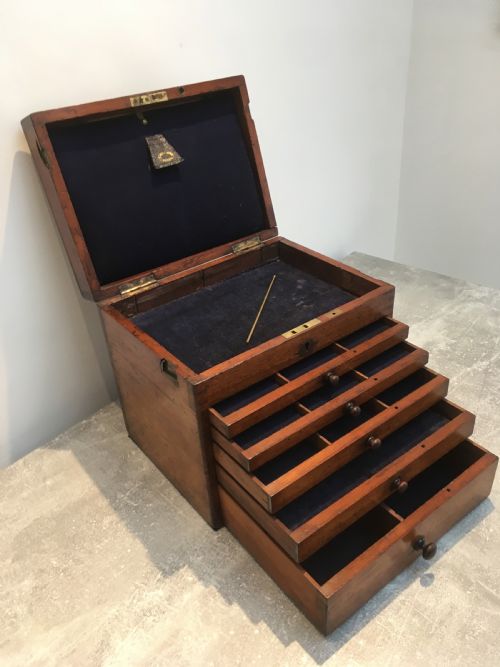


Brass Collector Case
A brass collector case protects and exhibits prized scientific instruments, firearms, and small specimens through glass and polished timber.
Brass Collector Case
A brass collector case encompasses everything from countertop shop displays and table cabinets to dedicated instrument enclosures and specimen boxes. These items appear across various periods, notably the Victorian era, the Edwardian period, and the nineteen-twenties.
Buyers seeking a brass collector case will encounter configurations built from timber frames like mahogany, oak, rosewood, and walnut, often featuring glazed panels or mirrored interiors. The selection spans scientific instruments, jewellery display tables, firearm boxes, and small cabinet works.
Origins range across English, continental, and Chinese Republic workshops, reflecting both domestic commerce and specialised scientific pursuits. The unifying thread is the combination of metal framing, protective glass, and compartmentalised or lined storage interiors.
Qualities of distinction
The distinction between standard utility boxes and finer examples rests upon the selection of timber and the precision of the brass work. Higher quality pieces utilise figured veneers, substantial bronze or ormolu mounts, and tight cabinet joinery designed to endure frequent handling.
Internal execution also separates the categories, seen in the care given to fitted velvet compartments, mirrored backings, and integrated locking mechanisms. Pieces by known instrument makers or specialist cabinet-makers generally display a higher level of finish in every structural joint.
Brass Collector Case Retail Price Guide 2026
Typical asking prices for brass collector case among the pieces listed under this phrase on Sellingantiques today, from the lower quarter to the upper quarter. They describe what is for sale here now, not the wider market.
A dentist's travelling mahogany instrument case sits quietly among the scientific gear, proving that tooth extraction once required very shiny brass hinges.
H Hughes & Son London·Alexander Adie of Edinburgh
The Brass Collector Case Glossary
- Ormolu
- Gilded bronze mounts applied to furniture and cabinet work for decorative effect. This technique creates a bright metallic accent against dark hardwoods like rosewood.
- Vitrine
- A glass-fronted display cabinet or case designed for viewing objects from multiple angles. These often stand on slender legs or rest upon tabletops.
- Bijouterie table
- A shallow glass-topped display table intended for jewellery and small curiosities. They frequently feature hinged lids and velvet-lined interiors.
- Altazimuth theodolite
- A precision scientific instrument used for measuring horizontal and vertical angles in surveying. They are typically housed in fitted mahogany or brass cases.
- Specimen case
- A small cabinet or box constructed to hold natural history items or mineral samples. Interiors are partitioned into neat compartments for organised storage.
Brass Collector Case: Frequently Asked Questions
What fits inside a brass collector case?
These enclosures accommodate a wide variety of items depending on their original purpose. Examples include scientific apparatus, pocket pistols, geological specimens, and jewellery.
Interior layouts often feature fitted compartments, velvet lining, or open shelf space designed to secure specific objects safely.
How do I date a Victorian display cabinet?
Dating relies on observing the timber species, construction methods, and hardware styles. Victorian pieces frequently employ dense hardwoods like mahogany and walnut alongside hand-cut dovetails and brass locks.
Stylistic shifts range from heavy revival designs in the mid-nineteenth century to lighter Edwardian or commercial countertop formats later on.
Were these cases used in shops or homes?
They served both commercial and domestic environments. Countertop cases and mirrored shop cabinets were built for retail displays, while table cabinets and vitrines belonged in private drawing rooms.
Scientific instrument cases and firearm boxes belonged strictly to professional practitioners or private collectors requiring portable security.
How should I clean the brass and wood?
Maintenance requires gentle dusting of the timber surfaces with a dry cloth and avoiding harsh chemical polishes. Brass elements can be cleaned sparingly with a dedicated metal cleaner.
Care must be taken to protect old velvet linings and delicate glass panels from excess moisture during routine upkeep.