


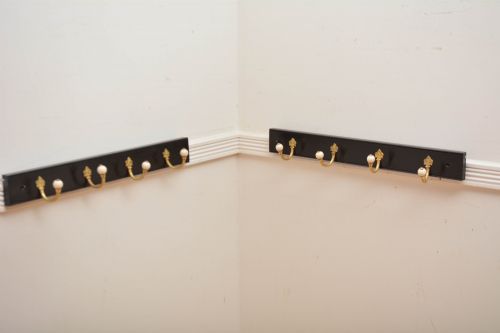


Brass Coat Hooks Wall
These brass coat hooks wall options organise an entrance hall with period character, combining heavy cast metal with rich timbers like mahogany and oak.
Brass Coat Hooks Wall
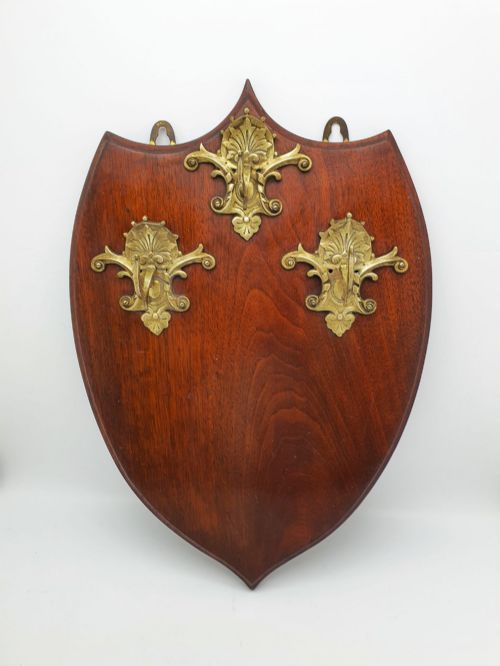
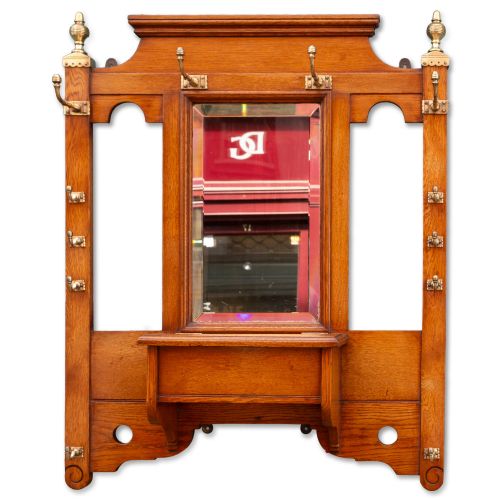
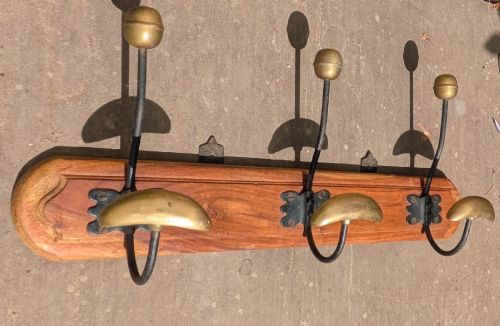
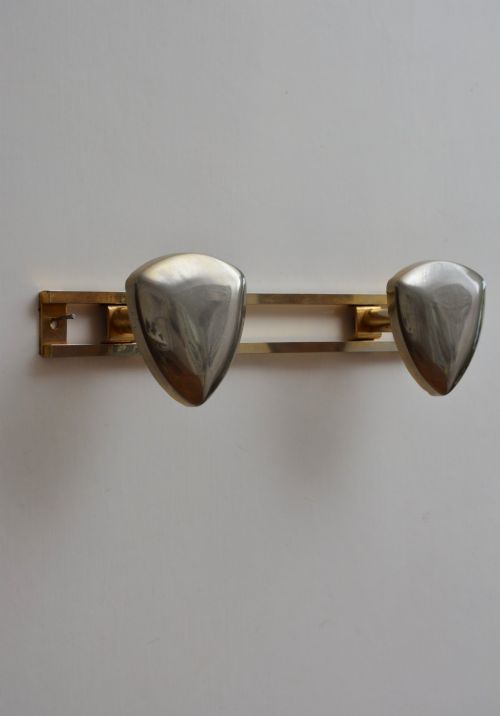
When you search for brass coat hooks wall pieces, you encounter everything from single Victorian fixtures mounted on pine backboards to long French art deco hat and coat racks. The selection spans the nineteenth and twentieth centuries, taking forms such as wall mounted coat racks, hall racks, and mirrored portmanteaus.
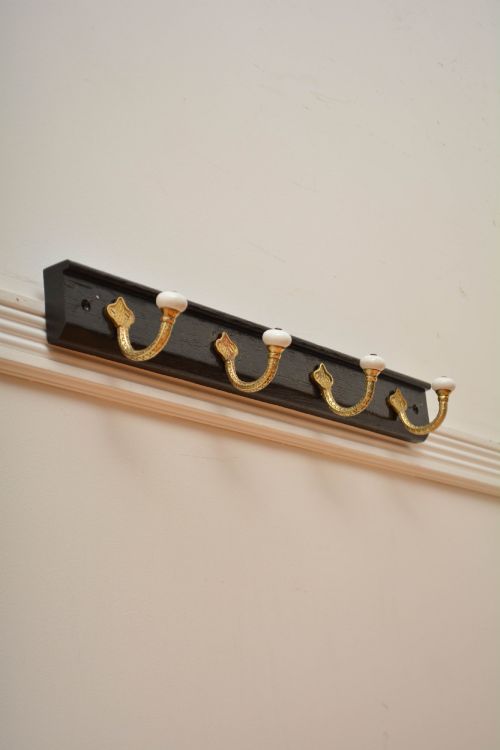
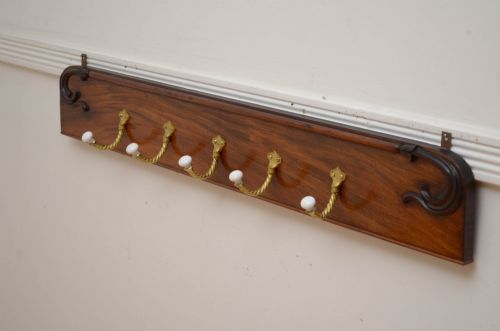
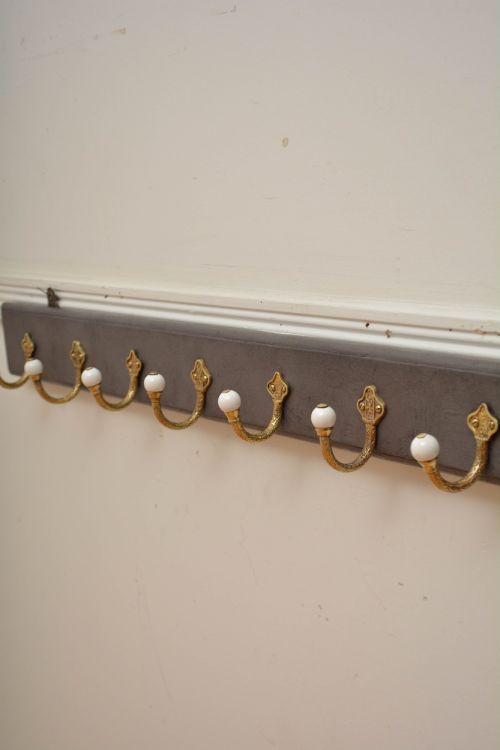
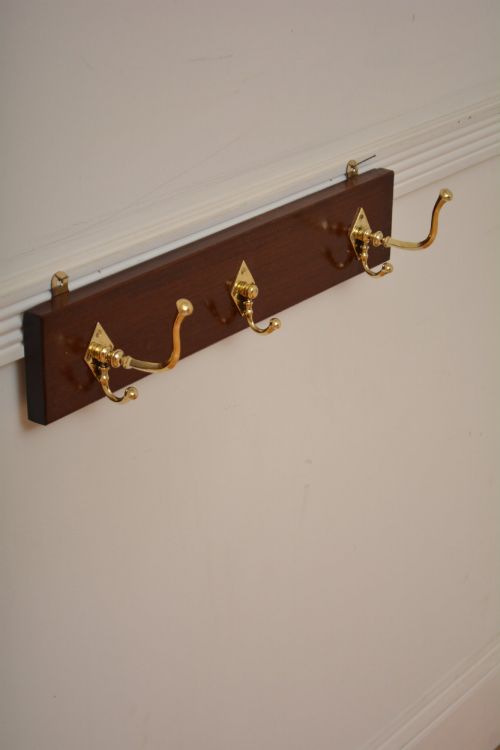
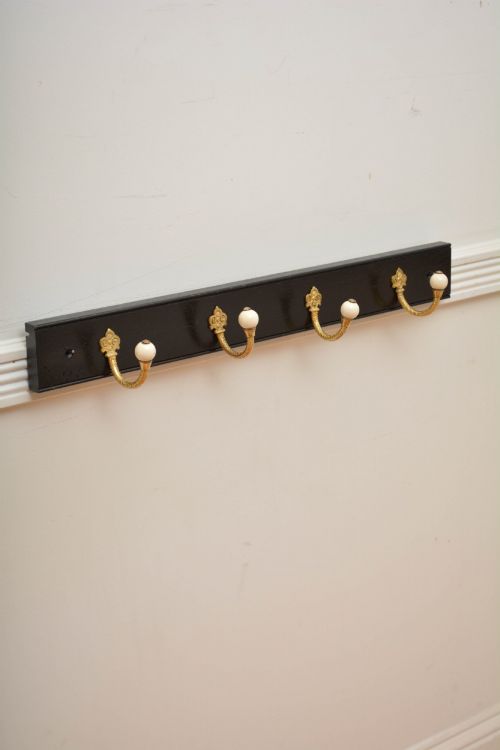
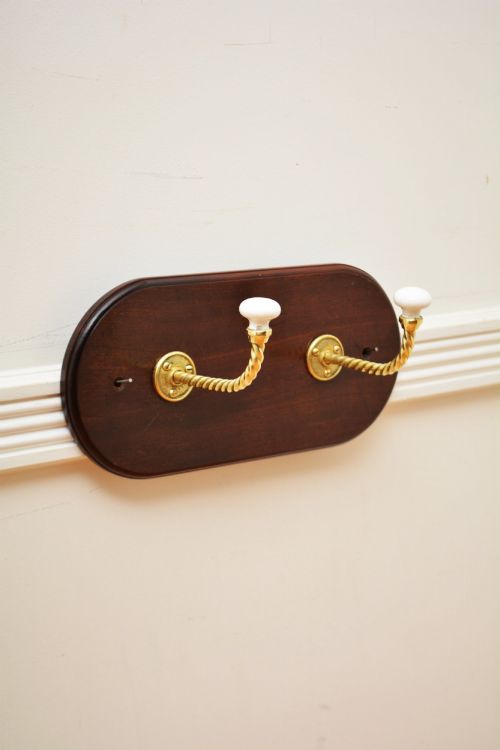
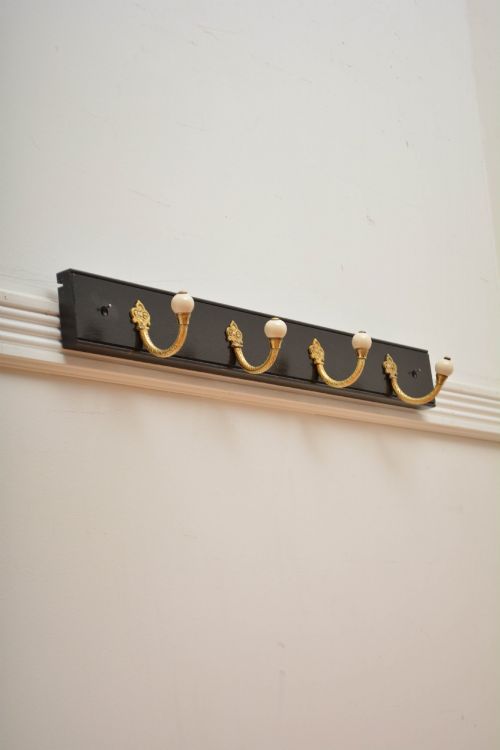
You are most likely to meet Victorian and Edwardian examples featuring solid mahogany, oak, or ebonised wood backplates fitted with robust cast brass hooks. Many incorporate ceramic or porcelain knobs, while others present specialised forms like equestrian crop hooks or horseshoe mirrors with integrated hooks.
Materials and Construction
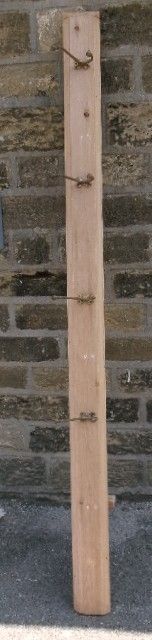
Makers cast the hardware from brass and bronze, frequently chasing the metal or shaping it into motifs like shields, scrolls, and horse heads. These sturdy hooks were securely fastened to durable backboards of mahogany, oak, pine, and ebonised wood.
Backplates often utilised contrasting materials, pairing dark timbers with polished brass or adding glass and ceramic elements to the hook terminals. Construction relied on solid wood panels and robust mounting plates designed to bear the heavy weight of winter garments.
Brass Coat Hooks Wall Retail Price Guide 2026
Typical asking prices for brass coat hooks wall among the pieces listed under this phrase on Sellingantiques today, from the lower quarter to the upper quarter. They describe what is for sale here now, not the wider market.
Listings feature pieces spanning the Victorian period through the nineteen-thirties, utilising brass, bronze, mahogany, oak, and ebonised wood.
Quality and Craftsmanship
Quality rests in the weight of the metal and the crispness of the casting. Superior pieces display deeply chased brass work, robust mounting plates, and well-turned ceramic or porcelain knobs rather than thin, stamped sheet metal.
The choice of timber similarly defines the tier of the piece. Dense, figured mahogany and solid oak backboards with original bevelled mirror plates or integrated umbrella stands demonstrate superior craftsmanship compared to simpler pine backboard arrangements.
The Brass Coat Hooks Wall Glossary
- Portmanteau
- A wall-mounted hall fixture combining coat hooks, a hat shelf, and frequently a central mirror. These multi-purpose units served as practical furniture for entrance hallways.
- Ebonised wood
- Timber treated with a dark finish to imitate expensive ebony. This technique provided a stark, contrasting background that made polished brass hooks stand out.
- Equestrian crop hook
- A specialised wall hook shaped like a riding crop or horse head. These pieces reflect nineteenth-century sporting interests and were used to hang riding gear.
- Chased brass
- Metal decorated with fine indentations hammered into the surface by hand. This decorative technique added texture and pattern to the hook plates and mounting brackets.
Brass Coat Hooks Wall: Frequently Asked Questions
How do I secure a heavy coat rack to the wall?
Heavy wooden backboards require sturdy fixings driven directly into wall studs or proper masonry anchors. Because antique brass racks carried substantial coats, matching the weight capacity of the wall is essential.
Distributing the load across multiple pre-drilled mounting points ensures the timber backplate remains secure under daily use.
Can I clean the brass without ruining the patina?
Gentle dusting and mild soapy water preserve the aged surface better than harsh chemical polishes. Aggressive cleaning strips away the dark oxidation that accumulates over decades.
Preserving the original surface appearance maintains the historical character of the metal.
How do I date a brass and wood coat rack?
Dating relies on the timber selection, screw types, and design styles associated with periods like the Victorian era or art deco movement. Hand-cut screws and dense mahogany often point to nineteenth-century manufacture.
Comparing the casting style of the brass hooks against documented design periods helps narrow down the decade.