


Brass Chain Pendant Lamp
These brass chain pendant lamp examples bring period illumination to a room, offering functional lighting paired with decorative glass and metalwork.
Brass Chain Pendant Lamp
A brass chain pendant lamp brings together metal suspension systems and glass shades, suspended from ceilings to illuminate spaces. When exploring this selection, buyers frequently encounter Edwardian and Victorian ceiling lights alongside later Art Deco and 1930s variations.
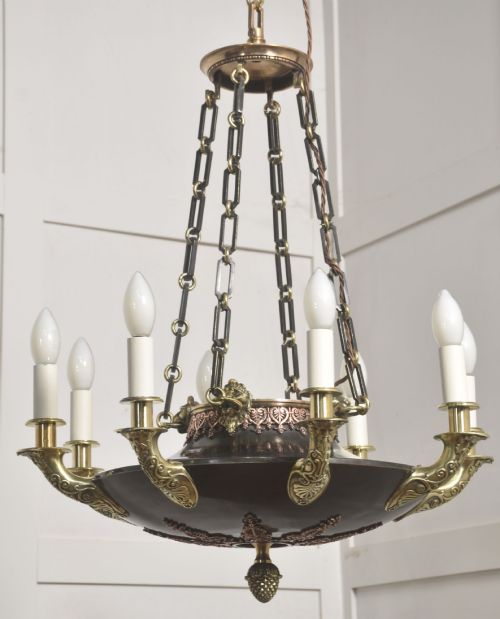
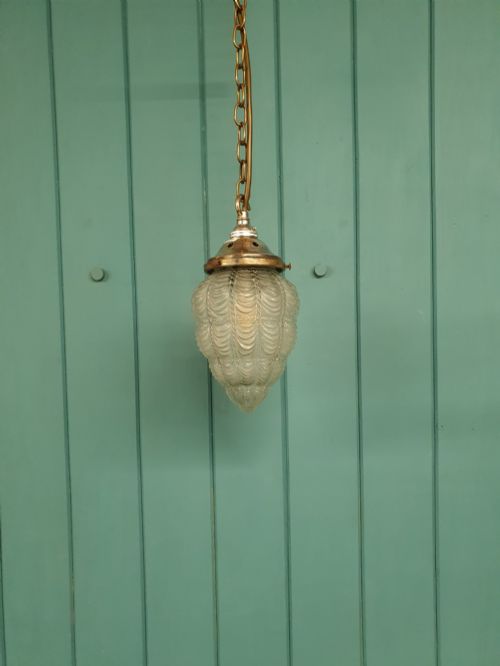
The assortment spans diverse forms including multi-light chandeliers, plafonniers, hall lanterns, and conical or bowl-shaped hanging pendants. Pieces originate from periods ranging through the nineteenth century into the 1930s, reflecting changing domestic lighting fashions.
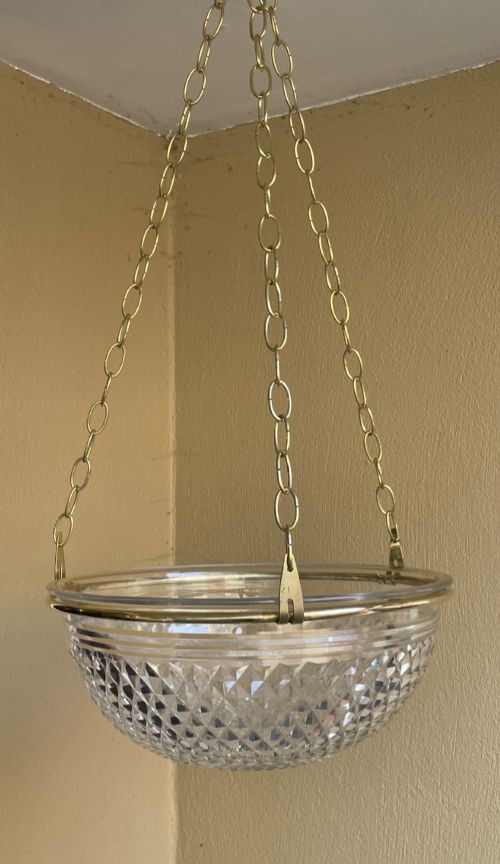
Victorian and Edwardian pieces sit alongside early twentieth-century examples featuring prismatic, opaline, or cut glass shades. These ceiling lights serve both functional illumination and decorative roles within period and eclectic interiors.
Distinguishing quality across examples
Quality reveals itself through the depth and clarity of the glass, particularly in complex cut, opaline, and prismatic shades that shape the output of light. Superior pieces display substantial metal gauge work in their brass frames and suspension chains.
Proportion and decorative detail separate standard utilitarian fittings from more ambitious designs, such as multi-light chandeliers or specialised hall lanterns. The integration between metal collars and glass bodies demonstrates the precision of the original manufacture.
Current listings demonstrate materials spanning brass, copper, and multiple glass varieties, anchored by metal chain suspensions across seven distinct historical periods.
The Brass Chain Pendant Lamp Glossary
- Plafonnier
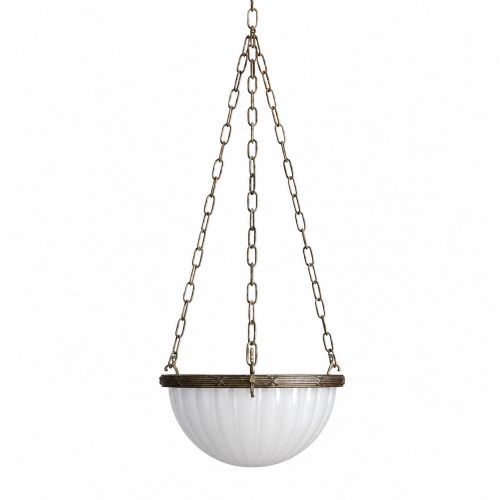
- A ceiling light fixture designed to sit flush or close to the ceiling surface. This French term typically describes bowl-shaped glass shades mounted in metal frames.
- Holophane
- A brand of scientific glass shade featuring prismatic ribs designed to diffuse and control light glare. These functional shades are characteristic of early twentieth-century industrial and domestic interiors.
- Opaline glass
- An opaque or translucent pale glass used to soften and diffuse light evenly. It imparts a milky appearance when unlit and a warm glow when illuminated.
- Chandelier
- A branched ornamental light fixture suspended from the ceiling to hold multiple lamps. Examples in this category range from Empire Revival styles to multi-light brass configurations.
Brass Chain Pendant Lamp: Frequently Asked Questions
What periods do these lamps cover?
The selection spans from the nineteenth century through the Victorian and Edwardian eras, extending into the 1920s and 1930s.
These dates encompass diverse stylistic movements including Arts and Crafts, Art Deco, and Empire Revival.
How were these pendant lamps used?
These fixtures served as primary illumination in hallways, living rooms, and dining spaces where overhead lighting was required.
Their suspended chain design allowed the height to be adjusted to suit the proportions of rooms with high ceilings.
What glass types are most common?
Listings frequently feature cut glass, opaline glass, and prismatic Holophane shades designed to manage light output.
Plain or coloured glass panels also appear within framed lanterns and bowls from the Victorian period onward.
How do I identify an Edwardian pendant?
Edwardian pieces often combine polished brass hardware with delicate cut glass or early prismatic shades.
They reflect the lighter, more refined domestic aesthetics of the early twentieth century compared to earlier Victorian designs.