
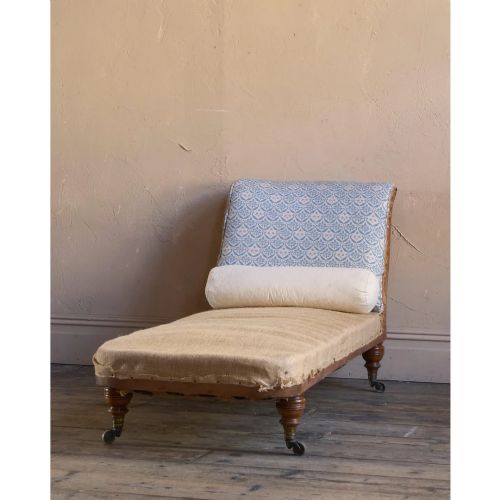
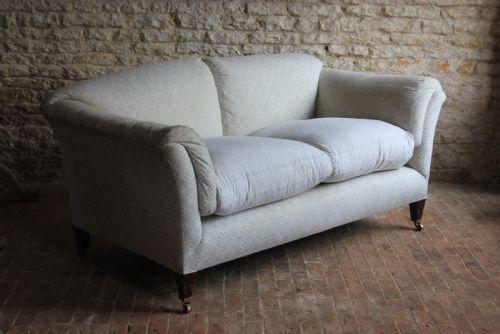
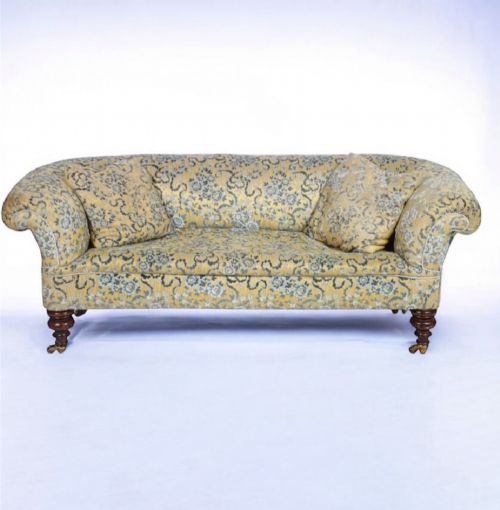
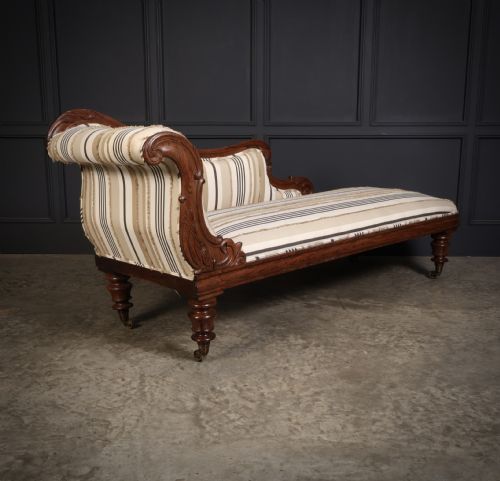
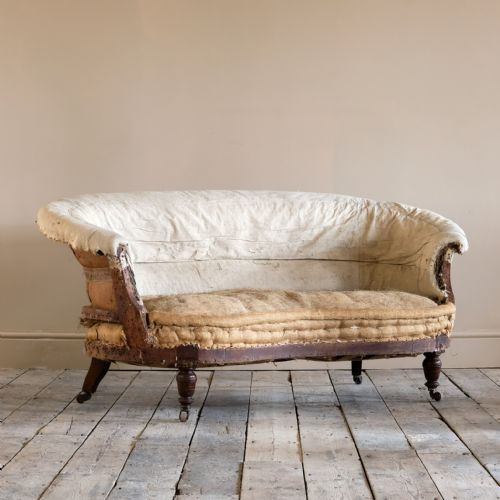


Brass Castor Upholstered Couch
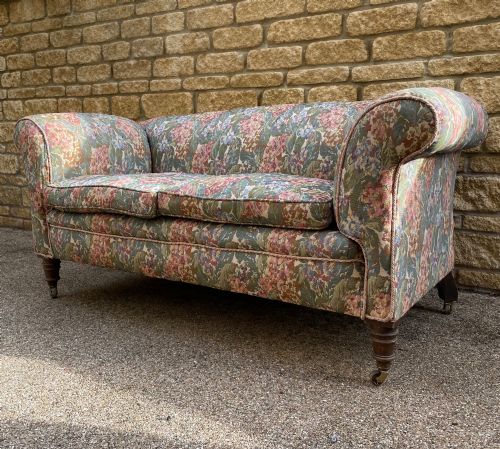
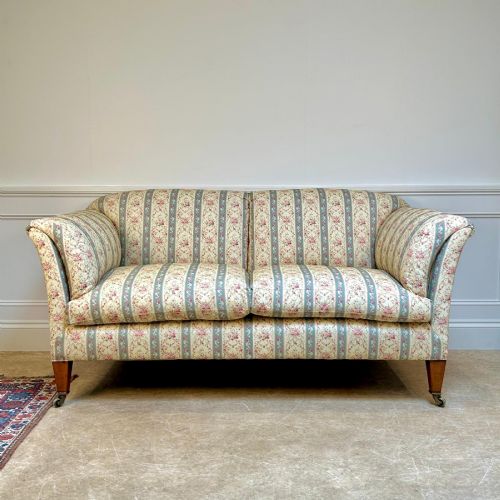
These brass castor upholstered couch pieces combine robust timber frames with generous padding, offering both historic character and deep seating comfort.
Brass Castor Upholstered Couch
A brass castor upholstered couch represents a diverse group of seating furniture spanning the eighteenth, nineteenth, and early twentieth centuries. Buyers search for these items to secure traditional forms like Chesterfields, day beds, and chaise longues that anchor a room with period presence.
The most common examples on this page date from the Victorian era and the nineteenth century, alongside earlier George III, Regency, and William IV designs. These pieces range from compact two-seater drop arm sofas to expansive multi-seater models mounted on sturdy brass wheels.
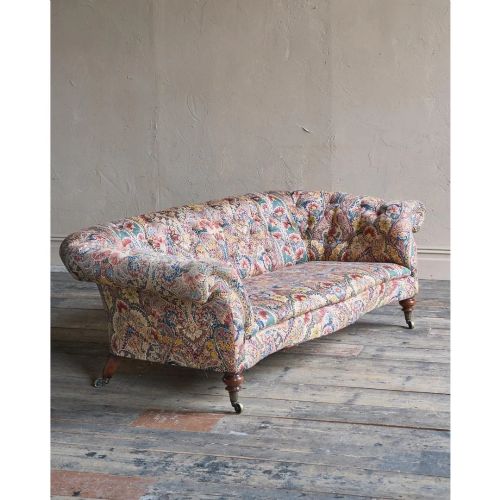
Makers such as Howard & Sons, Hampton & Sons, Holland & Sons, and William Birch feature prominently among the listings. Their workshops defined comfort and structural integrity through deep buttoning, sprung seats, and robust wood frames.
How they were made
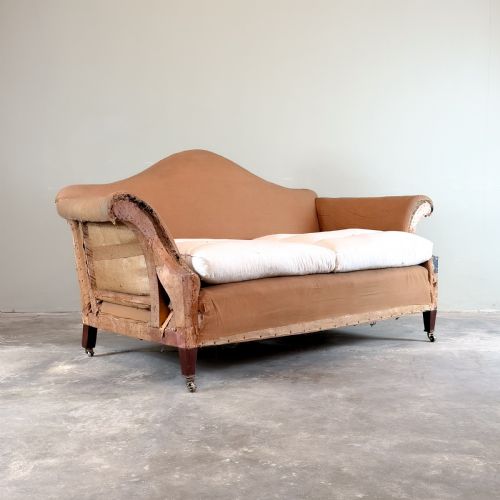
Makers constructed the structural frames of solid timbers like mahogany, walnut, and general hardwoods to withstand heavy daily use. Traditional joinery methods ensured longevity before the frame received complex internal webbing and springs.
Upholstery layers traditionally relied on natural materials such as horsehair, calico, jute, and linen to build resilient padding. Finished surfaces utilised various fabrics including velvet and bespoke upholstery cloth, secured with rows of tacks.
Listings feature woods including mahogany and walnut, paired with fabric coverings such as velvet, calico, and standard upholstery textiles.
What varies in quality
Quality rests significantly on the integrity of the internal frame and the original maker's stamp or attribution. Pieces bearing clear workshop signatures or constructed by prominent cabinet makers generally command greater interest from collectors.
The refinement of the timber carving, the casting quality of the brass feet and castors, and the proportion of the frame differentiate standard workshop output from exceptional bespoke commissions.
Howard & Sons·Hampton & Sons·Holland & Sons·William Birch
The Brass Castor Upholstered Couch Glossary
- Castor
- A small wheel mounted on a swivel assembly attached to the legs of furniture. This mechanism allowed heavy couches to move smoothly across carpets and wooden floors without damaging the surface.
- Chesterfield
- A large upholstered sofa characterised by rolled arms and a back of the same height. Traditional versions feature deep button tufting and generous padding throughout.
- Chaise Longue
- An upholstered long chair designed for reclining, typically featuring a single raised armrest and backrest. These pieces date widely across the Regency and Victorian periods.
- Drop Arm
- A movable sofa arm mechanism that lowers on one or both sides via hinges. This allowed nineteenth-century users to adjust the furniture for sitting or lying down.
Brass Castor Upholstered Couch: Frequently Asked Questions
How do I date a brass castor couch?
Dating relies on identifying stylistic markers, timber types, and structural construction methods associated with specific periods like the Regency or Victorian eras. Secondary clues often appear in maker stamps, upholstery webbing techniques, and the design of the brass castors.
Earlier eighteenth-century pieces display heavier geometric proportions, while later nineteenth-century examples often incorporate advanced coil springing and elaborate turned wooden legs.
Are these couches comfortable for daily use?
Most of these historic pieces were engineered for deep, ergonomic lounging using traditional horsehair and coil spring systems. Many survive with resilient internal padding that supports modern sitting habits.
Restoration history plays a major role in day-to-day comfort, as couches with renewed webbing and cushion interiors feel significantly firmer than those retaining degraded original stuffing.
How do I identify a Howard and Sons couch?
Authentic pieces by this maker frequently feature stamped brass castors, legible signatures on the webbing, or paper labels from their Berners Street premises. The carpentry typically exhibits exceptional weight and precise joinery beneath the upholstery.
Attributions also rest on characteristic silhouette lines, such as the low-rolled arms and deep sprung seats that defined their signature Chesterfield and lounge designs.
What is the difference between a chaise longue and a day bed?
A chaise longue incorporates a partial backrest and a single raised end designed for semi-recumbent seating. A day bed provides a fully horizontal platform intended primarily for lying down.
Both forms utilise the same underlying timber framing and brass castor hardware, but serve distinct functional layouts within historic interior spaces.