

Brass Candle Style Pendant
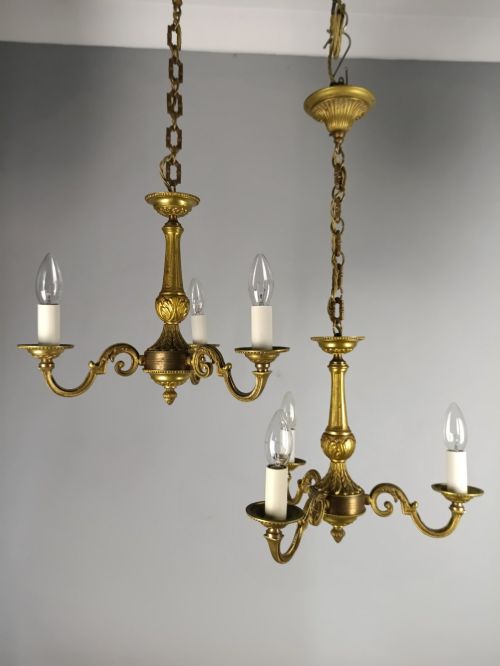
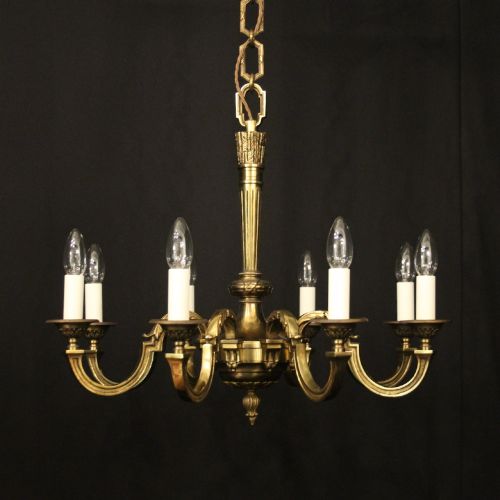
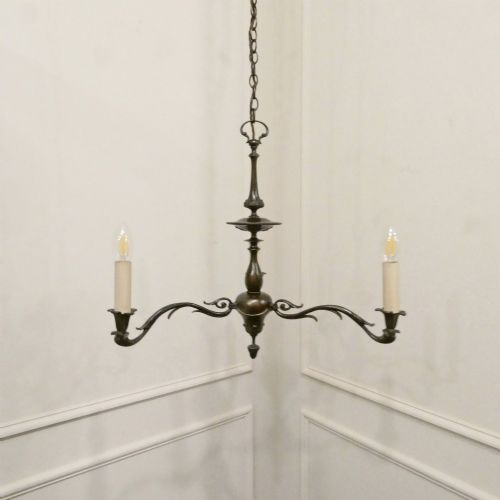
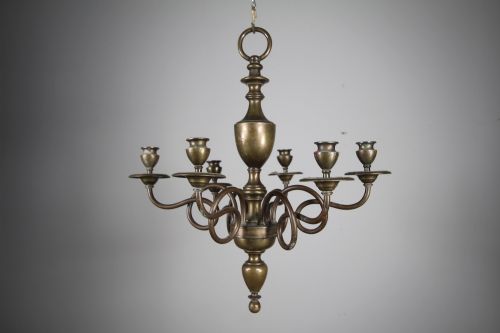
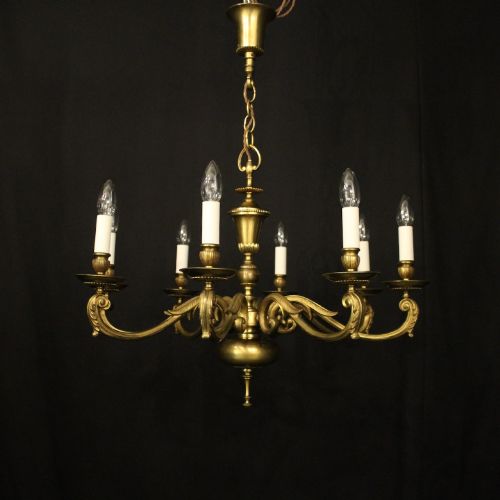
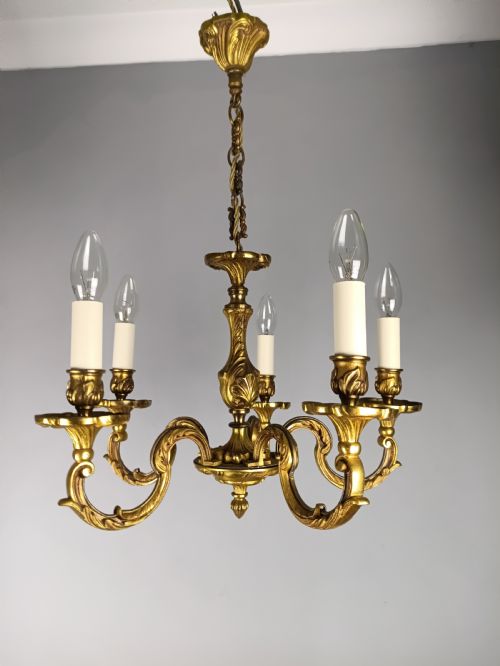
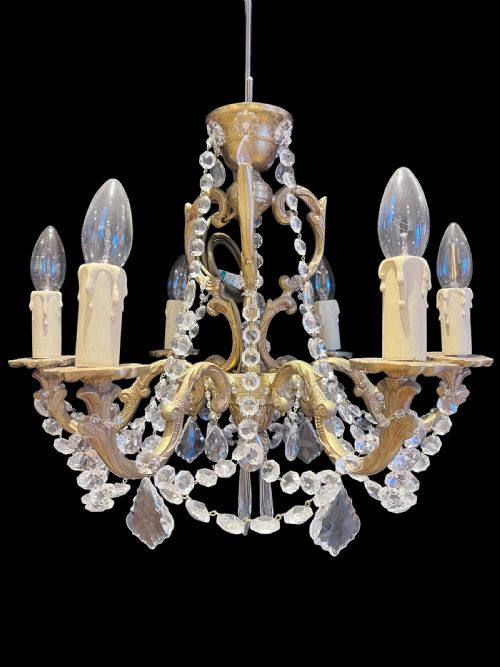
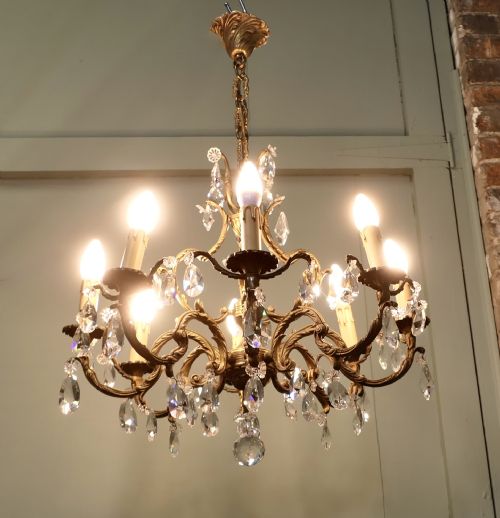
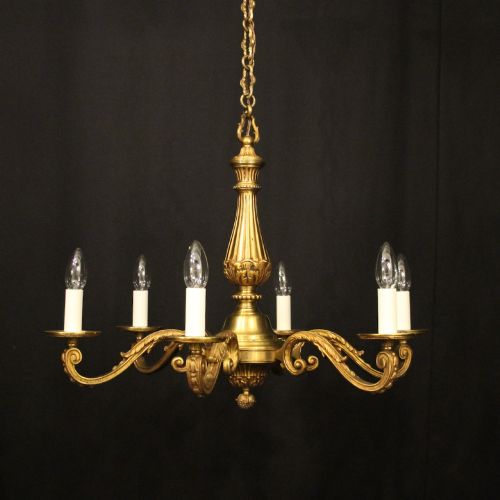
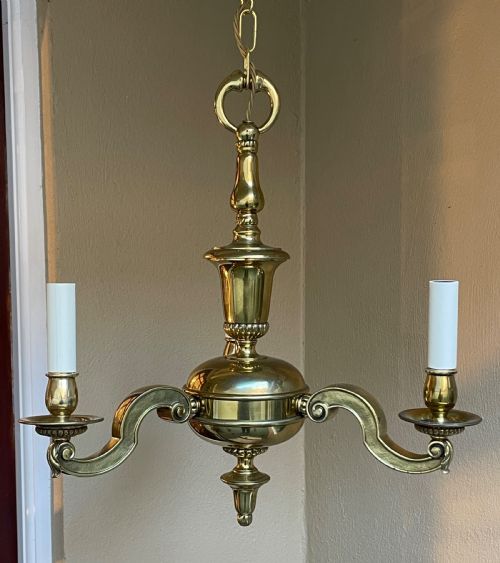
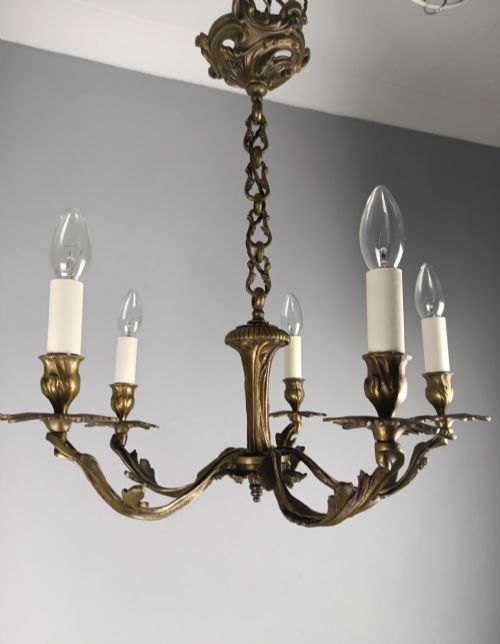
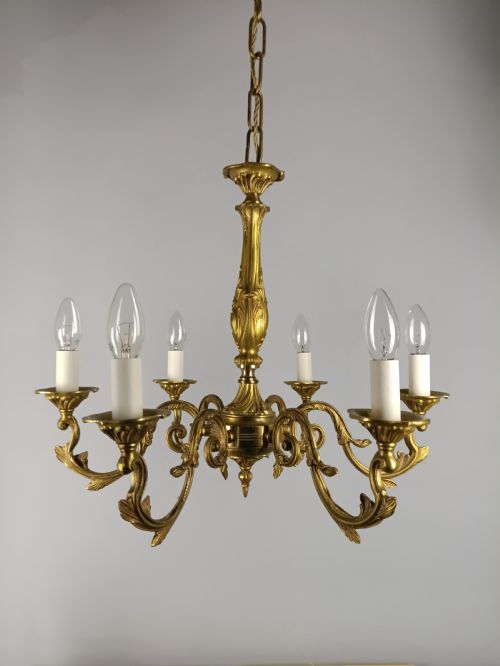
These brass candle style pendant fixtures bring historic metalwork and tiered candle branches into domestic spaces, capturing period illumination.
Brass Candle Style Pendant
A brass candle style pendant takes the form of a multi-branched hanging light fitted with vertical sockets meant to evoke traditional wax tapers. When exploring a brass candle style pendant on this page, the most frequent discoveries date from the late nineteenth century through the early twentieth century, spanning Edwardian and 1930s examples.
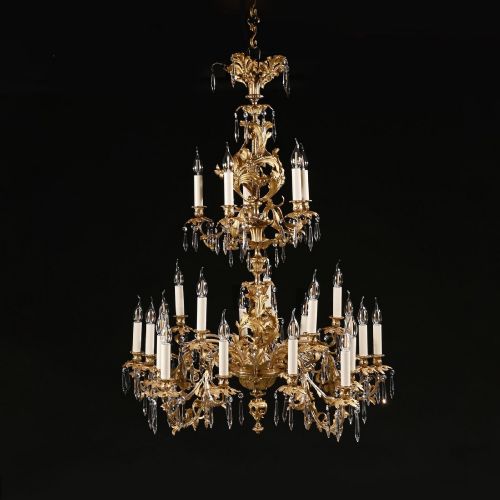
The selection leans heavily toward continental forms, notably French styles such as Rococo, Empire, and Neoclassical designs, alongside Dutch and Flemish brass traditions. These fixtures operate as primary ceiling lighting, often suspending multiple light arms arranged in single or double tiers from a central stem.
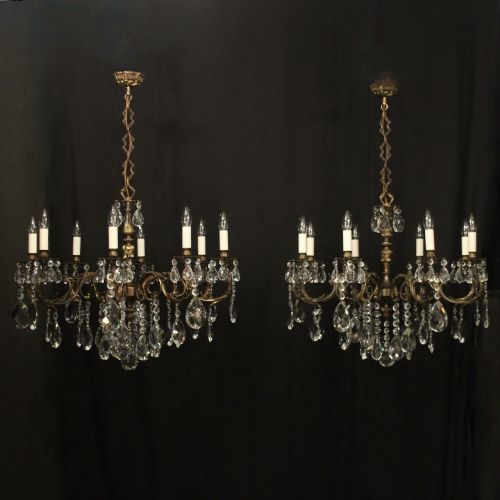
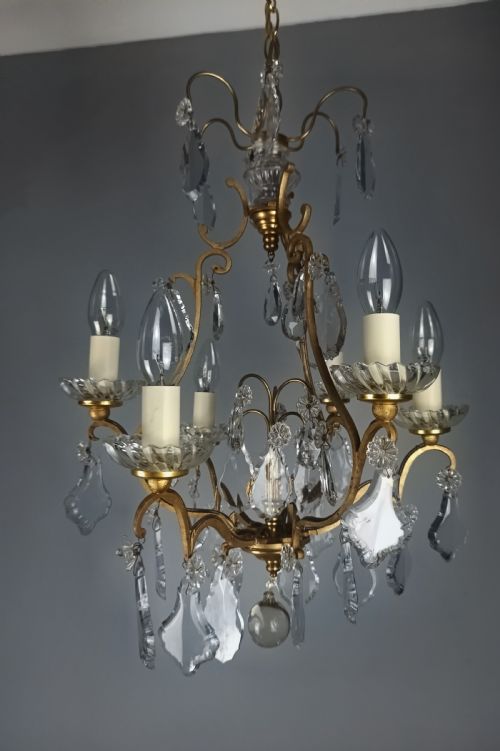
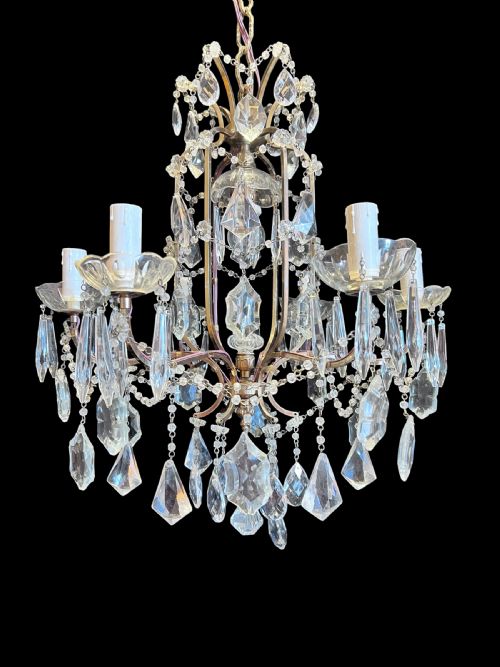
Many specimens incorporate glass or crystal lustres, drops, and fruit accents suspended from the metal arms, while others rely entirely on the sculptural quality of cast metal branches. Buyers encounter pairs and individual chandeliers designed to dominate principal rooms with substantial branch counts ranging from four up to twenty-five lights.
Materials and construction methods
The primary structure relies on cast and wrought brass, bronze, and gilt bronze, shaped into curving arms and central columns. Workshops employed traditional foundry techniques, casting metal components in sections before hand-finishing, chasing, and occasionally applying a gilt surface.
Cut glass and crystal elements complement the metalwork, attached via wire loops or pinned directly to the brass arms to refract light from the candle branches. Copper components and gesso details also appear alongside the dominant brass and bronze materials recorded in the listings.
Brass Candle Style Pendant Retail Price Guide 2026
Typical asking prices for brass candle style pendant among the pieces listed under this phrase on Sellingantiques today, from the lower quarter to the upper quarter. They describe what is for sale here now, not the wider market.
Materials documented across the inventory include crystal, glass, copper, and gesso alongside standard cast brass and bronze.
Distinctions in execution and design
Quality rests primarily in the crispness of the metal casting and the depth of the hand-chasing on the brass and bronze branches. Finer pieces display intricate ornamentation and balanced proportions across multiple tiers, whereas simpler items utilise plainer cast components.
The integration of high-grade cut crystal lustres and the preservation of original gilding or patination elevate certain examples above standard production pieces. Heavier metal weight and more complex branch configurations distinguish the more ambitious workshop outputs.
G.E.C
The Brass Candle Style Pendant Glossary
- Lustre
- A cut glass or crystal pendant hung from a chandelier to refract light. These drops often take the form of spears, beads, or coloured fruits.
- Gilt Bronze
- Bronze metal coated with a thin layer of gold or gold-coloured alloy. Also known as ormolu, this finish provides a bright, durable surface.
- Chandelier
- A branched ceiling light designed to hold multiple light sources. Historic variants typically imitated candle illumination.
- Branch
- An individual arm extending from the central column of a lighting fixture to support a light socket or candle pan.
Brass Candle Style Pendant: Frequently Asked Questions
How do I hang a heavy brass chandelier safely?
Installation requires anchoring the fixture directly into ceiling joists or structural noggin pieces using rated steel fixings. The substantial weight of cast bronze and crystal components demands professional support.
Electrical wiring must be routed through the central hanging rod or chain, ensuring the internal components comply with modern safety standards while preserving the historic exterior appearance.
What periods do these pendant lights represent?
The available lighting spans from the late nineteenth century through the 1930s, encompassing Victorian, Edwardian, and early twentieth-century manufacturing periods. Stylistic influences draw heavily from earlier French and Dutch aesthetics.
Design motifs range from ornate Rococo revival curves to cleaner Art Deco and Neoclassical symmetry, reflecting the revivalist tastes of their respective decades of production.
How should I clean crystal lustres on a pendant?
Crystal drops and glass fruit elements should be unhooked and washed individually in lukewarm water with a mild detergent. A soft cloth prevents scratching the historic glass surfaces.
Metal components require gentle dusting with a dry cloth rather than abrasive polishes, which can strip original gilt surfaces or historic patination from the brass and bronze.
Are these pendants suitable for low ceilings?
Most chandeliers in this category feature multi-tiered or branching arms designed for rooms with generous vertical clearance. Suspension chains can sometimes be shortened to adjust the overall drop.
Smaller formats with restricted branch counts or tighter profiles work better in modest spaces, preventing the fixture from dominating the room.