

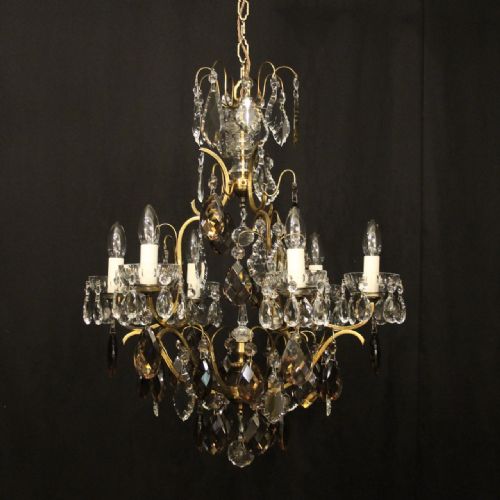


Brass Caged Chandelier
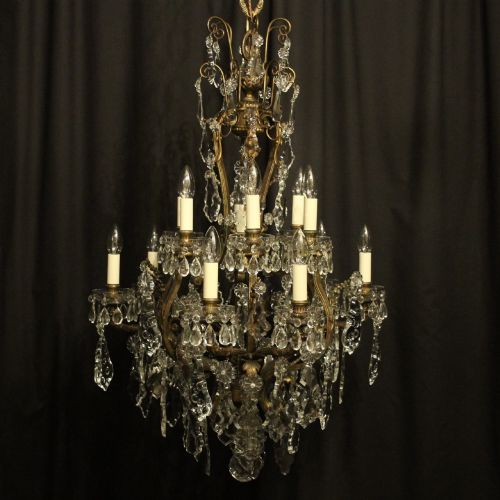
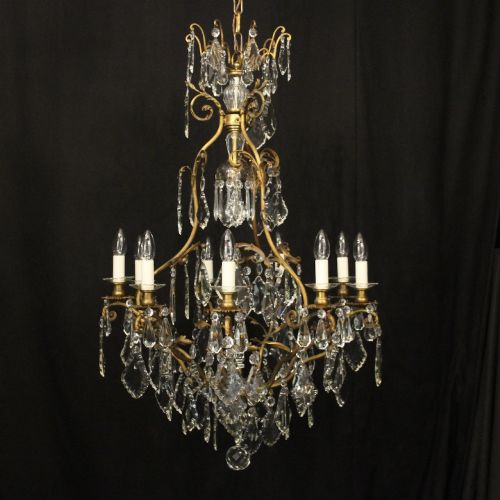
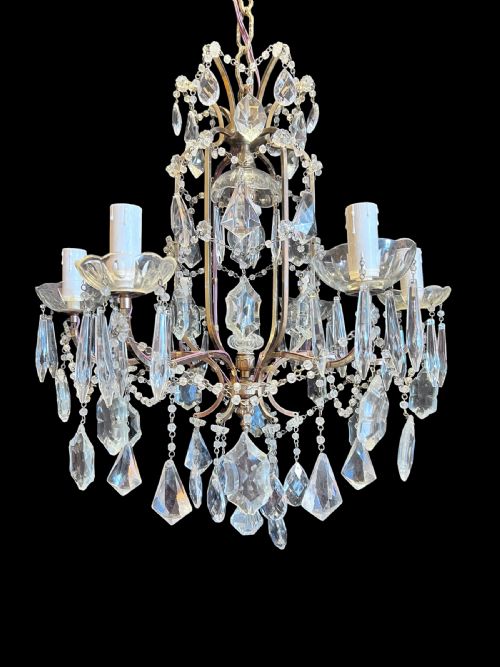
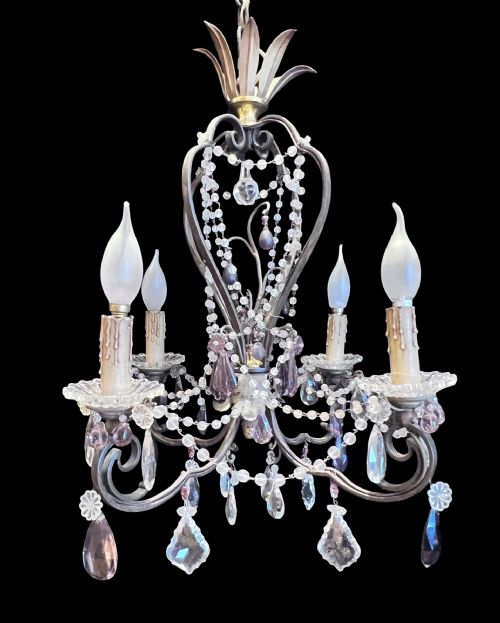
A brass caged chandelier brings structural metalwork and glittering drops together to illuminate a room with classic French and Italian styling.
Brass Caged Chandelier
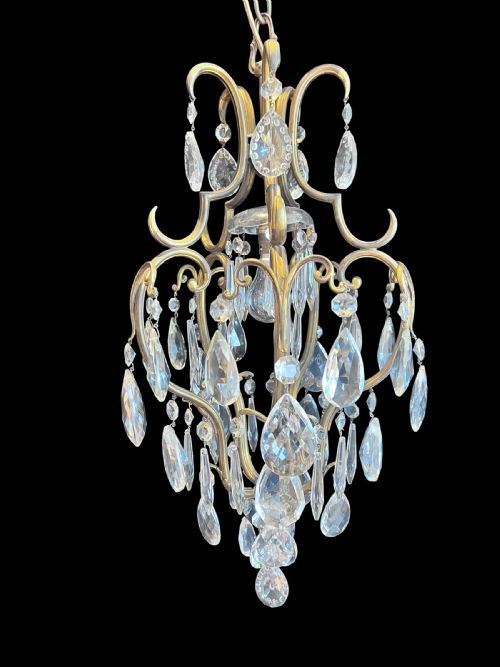
A brass caged chandelier combines a metal armature with hanging glass or crystal elements to create a striking focal point in a high-ceilinged room. These pieces appear primarily in French and Italian styles, spanning the nineteenth century through the early twentieth century.
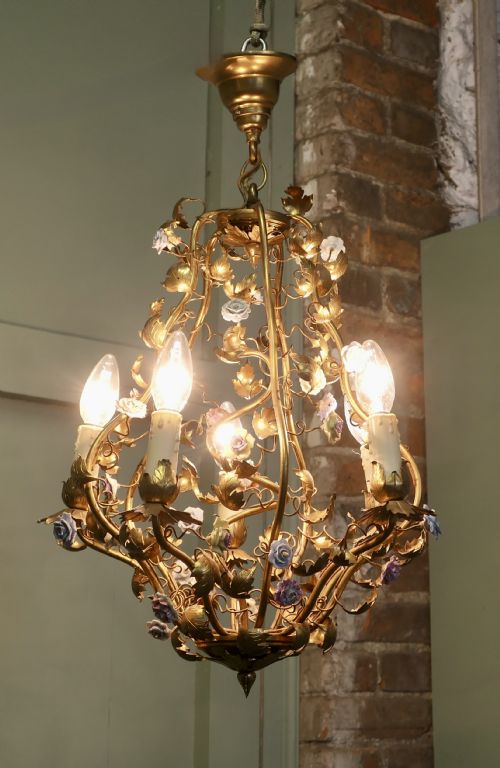
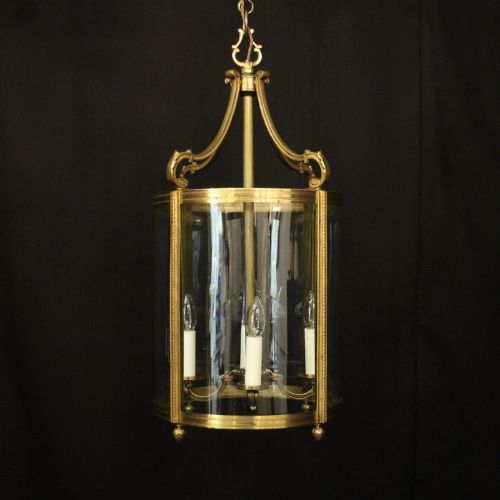
Buyers will encounter various forms on this page, ranging from compact single-light pendants to grand multi-armed fixtures holding twelve or more lights. Many examples incorporate birdcage designs, convex lanterns, or hexagonal ormolu frames styled after historic French palaces.
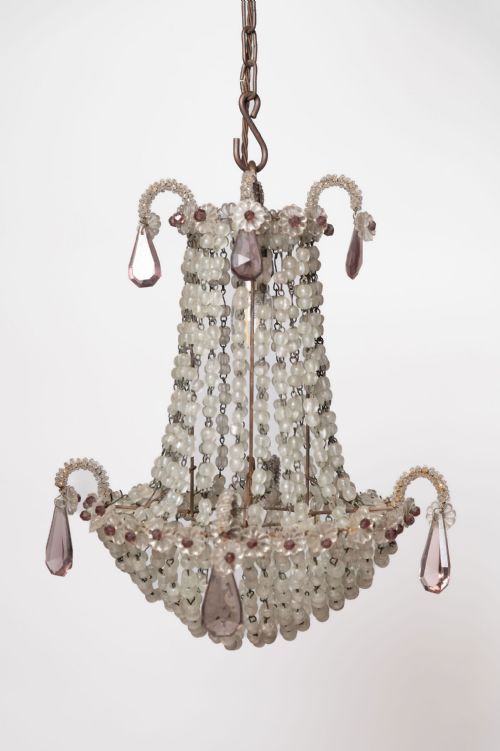
The materials visible in these chandeliers rely heavily on cast brass, gilded bronze, and gilt metal combined with cut crystal drops and bevelled glass panels. Certain pieces also integrate ceramic flowers, iron elements, or coloured fruits to add distinct decorative texture.
Materials and construction
Makers constructed the skeletal framework using cast brass, bronze, and gilt metal, often applying a layer of gold leaf or gilding to enhance the surface shine. These robust metal cages provide the necessary structural support for numerous branching arms and heavy glass components.
Cut crystal drops, prisms, and beads are wired directly into the brass framework, catching and dispersing light from the internal bulbs or candles. Bevelled glass panels and curved glass shades are fitted snugly into lantern frames, secured by metal glazing bars.
Evaluating the standard of a brass caged chandelier
Quality rests significantly on the intricacy of the metal casting and the depth of the original gilding on the bronze or brass components. Finer pieces demonstrate crisp detail in the floral or foliate mounts and retain substantial weight in their metal frames.
The cut and clarity of the crystal drops also dictate the standard of the fixture, as hand-cut lead glass refracts light with greater brilliance than pressed glass alternatives. Complete, matching sets of original prisms and undamaged bevelled glass panels elevate the integrity of the piece.
La Maison Bagues
The Brass Caged Chandelier Glossary
- Cage chandelier
- A lighting fixture featuring a skeletal metal framework enclosing the central stem and arms, frequently decorated with rows of crystal drops.
- Ormolu
- Finely chased and gilt bronze used for decorative mounts and metalwork on high-end light fittings.
- Bevelling
- The practice of cutting an angled edge around the perimeter of a glass panel to refract light more effectively.
- Prism
- A geometric piece of cut glass or crystal designed to split and scatter light across the surrounding space.
- Tolewear
- Painted tin or metal manufactured to simulate various decorative finishes, occasionally found in floral ceiling light elements.
Brass Caged Chandelier: Frequently Asked Questions
How do I clean a brass caged chandelier?
Maintenance requires gentle dusting with a soft brush and wiping glass elements with a mild cleaning solution while the fixture remains unpowered. Removing individual crystal drops for a thorough wash helps restore their original refractive brilliance.
Avoid using harsh chemical polishes on the gilded bronze or brass framework, as aggressive scrubbing can strip the historic surface finish. Regular care keeps both the metal cage and the crystal components looking bright.
What rooms suit a brass caged chandelier?
These fixtures work well in dining rooms, entrance halls, and high-ceilinged living spaces where their vertical presence can be fully appreciated. Their reflective crystal drops and metallic frames help brighten darker corners and add a formal focal point.
Ceiling height dictates the appropriate size, as larger multi-armed examples require adequate clearance to hang safely above foot traffic. Hall lanterns and more compact single-light versions suit narrower corridors or vestibules.
How can I tell the period of a brass chandelier?
Dating relies on examining the casting techniques, the style of the metalwork, and the cut of the crystal drops. Nineteenth-century examples often feature heavy gilded bronze frames with hand-cut lead crystal, while early twentieth-century pieces may incorporate lighter brass construction and simpler electric fittings.
Stylistic cues such as French Rococo Revival or Italian Florentine details also point toward specific decades of manufacture. Comparing the wiring channels and construction joints helps confirm the age of the piece.
Were these chandeliers originally electrified?
Most antique examples produced during the nineteenth century were initially designed for candles or gas before being converted for modern electrical wiring later in their lifespan. Early twentieth-century pieces were increasingly built to accommodate early electric lamp holders from the outset.
Rewiring is common practice for safety compliance, and professional installation ensures the heavy metal frames hang securely from appropriate ceiling joists. The original candle tubes or drip pans are frequently retained during electrification to preserve the historic appearance.