





Brass Bound Wood Bucket
These brass bound wood bucket pieces bring timber and metal together for fireside storage and wine cooling.
Brass Bound Wood Bucket
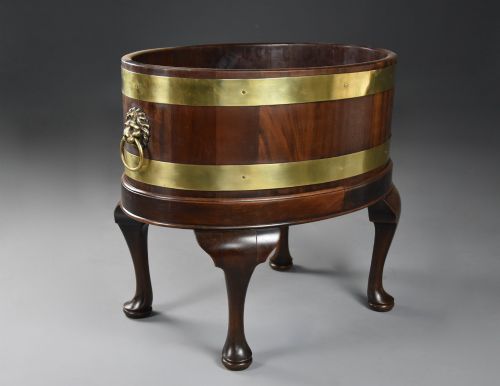
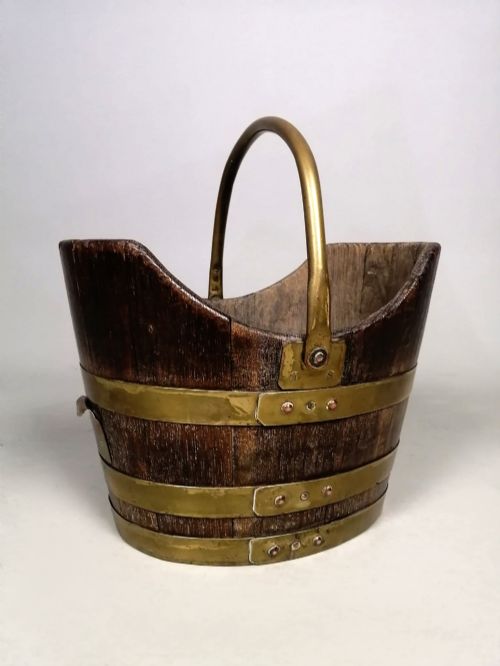
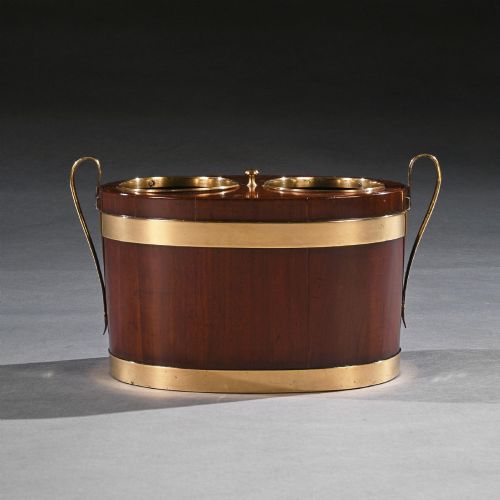
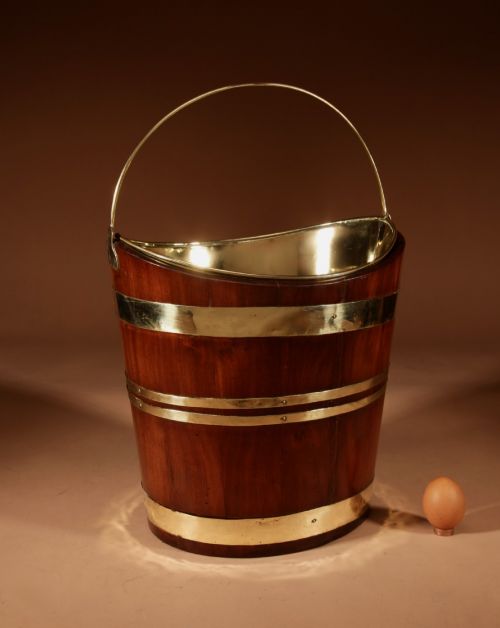
When you search for brass bound wood bucket, you are looking at sturdy vessels traditionally used beside the hearth or at the dining table. These items serve varied roles across Georgian and Victorian interiors, functioning as wine coolers, coal bins, log baskets, and jardinières.
The versions you meet most often on this page are mahogany or oak vessels shaped into ovals, boats, or round forms. Coopered construction forms the backbone of these pieces, holding stave bodies together with tight metal bands.
Origin details in the evidence point towards English, Irish, and Scottish workshops alongside Dutch influences. Many examples date from the eighteenth and nineteenth centuries, carrying marks of heavy utility and decorative display.
How they were made
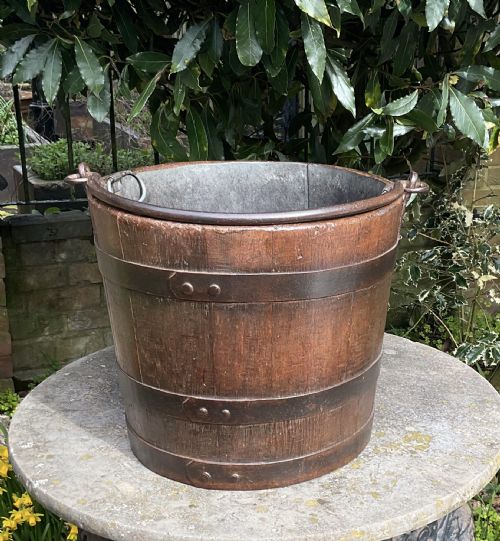
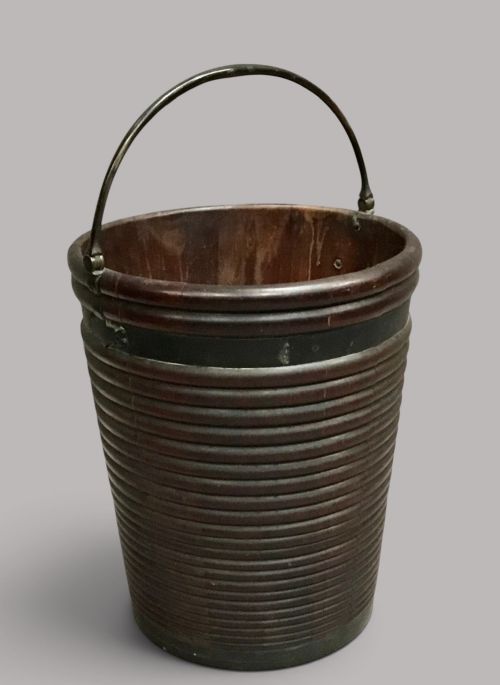
Maker workshops built these vessels using coopered staves of mahogany, oak, or walnut bound firmly by strips of brass or iron. Metal bands run around the circumference to secure the wooden staves and provide structural strength for heavy contents like coal, peat, or ice.
Craftsmen shaped the timber into oval, boat-shaped, or cylindrical forms, often incorporating drop handles or original liners in zinc or copper. Surfaces show polished hardwood grains contrasted against bright or patinated metal hardware.
Brass Bound Wood Bucket Retail Price Guide 2026
Typical asking prices for brass bound wood bucket among the pieces listed under this phrase on Sellingantiques today, from the lower quarter to the upper quarter. They describe what is for sale here now, not the wider market.
Object types include wine coolers, coal bins, plate buckets, and jardinières constructed using traditional cooperage.
What varies in quality
Quality rests in the fidelity of the cooperage, the weight and thickness of the brass banding, and the selection of timber figures in the mahogany or oak staves. Original internal liners and sturdy swing handles distinguish high-standard items from later adaptations.
The integrity of the original timber surface and the precision of the stave joints separate superior examples. Pieces retaining untouched patination carry greater historical coherence than those with heavily refinished exteriors.
The Brass Bound Wood Bucket Glossary
- Coopered
- Made by a cooper using curved wooden staves joined together to form a watertight or sturdy cylindrical vessel. This technique relies on tight side-joints and exterior metal hoops rather than glue or nails.
- Jardinière
- An ornamental pot or stand for holding plants and flowers, often matching the materials of indoor furniture. These containers sit on floors or tables in period interiors.
- Peat bucket
- A deep vessel designed to hold dried turf or peat for fuel beside an open hearth. These examples frequently appear in Irish and Scottish regional designs.
- Cellarette
- A lockable container or freestanding box used for storing bottles of wine near the dining table. They often feature lead linings and internal dividers.
- Plate bucket
- A cylindrical wooden container used historically for carrying plates safely between the pantry and the dining room. They share the stave-and-band construction of fuel buckets.
Brass Bound Wood Bucket: Frequently Asked Questions
What were these buckets used for?
These vessels served practical domestic duties ranging from holding coal and peat by the hearth to cooling wine at the dining table. Later examples often function as planters and jardinières for indoor greenery.
Their sturdy coopered construction allowed them to handle heavy contents safely while remaining decorative enough for principal rooms.
How do I tell a Georgian bucket from a Victorian one?
Georgian versions typically display lighter mahogany timbers, subtle bracket or plinth bases, and restrained brass work characteristic of the eighteenth century. Victorian pieces often use heavier proportions, darker woods, and bolder metal bands.
Construction details and secondary woods inside the staves also help separate the periods.
Are original liners usually present?
Original metal liners, made from zinc or copper, survive in some pieces but are absent in others due to centuries of heavy use. Their presence depends on whether the vessel served as a wine cooler or a dry fuel bin.
Replacements are common in items that saw continuous utility near firesides.
How do I care for the wood and brass?
Maintain the timber with traditional wax polish applied sparingly to preserve the grain and patination of the mahogany or oak. Avoid harsh liquid cleaners on the brass bands to keep their historic surface intact.
Keep these items away from direct heat sources to prevent the staves from shrinking or cracking.