



Brass and Wood Gong
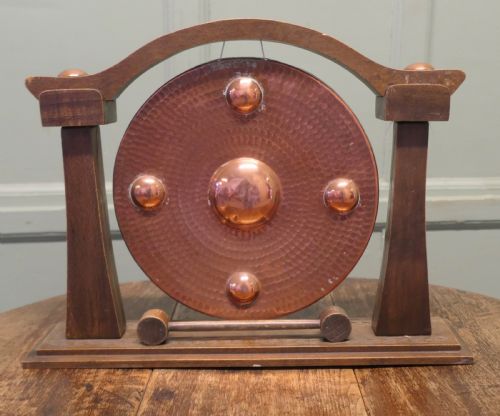
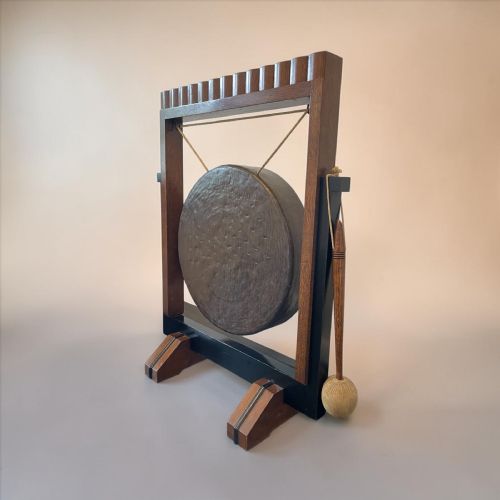
A brass and wood gong brings a resonant, historic voice into a room, combining solid timber frames with striking metal bells.
Brass and Wood Gong
When you search for a brass and wood gong, you are looking at striking percussion instruments mounted in decorative frames designed for domestic use. These pieces range from compact table versions to substantial floor-standing designs intended to summon household occupants.
The most common examples on this page date from the nineteenth and early twentieth centuries, spanning Victorian, Edwardian, and Art Deco periods. They combine functional metal discs or bowls with frames fashioned from oak, mahogany, walnut, or carved hardwood.
How they were made
Makers constructed the supporting structures using timbers such as oak, mahogany, and carved hardwood, often incorporating intricate woodwork like Chinese dragon carvings or Aesthetic Movement motifs. These frames were joined using traditional cabinet-making techniques to support the weight and vibration of the suspended metal.
The sound-producing elements consist of brass, bronze, or copper discs and bells, frequently suspended by sturdy cord within the wooden stand. Artisans hammered or cast the metal to achieve specific resonant properties, pairing industrial materials with handcrafted frames.
Brass and Wood Gong Retail Price Guide 2026
Typical asking prices for brass and wood gong among the pieces listed under this phrase on Sellingantiques today, from the lower quarter to the upper quarter. They describe what is for sale here now, not the wider market.
Listings feature oak, mahogany, and carved hardwood frames paired with brass, bronze, and copper bells spanning the Victorian to Art Deco periods.
What varies in quality
Quality in these pieces rests upon the harmony between the metal gong and its wooden mount. Superior examples feature deeply carved hardwood or solid oak frames that complement the rich, sustained tone of a well-cast bronze or brass bell.
Lesser items rely on simple turned wood without decorative carving, paired with thin metal discs that produce a flat, short-lived sound. The depth of the carving and the weight of the timber dictate the overall character of the piece.
The Brass and Wood Gong Glossary
- Dinner Gong
- A percussion instrument mounted in a frame, historically used in large country houses to announce meals. They are typically placed in hallways or dining rooms.
- Aesthetic Movement
- A late nineteenth-century design style emphasising visual beauty over narrative or moral function. Pieces from this movement often feature stylized natural motifs.
- Chinoiserie
- European artistic styles that reflect Chinese artistic influences. This aesthetic appears frequently in the carved wooden dragon frames and oriental motifs.
- Arts and Crafts
- A design movement valuing traditional craftsmanship and simple forms. Items from this tradition display visible hand-carved details in copper and timber.
Brass and Wood Gong: Frequently Asked Questions
How were brass and wood gongs used?
These instruments served a practical domestic purpose in larger homes, where servants struck them to announce dinner or gather residents. They functioned as both a communication tool and a striking decorative focal point in hallways.
Over time, their role shifted from utilitarian household signals to decorative interior furnishings. Today, owners retain them largely for their visual presence and resonant acoustic qualities.
How do I date a gong?
Dating relies on stylistic clues found in the woodwork and metal framing. Victorian and Aesthetic Movement pieces often feature dark oak or walnut with geometric or naturalistic carving, while Art Deco examples display cleaner, more streamlined lines.
Edwardian and later twentieth-century iterations frequently incorporate Chinese export carving styles. Examining the joinery and timber selection helps narrow down the period of manufacture.
Where should I place a gong?
These pieces suit entrance halls, reception rooms, or large living spaces where their substantial frames can command attention. Placing them against a solid wall allows the wooden structure to anchor the visual weight of the hanging metal.
Ensure the gong hangs securely within its frame using sturdy cord that can withstand repeated striking. Keep them away from high-traffic doorways where the swinging striker might cause accidental damage.
What woods were used for frames?
Cabinet makers utilised a variety of hardwoods, most commonly oak, mahogany, and walnut. Some pieces feature exotic carved hardwoods imported through Chinese export trade channels.
The choice of timber typically reflects the prevailing style of the period, from rustic Victorian oak to refined Edwardian mahogany. Each wood type influences the overall heft and colour tone of the stand.