

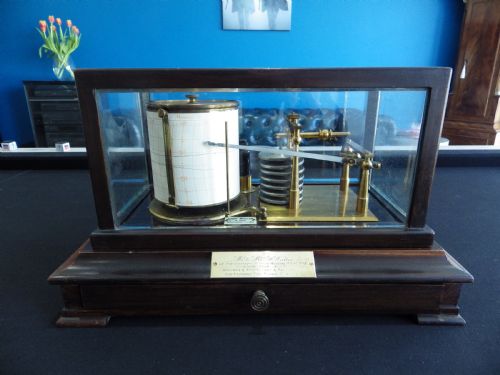


Brass and Wood Barometer
A brass and wood barometer records atmospheric pressure while anchoring a room with polished timber and gleaming metal.
Brass and Wood Barometer
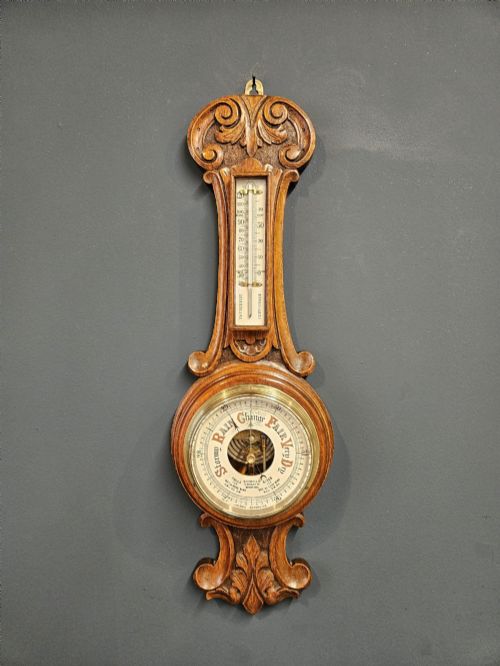
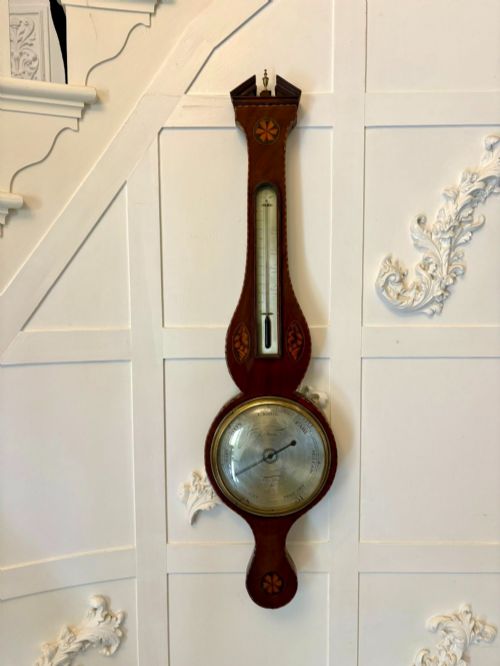
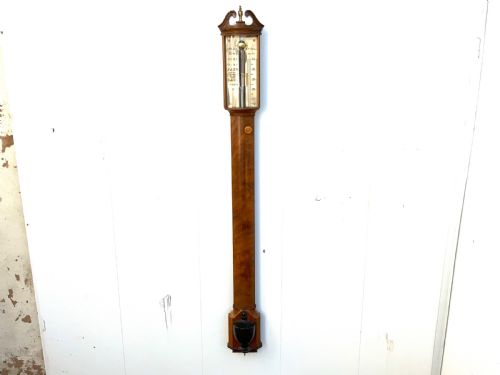
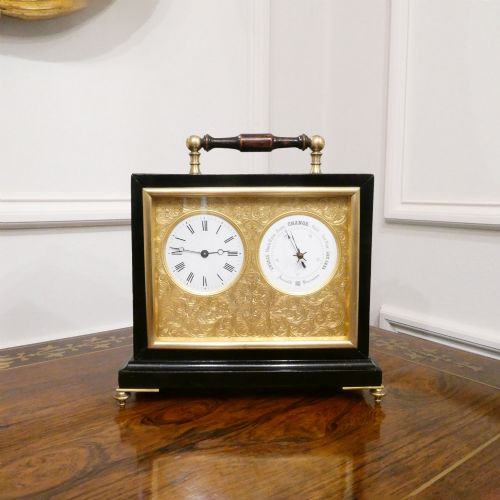
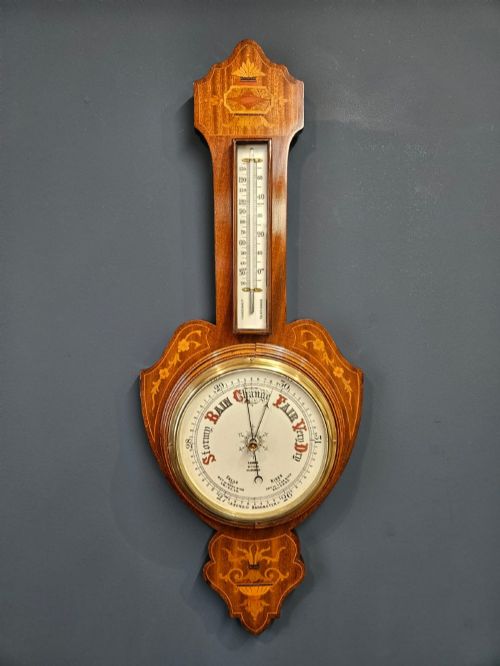
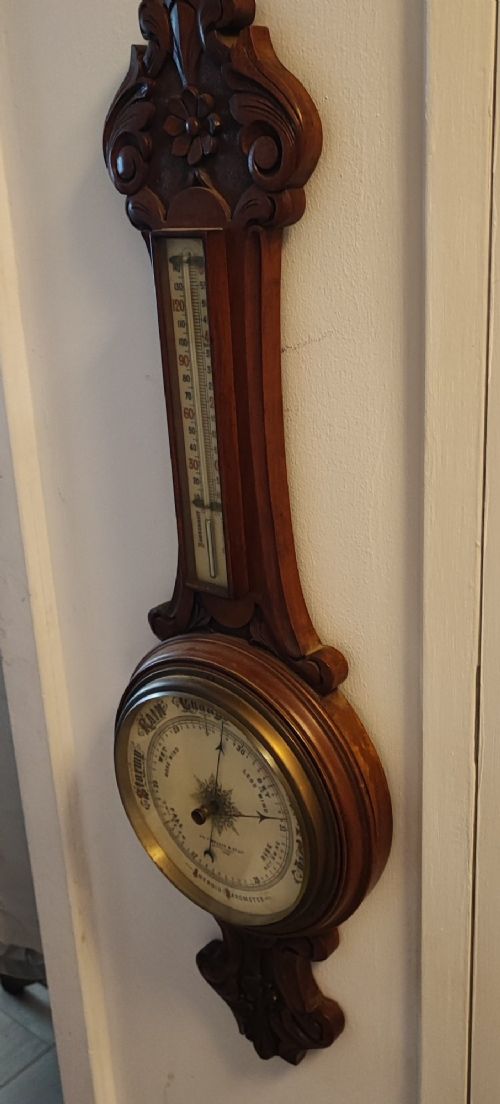
A brass and wood barometer spans several distinct domestic formats, ranging from slender stick barometers to sweeping banjo styles and compact wall units. The selections here draw heavily upon Georgian and Victorian periods, reflecting a long British tradition of domestic weather recording.
Most examples deploy rich timber casings such as mahogany, rosewood, and walnut, punctuated by brass bezels, dials, and cistern covers. Makers adapted these scientific instruments for domestic interiors, producing functional furniture that also served as a focal point in hallways and studies.
Materials and Construction
Cabinet makers utilised dense hardwoods like mahogany and walnut, frequently incorporating satinwood stringing, shell inlays, or carved oak details to elevate the visual appeal of the housing. These timbers were selected for stability and grain figure, housing sensitive mechanical or mercurial movements safely within.
Metal components relied on brass for bezels, scale plates, and cistern covers, offering durability and a bright contrast against the dark wood surfaces. Glass protected the delicate dials and indicators, while bone or enamel provided contrasting surfaces for engraved measurement scales.
Several examples include railway and Southend interest records, proving past owners kept a very close eye on weekend holiday weather.
Craft and Condition
Quality rests in the crispness of the timber carving, the delicacy of the wood veneers, and the legibility of the engraved brass scales. Finer pieces display meticulous subsidiary dials, such as hygrometers or thermometers, integrated smoothly into the main housing.
The integrity of the internal mechanism, whether mercurial tube or aneroid chamber, dictates the historical value alongside signed dials from established makers. Original glass, undamaged brass bezels, and matching wooden cistern covers preserve the integrity of the piece.
Short and Mason·Negretti and Zambra·James Pitkin·Alexander Wright·S and B Solomons
The Brass and Wood Barometer Glossary
- Banjo barometer
- A large wall barometer featuring a rounded top and a bulging lower trunk resembling a banjo. This form typically houses a hygrometer, thermometer, and spirit level alongside the main dial.
- Stick barometer
- A tall, narrow wall instrument enclosing a mercurial tube and a visible scale plate. These pieces offer precise barometric readings through a long column of mercury.
- Aneroid barometer
- A barometer measuring atmospheric pressure through the expansion and contraction of a sealed metal capsule. This mechanism removes the need for liquid mercury.
- Barograph
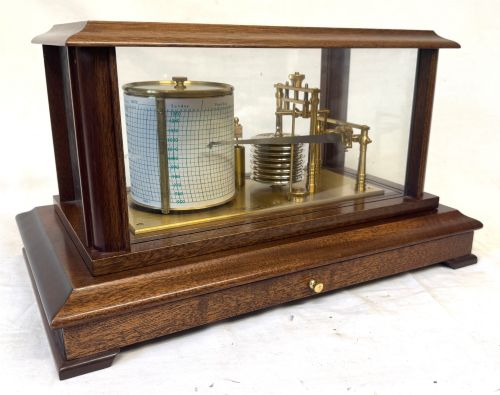
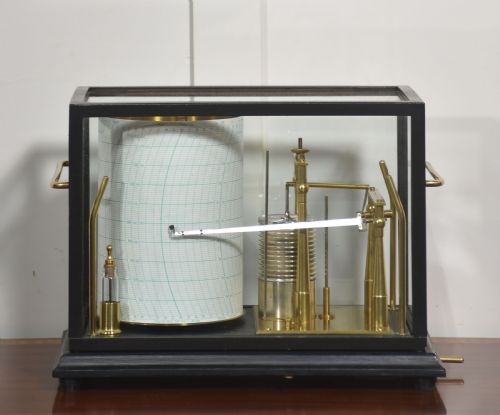
- A self-recording meteorological instrument that draws pressure readings onto a rotating paper chart housed within a wood and glass case. They often feature an ink pen driven by aneroid bellows.
- Cistern
- The lower reservoir containing mercury for a stick barometer. Enclosed in brass or wood, it regulates the fluid level within the vertical glass tube.
Brass and Wood Barometer: Frequently Asked Questions
How do I read a stick barometer?
A stick barometer measures atmospheric pressure by observing the height of a mercury column within a vertical glass tube. You align the movable vernier scale with the top of the mercury to take precise measurements.
Changes in the height indicate shifting weather patterns, where rising mercury generally points to fair weather and falling mercury warns of approaching storms.
Can I hang my barometer on an outside wall?
Barometers require stable indoor environments away from direct sunlight, dampness, and severe temperature fluctuations. Hanging them near radiators or exterior doors can warp the timber case and damage the delicate internal mechanism.
Interior hallways and studies offer the most stable conditions to preserve both the wood finish and the sensitive mechanical calibration.
How do I tell an aneroid from a mercurial barometer?
Mercurial barometers utilise a tall glass tube filled with liquid mercury and feature an exposed or enclosed cistern at the base. They take the form of tall stick barometers or traditional wheel models.
Aneroid barometers rely on a sealed metal vacuum box rather than liquid, allowing them to take on compact circular or banjo shapes without risk of fluid spills.
How do I clean the wood and brass?
Dust the timber case gently with a dry, soft cloth to protect the antique polish and veneer. Avoid commercial liquid polishes that can build up and dull the grain over time.
Clean exposed brass bezels and dials very carefully with a dry cloth, taking care not to let cleaning agents touch the surrounding wood or paper scale plates.