



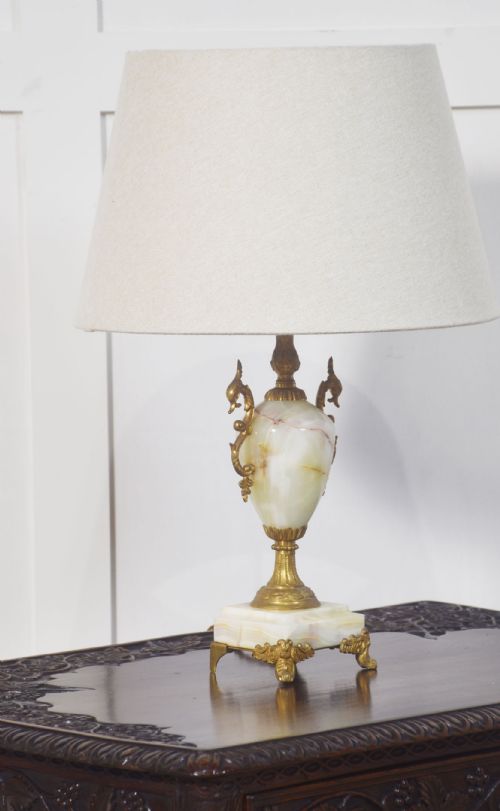


Brass and Alabaster Light
These brass and alabaster light fixtures combine warm metalwork with softly glowing stone to bring understated elegance and period character to any interior.
Brass and Alabaster Light
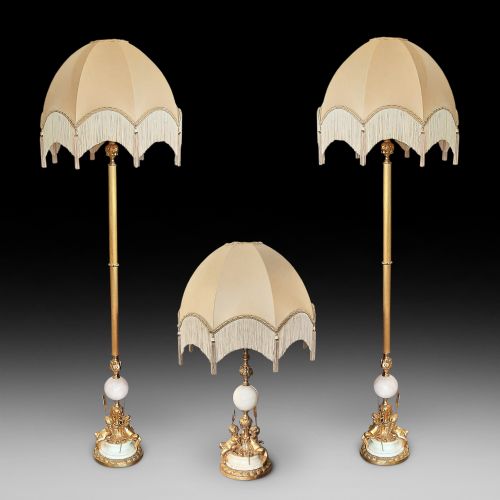
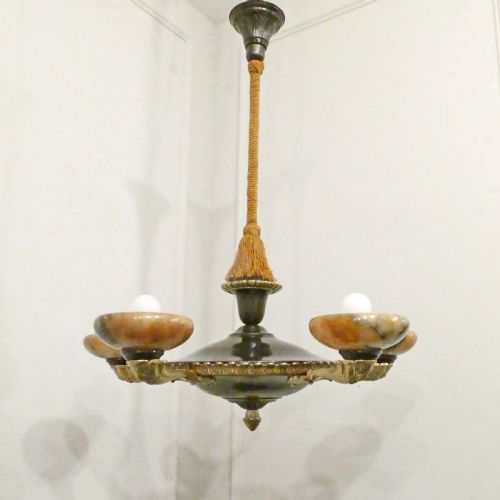
A brass and alabaster light brings together heavy cast metalwork and translucent stone, creating an illumination that feels both grounded and luminous. When you search for this phrase, you find a variety of forms ranging from hanging dish pendants to substantial table lamps and multi-light chandeliers.
The versions most commonly met on this page span the early decades of the twentieth century, with notable representation from the Art Deco and Edwardian periods. Pieces often feature classical revival motifs, bringing together polished or gilt brass with carved alabaster bowls, shades, and columns.
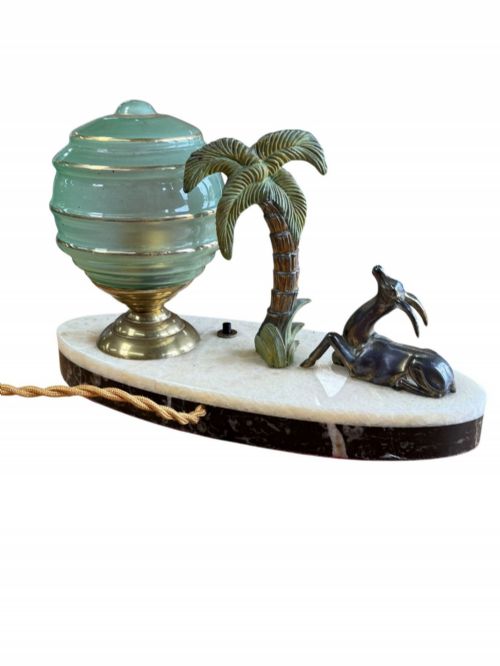
Makers and designers of these fixtures utilised contrasting materials, occasionally pairing alabaster with bronze, spelter, or white onyx alongside the primary brass mounts. Whether standing upon a country house table or suspended from a ceiling, these lights rely on the natural grain of the stone to diffuse the bulb's glare.
How they were made
Makers constructed these fixtures by turning or casting brass and gilt metal components to form the structural mounts, bezels, and chains. Alabaster and marble elements were then carved, hollowed, or turned on lathes to create translucent dishes, columns, and solid bases.
Techniques from the early twentieth century often involved mounting the stone directly into metal collars, securing heavy alabaster bowls with brass chains, or mounting marble columns onto stepped brass feet. Artisans balanced the dense weight of the stone against robust metal frames to ensure stability in both ceiling pendants and table lamps.
Brass and Alabaster Light Retail Price Guide 2026
Typical asking prices for brass and alabaster light among the pieces listed under this phrase on Sellingantiques today, from the lower quarter to the upper quarter. They describe what is for sale here now, not the wider market.
Some country house table lamps have survived so many decades that their alabaster bowls still hold a faint trace of nineteenth-century pipe smoke.
What varies in quality
The distinction between standard and superior examples lies primarily in the depth of carving and the purity of the stone. Finer alabaster and white onyx exhibit subtle, uninterrupted veining and consistent translucency when lit, whereas simpler pieces utilise denser, more opaque stone.
Metalwork also dictates the tier of a fixture, with heavier cast brass, intricate gilt detailing, and well-executed bronze mounts separating bespoke commissions from mass-produced items. The harmony between the metal fittings and the turned stone determines the overall sculptural success of the piece.
The Brass and Alabaster Light Glossary
- Alabaster
- A fine-grained, translucent stone prized for light fixtures because it diffuses illumination evenly across its surface. It varies in colour from crisp white to warmer amber tones.
- Spelter
- A zinc-based alloy often utilised as a cost-effective substitute for bronze in decorative metal mounts. It is frequently plated or patinated to resemble heavier metals.
- Gilt Metal
- Base metal treated with a thin layer of gold paint or leaf to provide a bright, reflective finish. It mimics solid or fire-gilt brass with a lighter overall weight.
- Dish Pendant
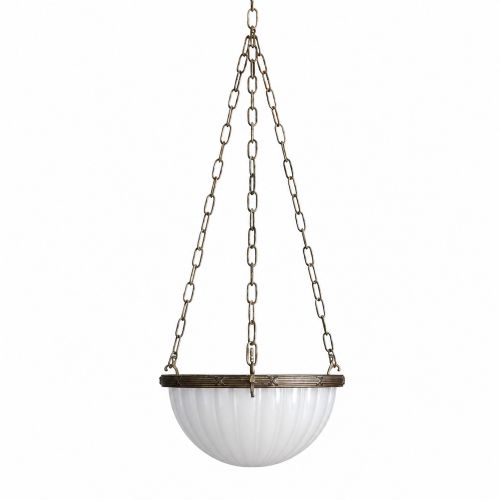
- A ceiling-hung light featuring a shallow, bowl-shaped shade suspended by chains. This form directs light upward toward the ceiling while casting a soft glow downward.
Brass and Alabaster Light: Frequently Asked Questions
Are these lights wired for modern use?
Many vintage fixtures retain older wiring configurations that may require updating to meet current safety standards. A qualified electrician can easily adapt the internal fittings while preserving the original exterior metal and stone components.
Rewiring typically involves replacing perished flex and updating lampholders to take standard modern bulbs. This ensures the piece functions safely without altering its historic appearance.
How do I date a brass and alabaster light?
Dating relies on observing stylistic markers such as the geometric lines of Art Deco pieces or the heavier classical ornamentation found on Victorian and Edwardian examples. Construction methods, including the type of screws and fixings used on the brass mounts, also offer clues to the period.
Materials can help narrow the era, as certain white onyx and marble combinations appear more frequently in pieces from the nineteen-twenties and thirties. Comparing the patination of the brass helps confirm its age.
Can table lamps support heavy stone bases?
Stone bases provide a naturally weighty foundation that keeps table lamps stable despite the heavy alabaster or glass shades they support. This solid heft prevents the lamp from tipping during everyday use.
Manufacturers balanced this weight by anchoring the central brass rod securely through the core of the marble or onyx. The resulting construction remains sturdy and reliable over decades of domestic placement.