

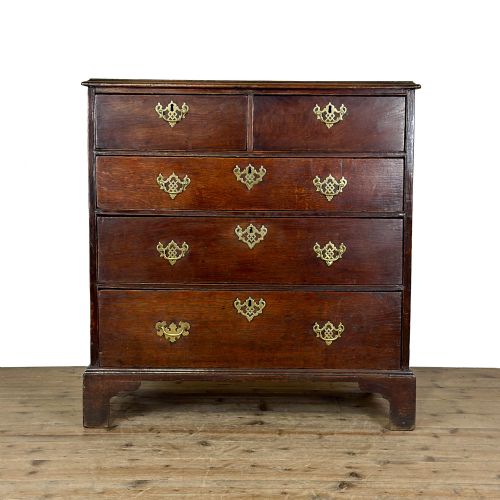
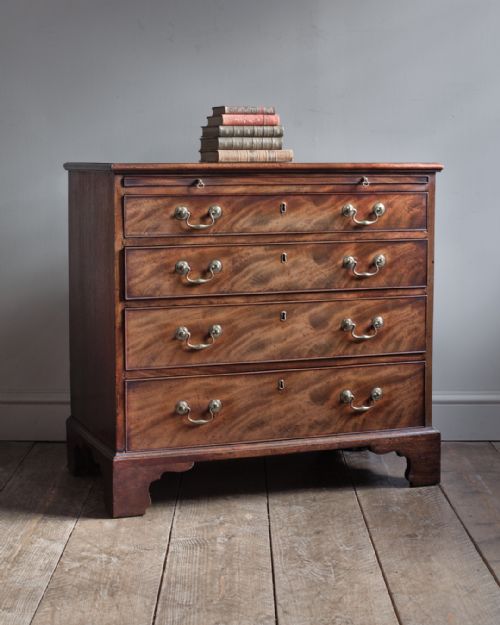
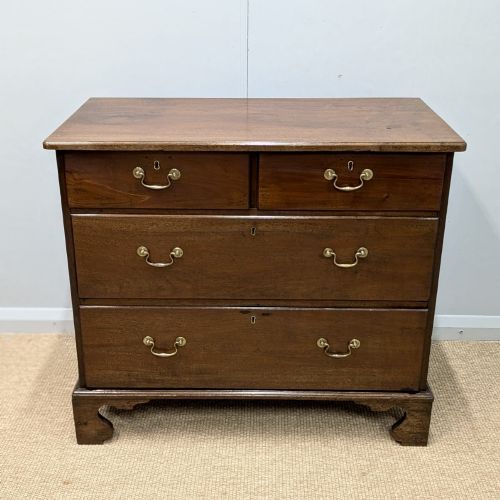
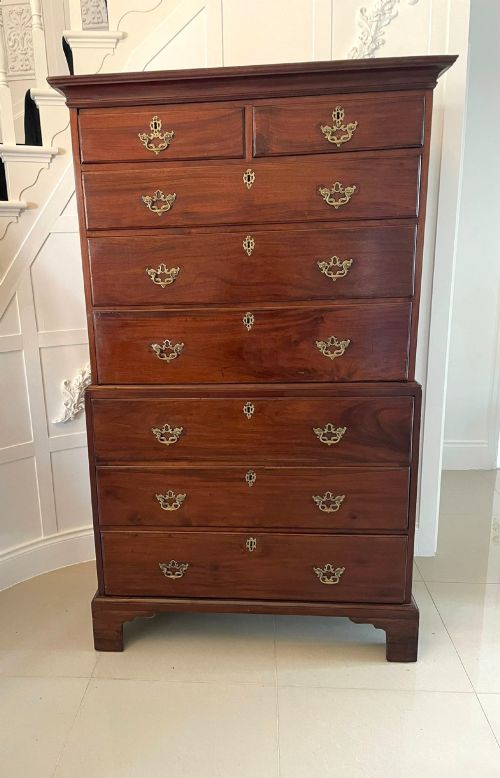
Bracket Feet Furniture
Bracket feet furniture offers sturdy, classical corner support beneath chests of drawers and desks spanning the Georgian to Edwardian periods.
Bracket Feet Furniture
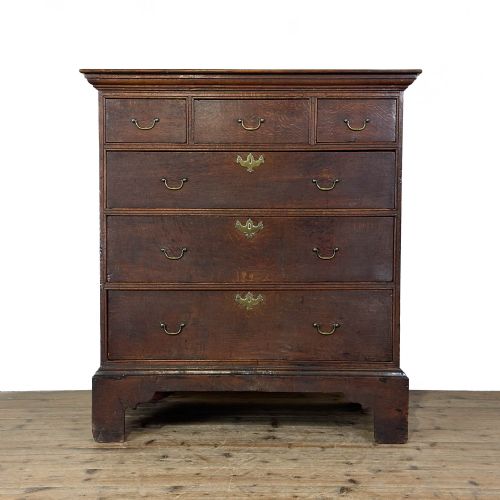
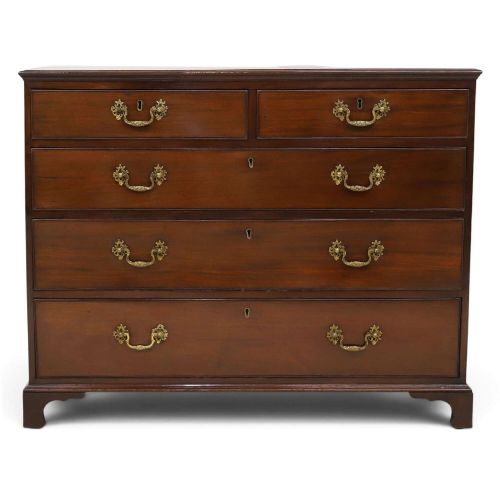
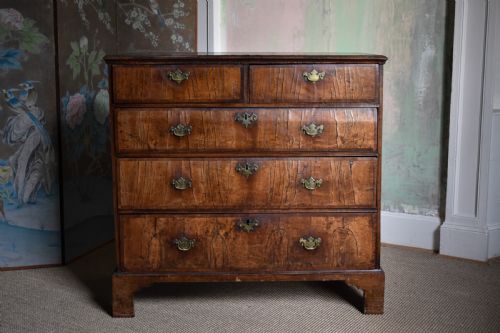
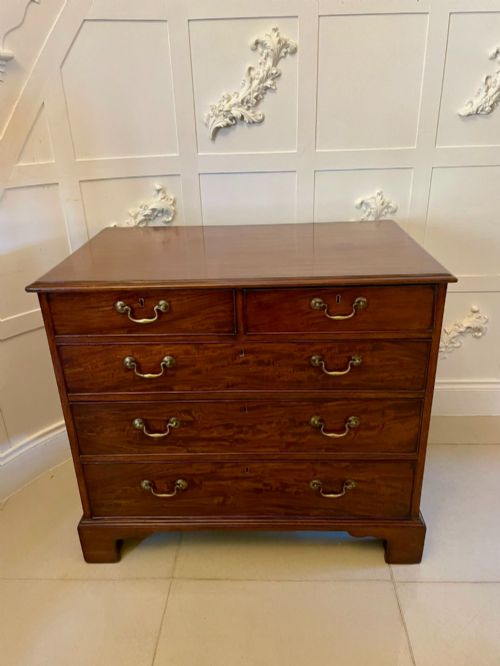
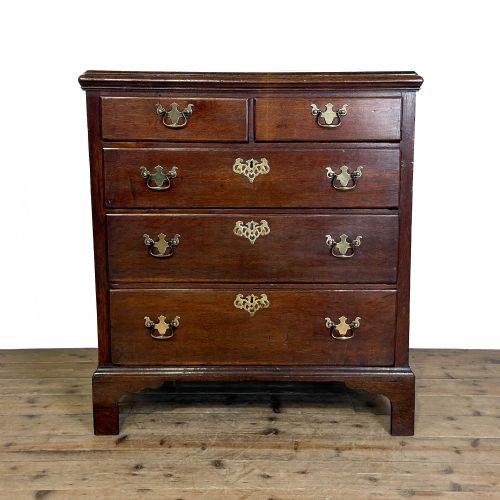
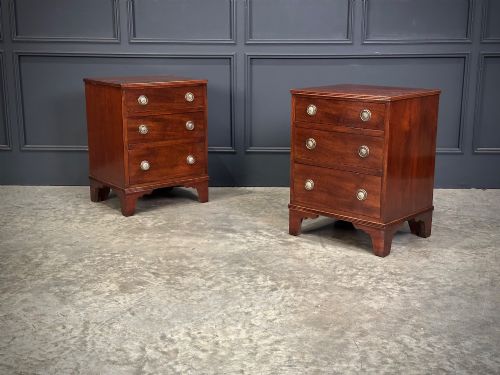
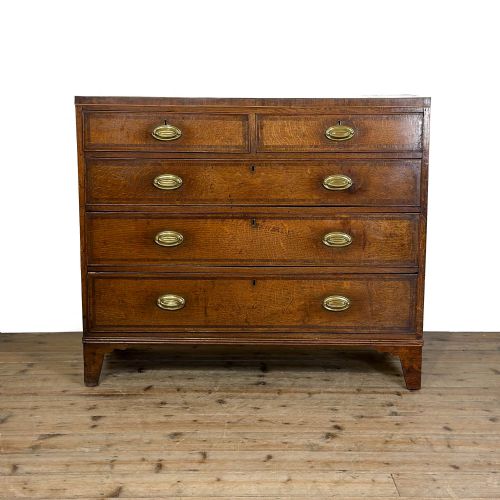
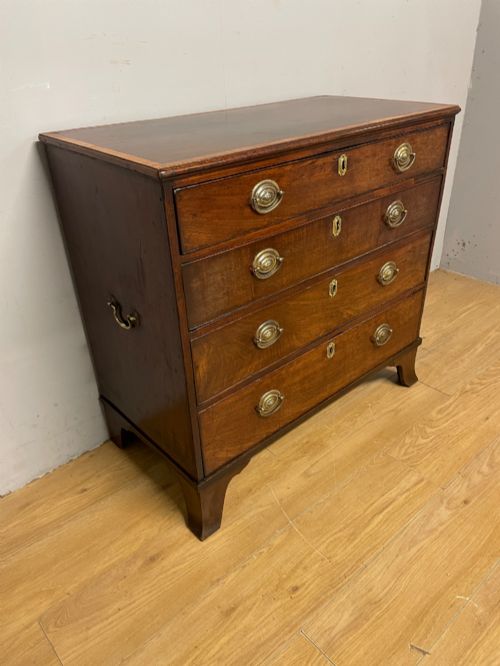
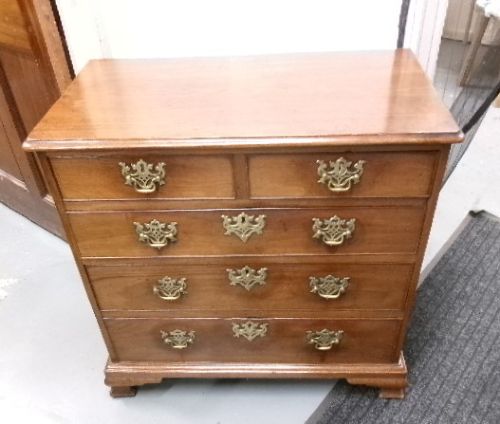
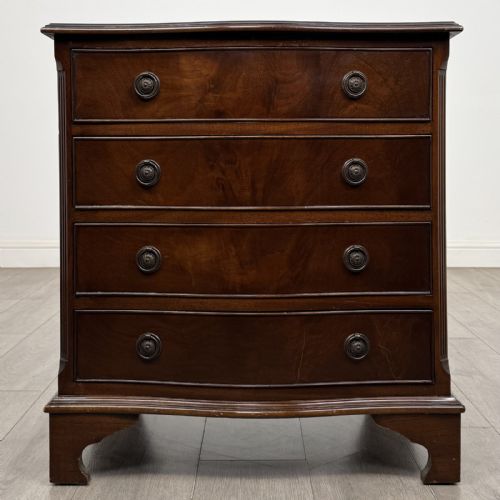
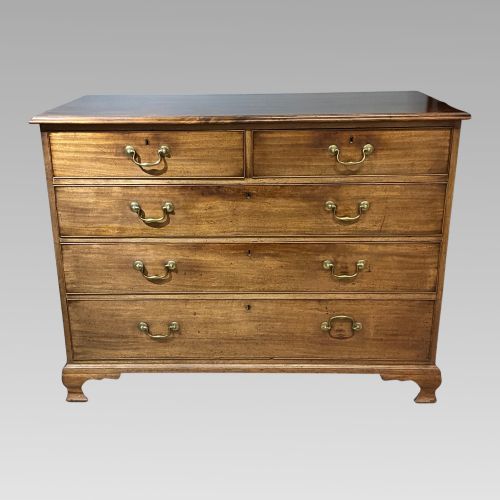
Bracket feet furniture centres on case pieces, predominantly chests of drawers, bachelors chests, and chests on chests designed with structural corner brackets. When searching for bracket feet furniture, buyers encounter forms that prioritize substantial drawer storage elevated slightly off the floor.
The pieces appearing on this page span several centuries, with a strong representation of Georgian and eighteenth-century examples alongside later Georgian revival adaptations. Mahogany, oak, and walnut form the primary corpus of these utilitarian storage items.
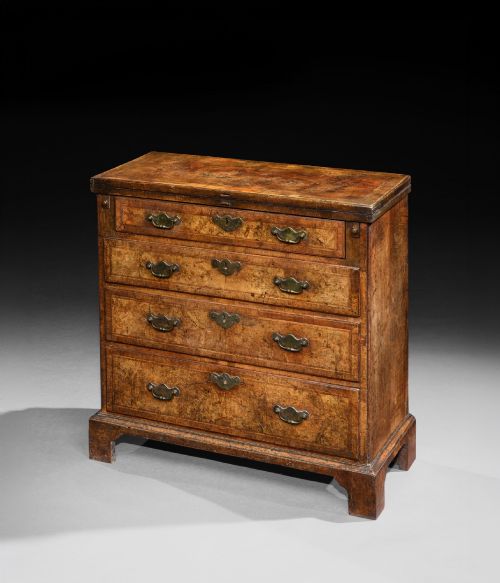
Makers produced these functional items in varying proportions, from tall chest on chest formats down to small four-drawer variations equipped with brushing slides. The bracket foot itself provides a stable foundation while maintaining the clean architectural lines of the cabinet work above.
Materials and Construction
Cabinet makers utilised solid timbers such as oak, elm, and Cuban mahogany, often selecting figured walnut or flame mahogany veneer for decorative exterior surfaces. These timbers were joined using traditional methods to build rigid carcases capable of supporting multiple heavy drawers.
Brass handles and escutcheons provided functional hardware contrast against the dark wood grain of mahogany and walnut pieces. The bracket feet were mitred at the corners and securely fixed to the lower base moulding to distribute the weight of the chest evenly.
Bracket Feet Furniture Retail Price Guide 2026
Typical asking prices for bracket feet furniture among the pieces listed under this phrase on Sellingantiques today, from the lower quarter to the upper quarter. They describe what is for sale here now, not the wider market.
Object forms on this page include standard chests of drawers, bachelors chests, desks, and tall chests on chests.
Assessing Quality and Execution
Quality reveals itself in the selection of timber figures, such as crossbanded burr walnut or highly figured mahogany veneer matched symmetrically across the drawer fronts. Superior pieces exhibit fine dovetail joinery within the drawer construction and retain their original brass handles and feet.
Proportion and scale distinguish finer examples, particularly in smaller bachelors chests and bow front designs where delicate execution is paramount. The integrity of the surface polish and the preservation of original timber patination further separate standard items from exceptional ones.
The Bracket Feet Furniture Glossary
- Bracket foot
- A corner foot shaped like a bracket, mitred at the corner and supporting case furniture such as chests of drawers. This foot style provides a neat architectural finish to eighteenth-century cabinetry.
- Bachelors chest
- A small compact chest of drawers typically featuring a fold-over top or a pull-out brushing slide. These versatile pieces date predominantly from the Georgian period.
- Chest on chest
- A tall case furniture form consisting of a larger chest of drawers base surmounted by a slightly smaller upper chest. Also known as a tallboy, this format maximises vertical storage.
- Brushing slide
- A pull-out shelf integrated into the upper section of a chest of drawers, originally used for writing or brushing clothes. It sits discreetly above the uppermost main drawer.
- Flame mahogany veneer
- A thin slice of mahogany timber cut to reveal a flamelike pattern of grain figures. Cabinet makers applied this to drawer fronts for decorative effect.
Bracket Feet Furniture: Frequently Asked Questions
What is bracket feet furniture?
Bracket feet furniture comprises case pieces like chests of drawers and desks supported by architectural corner feet mitred together at the base.
These designs provide a stable, box-like foundation that lifts the main body of the cabinet slightly off the floor.
How do I identify Georgian pieces?
Georgian pieces display traditional timber construction methods, typically utilising solid mahogany, oak, or walnut with hand-cut dovetails on the drawers.
Cabinet makers during this era focused on proportion, clean lines, and functional hardware such as brass drop handles.
Where were these pieces used?
These chests and desks served primarily as bedroom or study storage for clothing, documents, and personal valuables.
Their compact forms allowed them to fit neatly against walls in domestic chambers and hallways.
What are the common timber types?
Mahogany, oak, and walnut dominate the construction of these items, with some examples utilising elm in country pieces.
Cabinet makers also applied figured veneers and crossbanding to enhance the visual texture of the drawer fronts.