

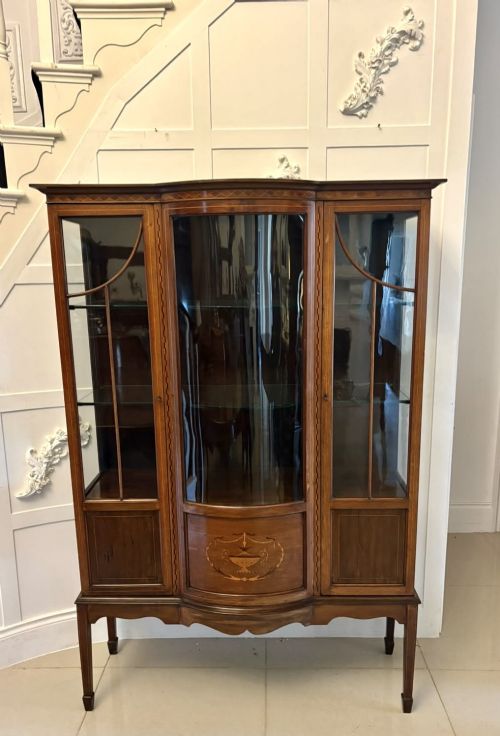
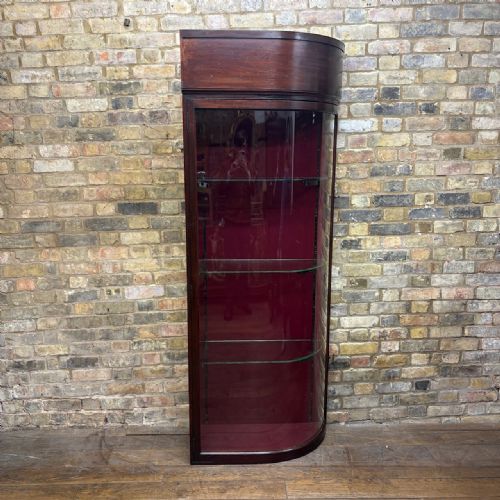
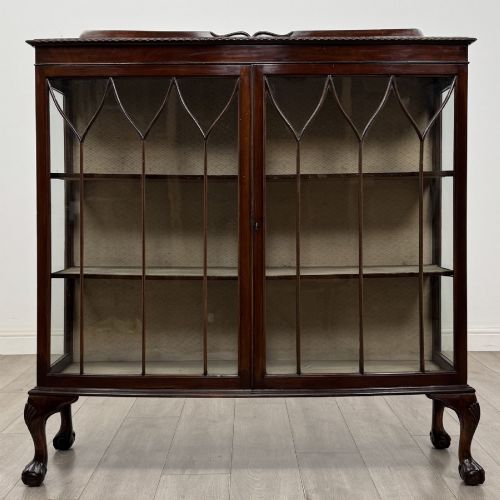
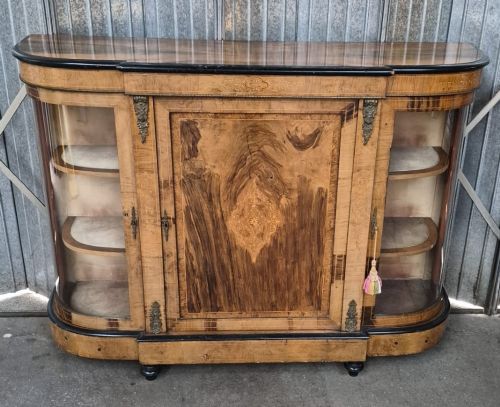
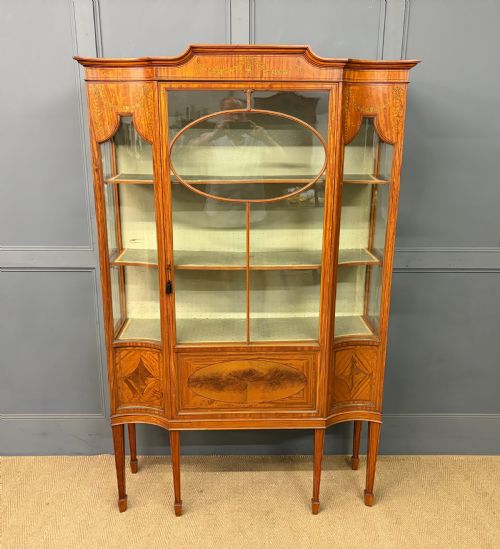
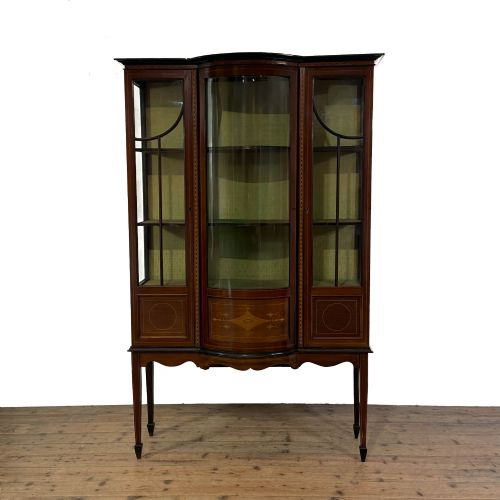
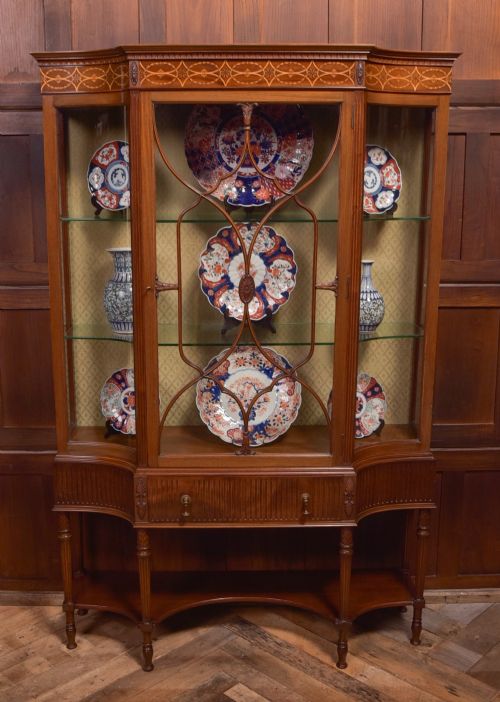
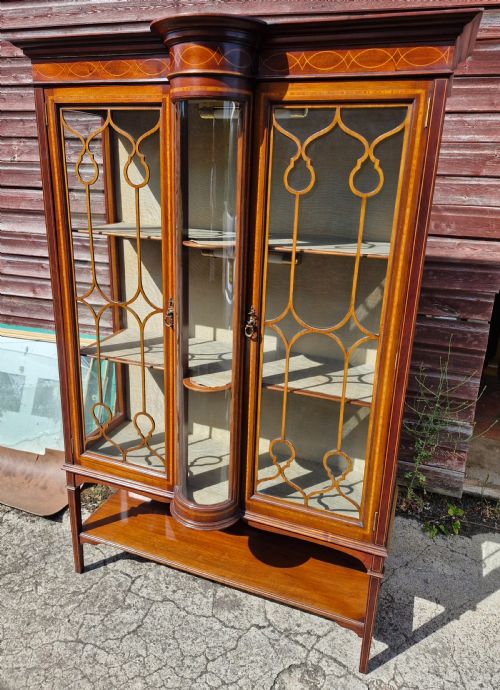
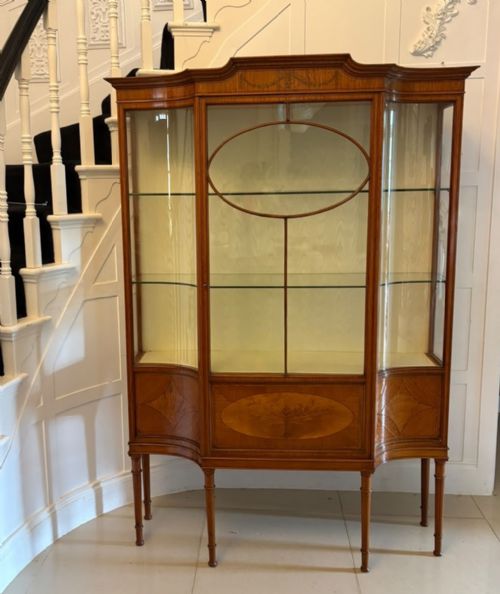
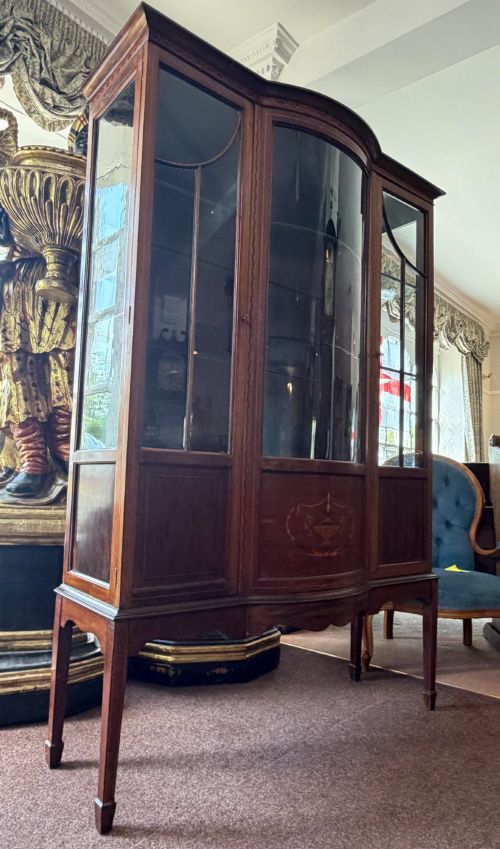
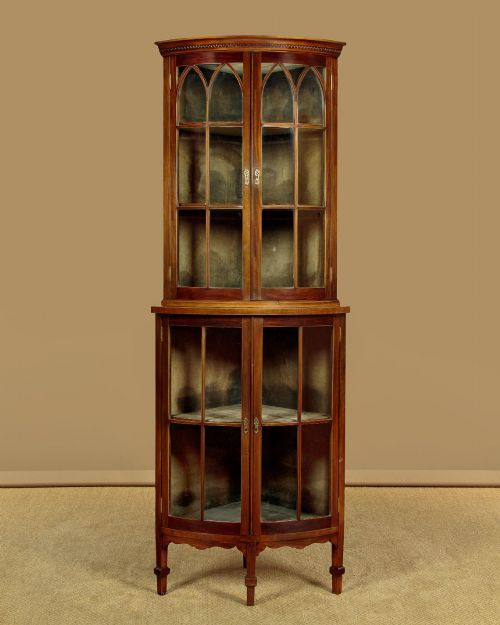
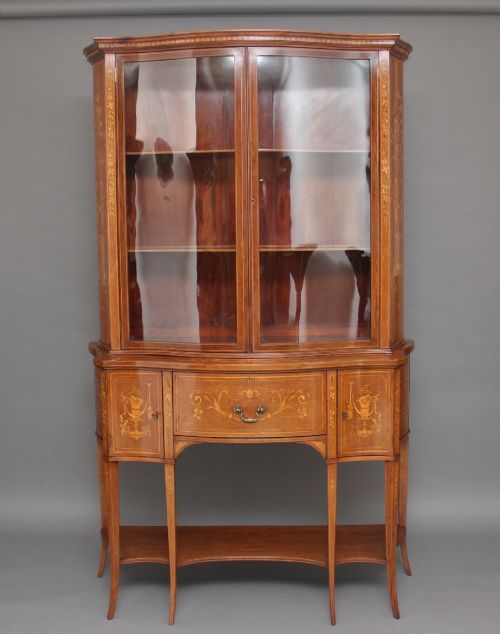
Bowed Glass Cabinet
When you want a bowed glass cabinet, you are looking for a curved glazed display piece to showcase fine objects.
Bowed Glass Cabinet
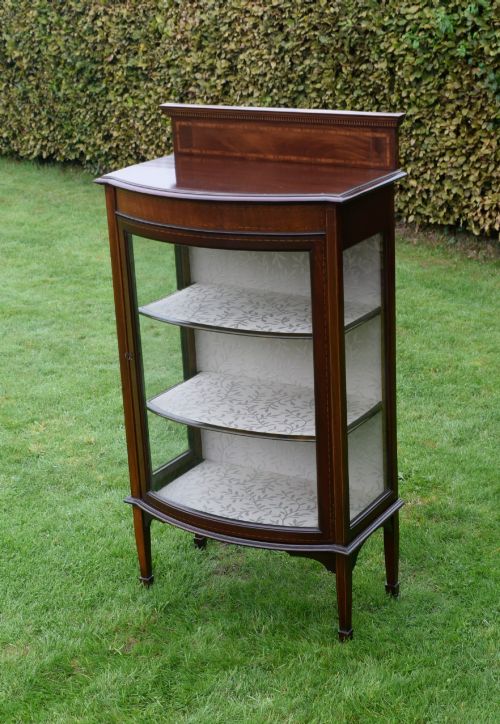
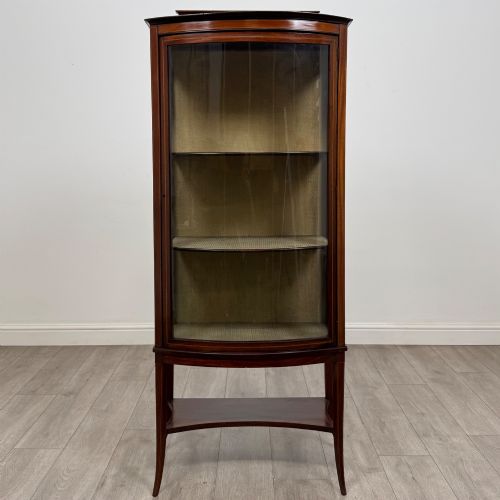
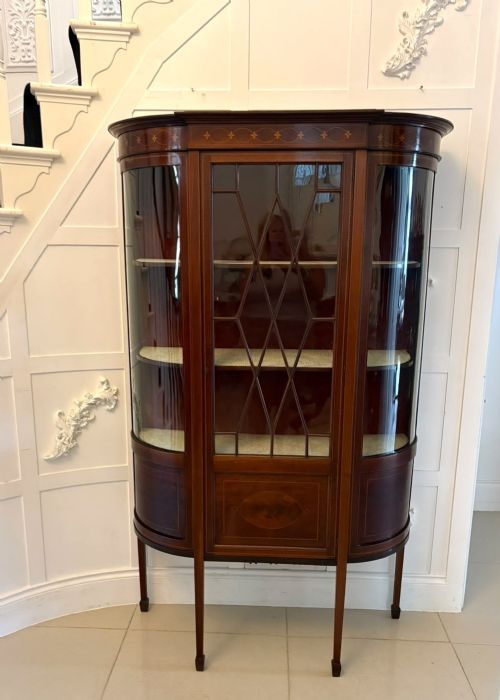
A bowed glass cabinet presents a curved glazed front or sides designed to exhibit porcelain, silver and curiosities. These pieces emerge primarily from Victorian and Edwardian workshops, spanning the late nineteenth and early twentieth centuries.
Makers and designers from these eras applied refined decorative schemes to domestic interiors. Such items served as both functional storage and elegant focal points in period drawing rooms.
How they were made
Cabinet makers utilised dense hardwoods like mahogany and burr walnut as the structural carcasses. Satinwood veneers and delicate fruitwood inlays provided decorative contrast on the exterior surfaces.
Glazing required curved glass panes fitted securely into timber frames, sometimes augmented by brass mounts and ormolu. Artisans also employed painted details and satinwood inlay to enrich the appearance of Edwardian vitrines.
Bowed Glass Cabinet Retail Price Guide 2026
Typical asking prices for bowed glass cabinet among the pieces listed under this phrase on Sellingantiques today, from the lower quarter to the upper quarter. They describe what is for sale here now, not the wider market.
Corner cabinets and credenzas appear alongside standard freestanding display cases.
What varies in quality
The refinement of the timber selection and the precision of the inlay set superior examples apart from standard production. Richly figured burr walnut and carefully matched satinwood indicate higher workshop standards.
Construction detail in the curved glazing and the integration of brass or ormolu mounts dictate the overall elegance. Pieces bearing marks from established firms display superior execution in their joinery and decorative elements.
Maple & Co·James Hicks·Edwards and Roberts
The Bowed Glass Cabinet Glossary
- Vitrine
- A glass display cabinet used chiefly for showcasing fine porcelain and small decorative objects. These freestanding pieces often feature glazed sides to maximise interior light.
- Credenza
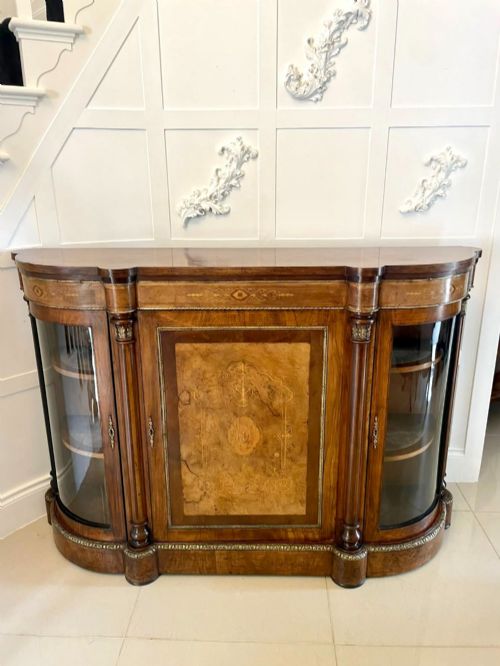
- A decorative cabinet or sideboard, frequently featuring curved ends and glazed doors. Victorian examples often incorporate burr walnut and ormolu mounts.
- Inlay
- A technique where pieces of contrasting timber or fruitwood are inserted into the primary surface to form decorative motifs. This method adorned many Edwardian and Victorian cabinets.
- Ormolu
- Gilded bronze mounts applied as decorative ornaments to furniture pieces. They appear frequently on nineteenth-century walnut credenzas.
Bowed Glass Cabinet: Frequently Asked Questions
Where did people place these cabinets?
These cabinets stood in drawing rooms and formal parlours where guests gathered. They functioned as primary display furniture for valuable porcelain and silver collections.
Corner versions utilised neglected angles in smaller reception rooms, while larger credenzas anchored long walls.
How do I clean the curved glass?
Use a soft microfibre cloth with a mild glass cleaner sprayed onto the cloth rather than directly onto the glass. This prevents moisture from seeping into the wooden rebate.
Take care around delicate timber frames and painted satinwood surfaces during the process.
Can I adjust the internal shelves?
Some Edwardian and French examples feature adjustable internal glass shelves supported by specialised brackets. Fixed timber shelves appear more frequently in older Victorian models.
Check the interior supports carefully before altering shelf heights to avoid damaging the cabinet lining.
How do I tell Edwardian from Victorian?
Victorian cabinets often utilise heavier burr walnut veneers paired with ormolu mounts and serpentine or bowed ends. They date from the mid to late nineteenth century.
Edwardian pieces tend to employ lighter mahogany or satinwood with delicate painted motifs and Sheraton Revival influences, dating around nineteen hundred.