



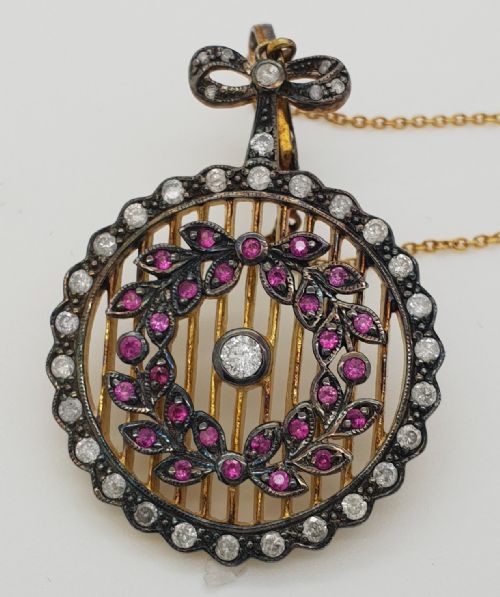


Bow Pendant Necklace
These pieces of bow pendant necklace design span several eras, offering delicate gemstone work and precious metals for daily wear or collection.
Bow Pendant Necklace
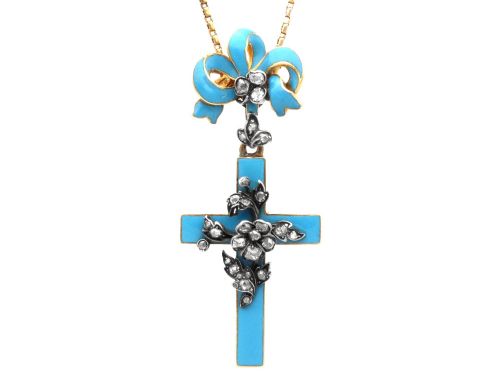
A bow pendant necklace centres on a ribbon motif formed in precious metal and set with stones, emerging across periods from Georgian origins through to the mid-century. The listings show a strong representation of Edwardian and Victorian pieces, alongside occasional examples from the 1800s and 1960s.
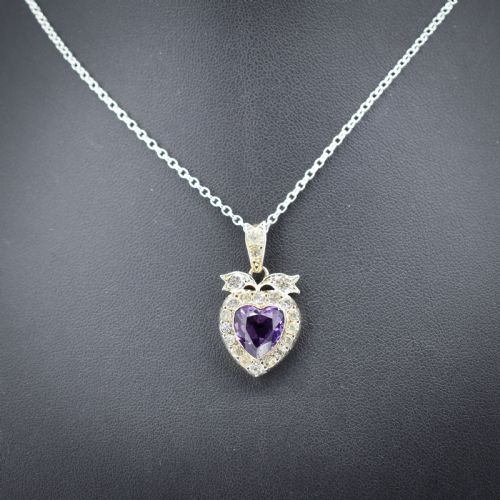
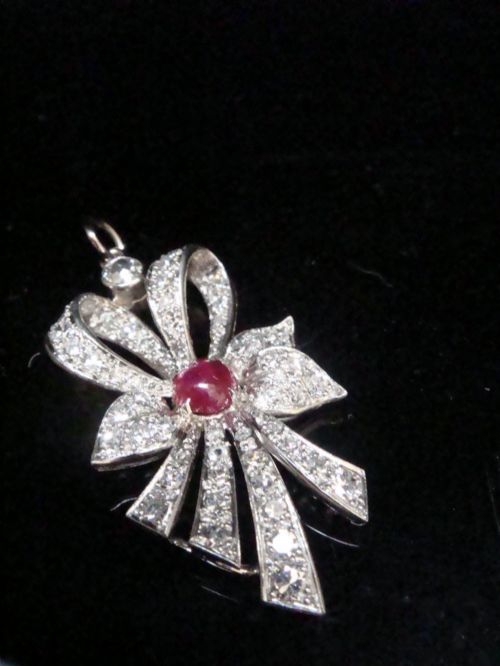
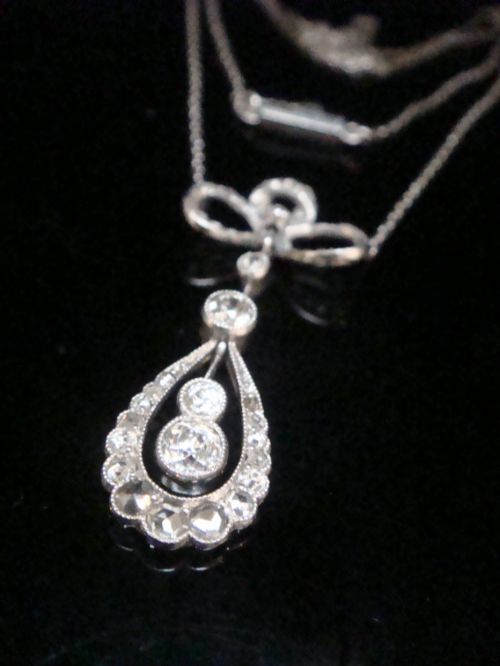
Makers shaped these ribbon motifs into necklaces and pendants using gold, platinum, and silver gilt, often combining them with diamonds, rubies, pearls, and enamel. The form ranges from simple gold ribbons to complex platinum drops featuring calibrated stones.
Buyers searching for a bow pendant necklace encounter varied interpretations of the knot and loop motif, spanning delicate Edwardian white gold and platinum settings to heavier Victorian gold work. Each period brings its own characteristic proportion and stone arrangement to the design.
How they were made
Metals such as platinum, 15ct and 18ct yellow and white gold, and silver provide the structural framework for these pieces. Artisans worked these precious metals into intricate looped ribbons designed to catch the light from every angle.
Gemstones including old cut diamonds, rubies, pearls, and paste glass are integrated into the metal framework using period setting techniques. Enamel work also appears on select pieces, adding coloured detail to the gold structures.
Bow Pendant Necklace Retail Price Guide 2026
Typical asking prices for bow pendant necklace among the pieces listed under this phrase on Sellingantiques today, from the lower quarter to the upper quarter. They describe what is for sale here now, not the wider market.
Materials across these listings include platinum, gold, silver, diamonds, rubies, pearls, enamel, and paste glass.
What varies in quality
The sophistication of the metalwork defines the upper tier of these pieces, where the ribbon folds appear fluid and convincing rather than stiff or flat. Superior examples demonstrate precise stone setting that follows the contours of the bow without crowding the metal.
Material combination also elevates a piece, particularly when platinum or higher carat golds are paired with matched gemstones and original fitted boxes. Poorer quality generally shows in heavier, less refined casting and simpler stone selections.
EDUARD FOEHR
The Bow Pendant Necklace Glossary
- Edwardian
- A period spanning the early twentieth century known for delicate platinum and diamond jewellery, frequently utilising the garland style. Pieces from this era often feature light, airy openwork metal structures.
- Old cut
- A diamond cutting style prevalent in antique jewellery featuring a small table, high crown, and large culet. This cut produces a softer, more candlelit sparkle compared to modern brilliant cuts.
- Paste glass
- Hand-cut and polished glass used as a gemstone substitute in antique jewellery. High quality paste is faceted by hand and foil-backed to increase brilliance.
- Silver gilt
- Sterling silver that has been coated with a thin layer of gold. This technique provides the rich appearance of gold while utilising silver as the base metal.
Bow Pendant Necklace: Frequently Asked Questions
What periods do these necklaces come from?
The listings encompass items from the Georgian era around 1830, the Victorian period, the Edwardian era, and mid-century retro pieces from the 1960s.
Each period utilises different metals and stones, ranging from early yellow gold and enamel to Edwardian platinum and diamonds.
What stones are typically set in them?
Commonly encountered stones include old cut diamonds, rubies, pearls, pink tourmaline, and paste glass.
These materials are set into gold, platinum, or silver frames to accent the ribbon and bow designs.
How do I wear an antique pendant?
Many of these pieces arrive on their original or period-appropriate chains, designed to sit at standard pendant lengths around the collarbone.
Care should be taken with delicate stone settings and fine gold or platinum chains during daily wear.
Are original boxes common?
Original fitted boxes occasionally accompany specific pieces, providing a fitted interior designed precisely for the pendant or necklace.
Such boxes offer additional context about the provenance and retail origin of the item.