




Botanical Study on Paper
These botanical study on paper pieces bring natural history directly to your walls through delicate watercolours, gouache, and engravings.
Botanical Study on Paper
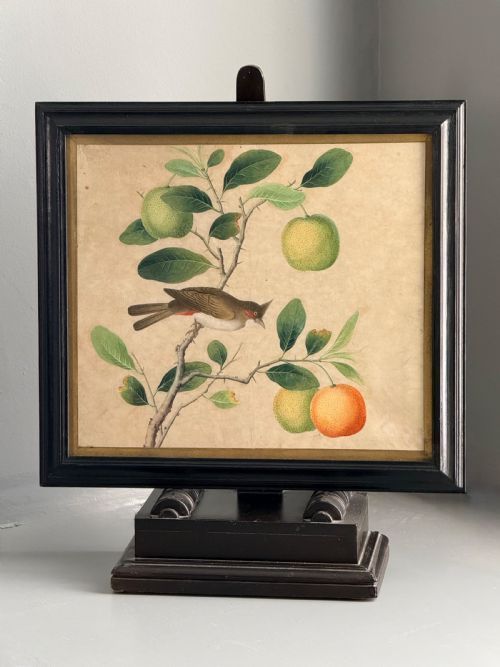
A botanical study on paper captures plant life with scientific precision and artistic grace, spanning periods from the eighteenth century to the mid-twentieth century. When searching for a botanical study on paper, buyers frequently encounter Victorian watercolours, hand-coloured engravings, and Chinese pith paper works.
The selection here encompasses framed artwork, wall art, and academic sketch studies, reflecting both British and international traditions. Pieces range from detailed studies of azaleas and wallflowers to ornithological bird studies and lithographs.
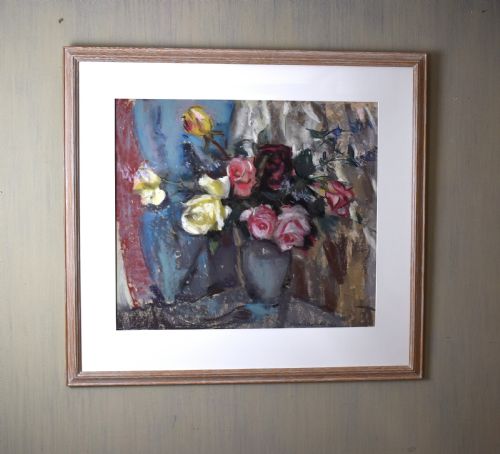
Nineteenth-century examples dominate the offerings, often appearing as individual sheets or curated sets of botanical specimens. Mid-century British watercolours also feature prominently, showing floral still lifes in jugs and baskets.
Materials and execution
Watercolour and gouache dominate these works, applied directly to paper or delicate pith paper to achieve vibrant floral hues. Engravings provide a sharper line, frequently enhanced with hand-colouring to delineate petals and leaves accurately.
Supporting elements include ebonised wood frames and glass protection, which preserve the fragile paper surfaces from atmospheric damage. Silk occasionally appears as a painting substrate in Chinese export pieces, paired with traditional pigments.
Substrates vary from traditional rag paper and silk to fragile pith paper and mounted lithographic plates.
Assessing quality and execution
The precision of the brushwork and the botanical accuracy dictate the distinction between standard decorative prints and master-level studies. Finer works demonstrate careful attention to leaf venation, colour gradients, and structural plant details.
The condition of the paper and the vibrancy of the original pigments heavily influence desirability. Works by recorded artists command greater attention than anonymous academic sketches, particularly when accompanied by original period framing.
Edith Barrow·Grace Hastie·Phyllis I Hibbert·Lena M Alexander·Marian Chase·Charlotte Isa James·Alice Macallan Swan·John Curtis·Marion Broom·John Sherrin·Minnie Smythe·George Dionysius Ehret
The Botanical Study on Paper Glossary
- Gouache
- An opaque watercolour paint that dries to a matte finish, allowing for dense colour application on paper.
- Pith paper
- A delicate material made from the pith of the Tetrapanax papyrifer plant, commonly used in nineteenth-century Chinese export art.
- Engraving
- A printmaking technique where an image is incised into a metal plate, producing fine, clear lines suitable for scientific illustration.
- Lithograph
- A print produced from a flat stone or metal plate, utilised extensively for multi-colour botanical plate production.
- Academic sketch
- A preparatory study executed by an artist to understand natural forms before completing a finished composition.
Botanical Study on Paper: Frequently Asked Questions
How should I hang fragile paper art?
Keep framed pieces away from direct sunlight to prevent the watercolours and hand-coloured inks from fading over time.
Ensure the room maintains a stable humidity level to protect the vintage paper and wooden frames from warping.
Are these works original or printed?
The selection contains both hand-painted original watercolours and gouaches alongside period hand-coloured engravings and lithographs.
Examination under magnification reveals whether pigment sits on the paper surface or forms part of a printed matrix.
What is pith paper?
Pith paper is a fragile, velvety material derived from plant pith that absorbs gouache pigments with exceptional depth.
Works on pith paper require protective glass framing to prevent the delicate substrate from cracking.
How do I date a botanical engraving?
Examine the paper watermark, typography style, and publication details if the print derives from a known plate book.
Stylistic cues within the Victorian and eighteenth-century examples also help narrow down the decade of production.