


Botanical Sterling Silver Jewellery
Botanical sterling silver jewellery brings the quiet forms of leaves and blossoms into wearable silver, shaped by Scandinavian modern designers and Victorian makers.
Botanical Sterling Silver Jewellery
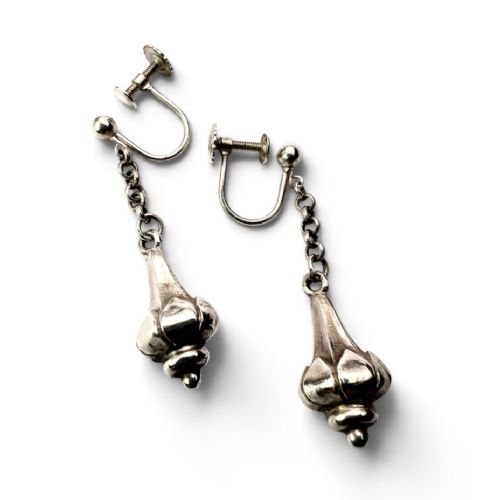
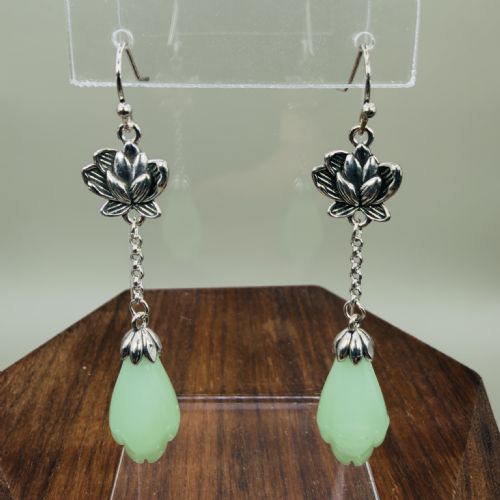
Botanical sterling silver jewellery encompasses earrings, necklaces, bangles, and brooches that draw their motifs directly from plants and flowers. Pieces range from Victorian aesthetic movement designs to mid-century Scandinavian works and later creations.
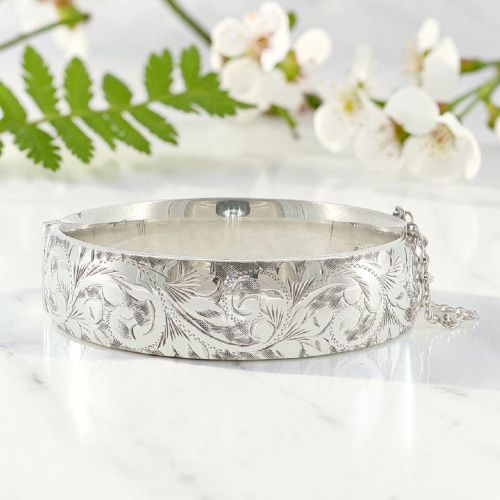
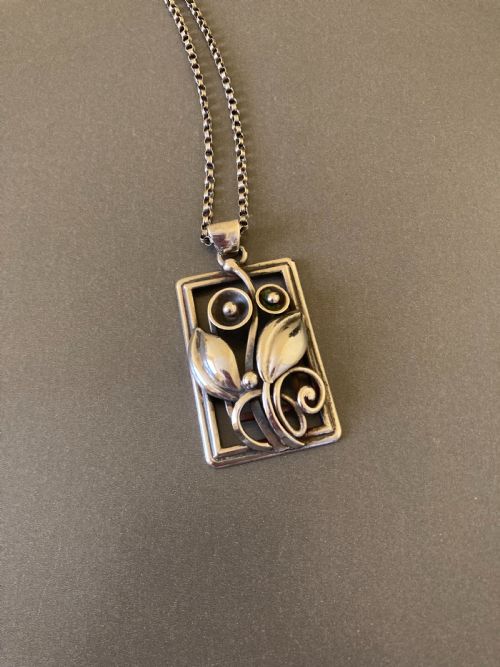
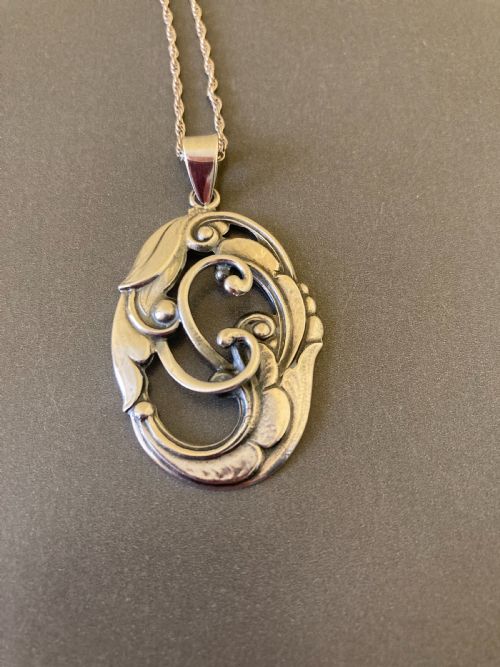
The version you are most likely to meet on this page is the Scandinavian modern floral brooch, pendant, or bangle, often originating from the 1930s through to the 1950s. These items frequently employ clean lines and hand-engraved details to render natural forms in solid silver.
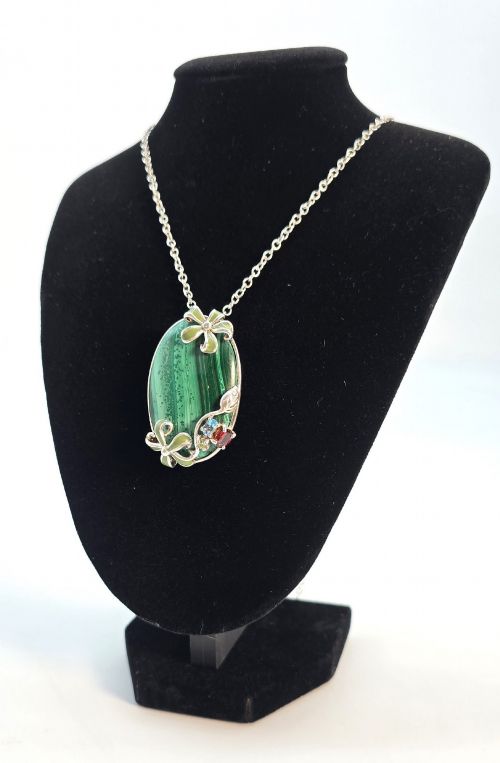
Victorian pieces also appear, bringing the earlier aesthetic movement interpretations of foliage and blossoms to earrings and bracelets in sterling silver. Alongside these, you will find items incorporating green chalcedony, malachite, crystal, amethyst, and enamel to colour the floral subjects.
How they were made
Makers shaped sterling silver and silver into floral subjects through hand engraving, casting, and setting. Metalwork is frequently paired with vibrant enamel or polished hardstones such as green chalcedony and malachite to accentuate the petals and leaves.
Scandinavian and Victorian workshops relied on skilled metal-forming techniques to articulate delicate flower drops, articulated bracelets, and substantial pendants. The integration of coloured stones and enamel required precise bezel and flush settings within the silver framework.
Flowers that refuse to wilt, rendered permanently in solid silver and bright enamel for daily wear.
What varies in quality
The standard of a piece rests in the crispness of the hand engraving and the structural integration of the botanical elements. Finer examples display meticulous attention to the veining of leaves and the organic curves of petals rather than flat stamping.
Quality also shows in the selection and setting of secondary materials like enamel and hardstones such as green chalcedony or malachite. Secure mounting and rich, even coloration distinguish the finer workshops from more basic production.
Georg Jensen·G. Hoppe
The Botanical Sterling Silver Jewellery Glossary
- Sterling silver
- An alloy consisting of silver and other metals, usually copper, formulated to increase durability while maintaining a bright lustre. It provides the primary metallic body for these pieces.
- Green chalcedony
- A microcrystalline variety of quartz coloured green by impurities, often cut and set into silver floral mounts. It adds a translucent botanical hue to earrings and pendants.
- Malachite
- An opaque, green copper carbonate hydroxide mineral featuring characteristic banded patterns. It is used in silver jewellery to represent leaves and natural stones.
- Skønvirke
- The Danish iteration of Art Nouveau and Arts and Crafts principles, focusing on organic motifs and skilled handcraft. It strongly influences Scandinavian silver floral design.
- Aesthetic Movement
- A late nineteenth-century movement that emphasised visual beauty over narrative content, visible in Victorian silver pieces decorated with stylized foliage.
Botanical Sterling Silver Jewellery: Frequently Asked Questions
What is botanical sterling silver jewellery?
Botanical sterling silver jewellery encompasses decorative wearable items fashioned from silver into the shapes of leaves, flowers, and vines. These pieces span multiple decades and stylistic movements, from Victorian aesthetic creations to mid-century Scandinavian designs.
The category includes earrings, necklaces, pendants, bangles, bracelets, and brooches. Many incorporate coloured elements such as enamel, green chalcedony, malachite, crystal, and amethyst to enhance their naturalistic subjects.
How do I date a piece?
Dating these items requires examining the stylistic clues, construction methods, and materials typical of specific periods. Victorian pieces often reflect the aesthetic movement of the late nineteenth century with heavier ornamentation.
Mid-century items, particularly from the 1930s, 1940s, and 1950s, tend to exhibit clean Scandinavian modern lines or Skønvirke influences. Maker marks, where present, provide further chronological anchor points.
How should I care for my silver jewellery?
Proper care involves gentle cleaning and mindful storage to preserve both the sterling silver and any set stones or enamel. Regular wiping with a soft cloth helps maintain the metal's lustre without abrasive polishes that might damage hand engravings.
Items set with softer materials like malachite or green chalcedony require extra caution to avoid harsh chemical dips. Storing each piece separately prevents scratching between metal surfaces and delicate stones.