



Botanical Silver Jewellery
Botanical silver jewellery captures natural forms in sterling silver, bringing flowers and leaves into wearable pieces from the Victorian era onwards.
Botanical Silver Jewellery
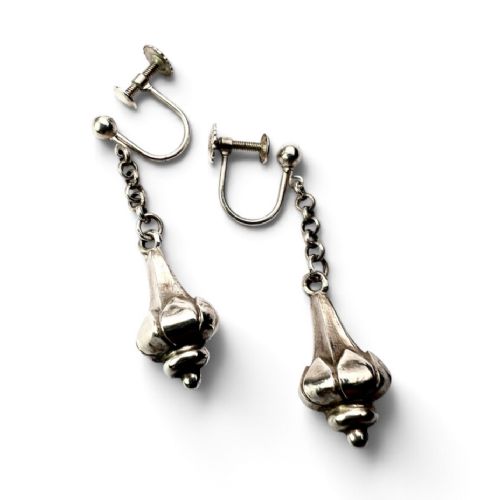
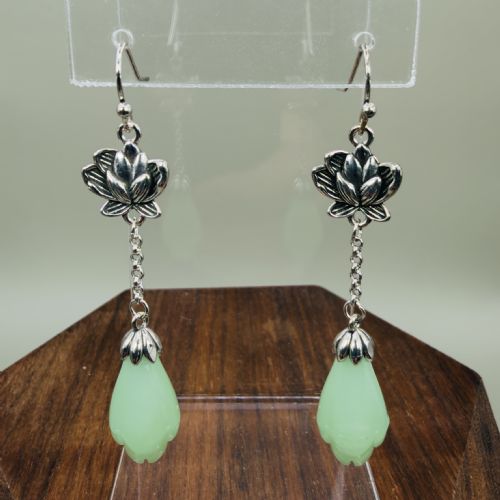
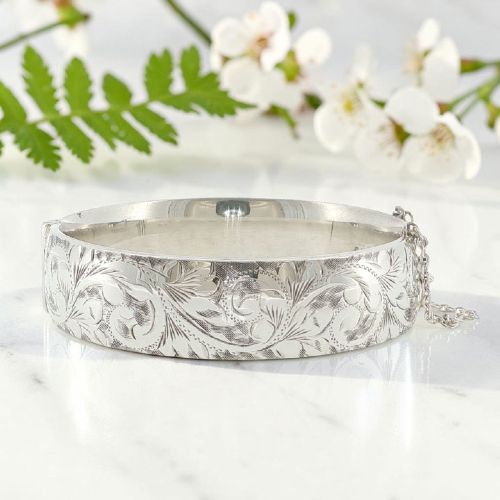
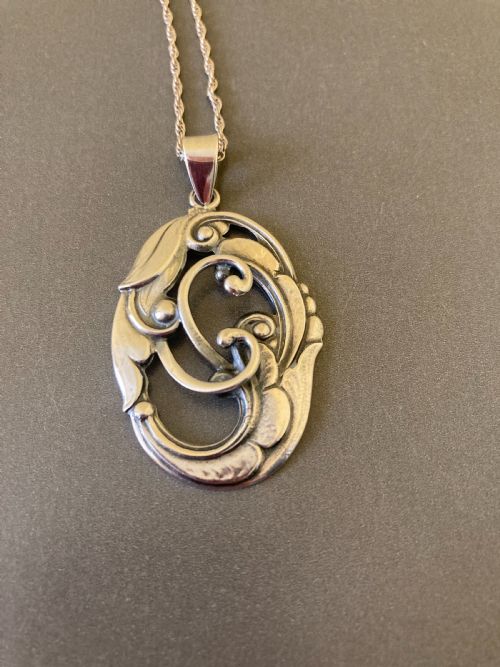
Botanical silver jewellery encompasses brooches, earrings, necklaces, and bangles that take their inspiration from flowers, leaves, and natural plant motifs. Pieces span multiple periods, ranging from Victorian and Edwardian iterations through to Art Nouveau designs and mid-century Scandinavian modernist work.
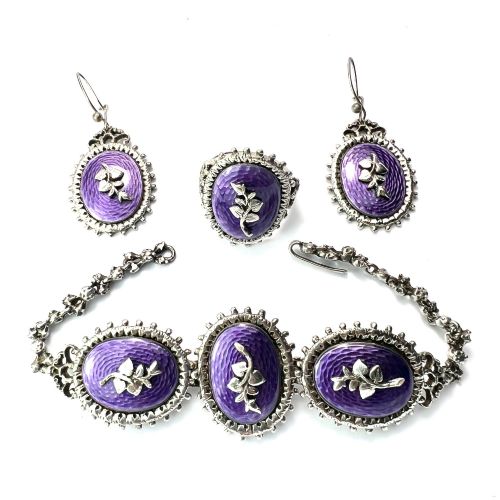
The items most frequently encountered include floral brooches and pendants, alongside earrings and bracelets set with stones or decorated with enamel. Makers apply these organic motifs across various decades, uniting natural subjects with silver craftsmanship.
How they were made
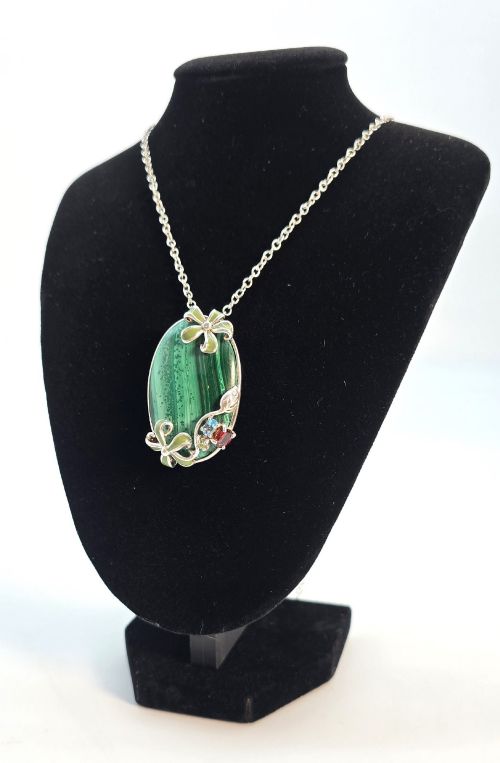
Silversmiths shape sterling silver and silver gilt using techniques such as hand engraving, repoussé decoration, and casting to create realistic or stylized plant forms. Many pieces incorporate enamel work, including plique-à-jour, adding translucent colour to petals and leaves.
Gemstones and decorative minerals are frequently integrated into the metalwork. Earrings, brooches, and pendants feature settings with diamonds, green chalcedony, amethyst, marcasite, and malachite.
Botanical Silver Jewellery Retail Price Guide 2026
Typical asking prices for botanical silver jewellery among the pieces listed under this phrase on Sellingantiques today, from the lower quarter to the upper quarter. They describe what is for sale here now, not the wider market.
Listings feature items from the Victorian and Edwardian eras alongside mid-century Scandinavian modern and Art Nouveau pieces.
What varies in quality
The standard of execution in botanical silver jewellery depends heavily on the precision of the hand working, particularly in repoussé detailing and hand engraving on leaves and stems. Finer examples display crisp articulation of plant anatomy rather than cast-in-bulk simplification.
Quality also distinguishes the application of enamel and the selection of stones. Intricate enamel work like plique-à-jour and well-matched stones such as chalcedony or diamonds elevate the finish of the piece.
Goldsmiths and Silversmiths Company·Georg Jensen·Aksel Holmsen·G. Hoppe·Harold Arthur Lazarus·Meyle & Mayer
The Botanical Silver Jewellery Glossary
- Sterling silver
- An alloy containing ninety-two point five percent silver and seven point five percent other metals, usually copper. This composition provides the durability required for detailed jewellery making.
- Repoussé
- A metalworking technique where the smith hammers the silver from the reverse side to form a raised design in relief. This method creates the three-dimensional curves seen on petals and leaves.
- Plique-à-jour
- An enamelling technique resembling miniature stained glass, where enamel is fired in open cells without a backing. It allows light to pass directly through the coloured sections of flowers and wings.
- Marcasite
- Small faceted pyrite stones set closely together in silver jewellery to provide metallic sparkle. They frequently accent floral and foliate motifs in Art Deco and vintage pieces.
- Silver gilt
- Sterling silver that has been coated with a thin layer of gold. This treatment adds a warm golden tone to the underlying silver botanical design.
Botanical Silver Jewellery: Frequently Asked Questions
How do I clean silver botanical jewellery?
Use a soft microfibre cloth to gently polish sterling silver components without rubbing harsh abrasives against delicate enamel or softer gemstones.
Keep pieces away from liquid dips if they contain enamel, marcasite, or stones like malachite, as chemical immersion can damage the settings.
Are these pieces suitable for daily wear?
Many sturdy sterling silver items withstand regular use, provided you take care with protruding elements like thin stems or delicate leaves.
Items featuring plique-à-jour enamel or soft chalcedony require extra caution to prevent impact fractures during everyday activities.
How can I tell an Art Nouveau piece apart?
Art Nouveau botanical designs emphasise flowing, asymmetrical plant lines and whiplash curves that mirror natural growth patterns.
These pieces often feature organic surface textures like repoussé work and specialised enamel techniques characteristic of the period around nineteen hundred.
What is the difference between Victorian and mid-century styles?
Victorian botanical jewellery tends to be detailed and naturalistic, frequently incorporating rich gemstones like amethyst and heavy sterling silver structures.
Mid-century Scandinavian designs lean toward clean, abstract representations of flora, utilising smooth silver surfaces and minimalist enamel palettes.